
One-Person-One-Vote Is a Complicated Concept
Published May 29, 2015 • Read time: 4m
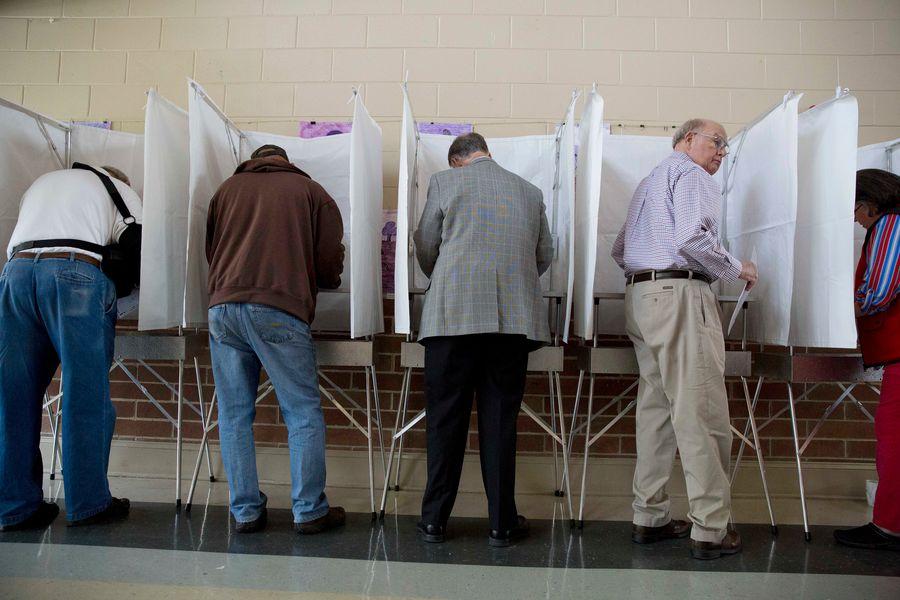
Does your vote count the same as the ballot of someone living in another part of the state, or elsewhere in the country? The U.S. Supreme Court’s one-person-one-vote ruling says it must. But a new case before the high court demonstrates that issue is not as simple as it seems.
In deciding this week to take a lawsuit from Texas, the justices will elaborate on the court’s historic 1964 decision that legislative districts must have, as close as possible, the same number of people. The question comes down to the meaning of people. Does that describe all persons, just citizens or only the voting age population?
Obviously the issue is fraught with overtones of the illegal immigration issue but raises legitimate questions about citizenship and representation in a democratic republic. The stakes are huge for states with big immigrant populations, such as Texas, California and Illinois among others. While the case involves legislative representation in a state government, any decision would surely apply to determining districts for the U.S. House of Representatives, too.
Representation traditionally has been based on the census of the general population, meaning everybody. That standard has been challenged in the past but until now the Supreme Court has refused to take it up. Justice Clarence Thomas in 2001 unsuccessfully argued, “As long as we sustain the one-person-one-vote principle, we have an obligation to explain to states and localities what it actually means.” It looks like he finally won that argument.
He's Mean, But Is He at Least Bright?
Supreme Hypocrisy
It's Time to End ALL Lame-Duck Sessions
The Court Fight Is About Democracy
In the new case, Evenwel v. Abbott, the Project for Fair Representation, a conservative advocacy group representing Texas voters Sue Evenwel and Edward Pfenninger, asserts that the total-population standard means they have seen their votes in their Texas state senate districts “diluted” compared to other jurisdictions.
Large urban districts can have big immigrant populations and significant numbers of disqualified felons, as well as a lot of children. Such districts enjoy the same representation in the legislature although they may be home to fewer actual voters than other districts that have much smaller non-citizen populations, the suit says. It cites Evenwel’s rural East Texas district with 533,000 citizens of voting age and a nearby Houston urban district with 372,000 eligible voters. Each elects one senator to the 31-member Texas Senate.
Defenders of the status quo worry that any change could benefit rural and suburban districts over urban ones, favor the Republican Party over Democrats, be detrimental to Latinos, and deny big cities the clout they need to deal with their particular problems. They further argue that since the national census counts everyone, any ruling overturning tradition would have legislative apportionment based more on an estimate than an actual count of citizens or eligible voters, whichever was the new standard.
The legal fight may boil down to whether the word “persons” in the Constitution’s phrase “counting the whole number of persons in each state” means citizens or every one.
A plain reading of that text would seem to favor the total population argument. But certainly the Founders never envisioned an America with such a large illegal immigrant population, 11 million, as now exists.
Texas asserts state’s rights in saying it and other states should have the authority to set the standards. Justice Thomas has said, “The one-person-one-vote principle may, in the end, be of little consequence if we decide that each jurisdiction can choose its own measure of population.”
This case poses a huge challenge for the court: The Constitution is a contract between the government and the nation’s citizens, and if one person, one vote means anything, that should be equality among citizens in the responsibility of electing our legislatures. But any change from the current standard might deprive immigrant-heavy cities the legislative influence to address the unique problems of their communities.
One person, one vote — what does it mean? We’ll have to wait until 2016 to find out what the court thinks.

Congress Doesn’t Need Another Blame Game. It Needs To Find What’s Broken
Jarrod Bernstein • RealClearPolitics
Democrats Won the Midterms. Common Sense Won, Too
Jordanne Kemper • RealClearPolitics
The 120th Congress Shapes Up
Carolina Lumetta • RealClearPolitics
Flooding GOP Primaries With Democrats
Robert Natelson • RealClearPolitics
Washington Keeps Rewarding Oracle—Veterans Keep Paying the Price
Darin Gaub • RealClearPolitics
The Seeds of Unrestricted Warfare
John Teichert • RealClearPolitics
RCP Today
Top stories on RealClearPolitics
The Takeaway
Polling intelligence and analysis delivered to your inbox
World News
Featuring the latest world news
Policy
Featuring the latest policy news
Support Our Mission
As part of RealClearPolitics, authors aim to provide balanced, non-partisan analysis by presenting top reporting and commentary from all sides of the political spectrum.
Trusted by policymakers and citizens alike since 2000