
Congress Doesn’t Need Another Blame Game. It Needs To Find What’s Broken
Published Nov. 21, 2026 • Read time: 4m
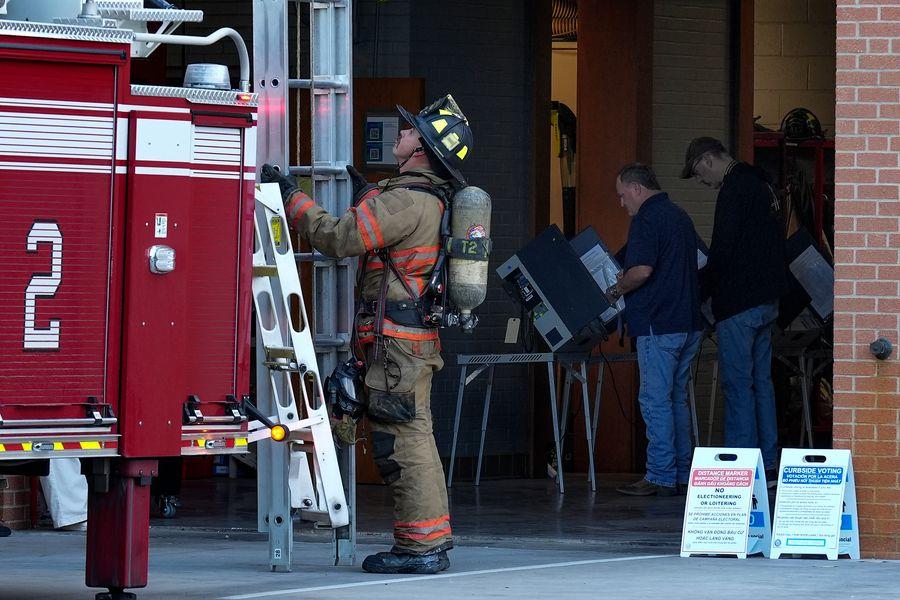
My volunteer fire department covers 450 homes. People ask why we need two pumpers, two cardiac monitors, and two transport vehicles. The answer is simple. Things break. And the more you depend on something, the worse it is when it does.
Last week, a Microsoft outage disrupted email for businesses and government agencies, and New York City’s Emergency Management Department warned that email to city agencies could be delayed. The FAA issued a nationwide ground stop after telecommunications problems affected air traffic control centers. Then on Monday, a software bug at JPMorgan Chase slowed transactions for hours, and customers of at least five other banks reported problems too. The same day, United Airlines delayed hundreds of flights over a problem with the system that calculates a plane’s weight before takeoff. On Tuesday, Apple said an internal update knocked out Apple Music, the App Store and AppleCare. None of the outages started with an attacker. Five very different events raised the same question: What happens when the thing you count on is suddenly unavailable?
When Democrats take the gavels in January, the temptation will be to haul in whoever is to blame. Hearings that find a villain make headlines. Hearings that find the single point of failure make the country safer. So the first thing I’d ask the new Congress to do is give federal agencies 90 days to answer three questions: Which essential services can be brought down by a single failure? What backup do you have? When did you last test it?
McCain to Code Pink Protestors: Get Out of Here You Low Life Scum
AG Nominee Lynch Deflects Cruz Missile
Senate to Begin Hearings on Obama Attorney General Nominee
Democrats, Republicans Spar Over Benghazi Investigation
In New York City emergency management, we had to know what would still work when the usual systems went down. Today I advise clients facing congressional investigations, and I want them to be able to answer the same question before a committee asks it. A hearing can establish who made the call. It should also establish what made it possible for one decision to affect so many people and what would happen differently if the same thing broke tomorrow.
We’ve spent years rewarding efficiency. One provider can be cheaper. One network is easier to manage. Each choice can make sense on its own. The costs show up later, when a routine technical problem forces everyone to find out how much they were relying on the same thing.
Start with the services the government buys. Email is the obvious example. Identity systems, payments, and cloud computing are the harder ones. An agency may have a backup way to reach its staff. But can they still sign in to use it? Congress should ask agencies to walk through what they would do in the first hour of an outage, including how they’d reach the people responsible for getting services back online.
Then look at how a disruption spreads. Transportation Secretary Sean Duffy says excessive connection attempts flooded the FAA’s telecommunications network, disrupting aircraft communications and radar feeds. Congress should ask what allowed the disruption to spread across so many facilities and which backup systems can operate independently of that network.
If someone acted recklessly, broke the law or ignored warnings, Congress should investigate. It should also follow through after the hearing. If an agency tells a committee that it has a backup, the committee should ask to see the results of the last test. If the test exposed a problem, ask who owns the fix and when they’ll run it again.
Executives can do the same exercise before the committee letters arrive. Pick a day, take the usual communications channel out of the exercise and see how long it takes the people in charge to reach each other and make a decision. You’ll learn something that a written plan can’t tell you. And what you say in the first few hours of a crisis may be the first thing a committee reads back to you months later. If you’re still figuring out what happened, say what you know, what you’re checking, and when you’ll update people.
We buy the second pumper because we expect the first one to fail on the worst possible day. Congress should find out which essential services are still counting on their first.
Support Our Mission
The Internet provides an endless stream of content. Not all of it is worth your time. That's why, every day, RealClearPolitics curates the most essential news and information—from all sides and across mediums. The links, videos, and podcasts curated here are the product of human judgment, not algorithms or AI. Please help power our mission of presenting a thoughtful, balanced public discourse through a tax-deductible donation.
Would you consider supporting us today?

Congress Doesn’t Need Another Blame Game. It Needs To Find What’s Broken
Jarrod Bernstein • RealClearPolitics
Democrats Won the Midterms. Common Sense Won, Too
Jordanne Kemper • RealClearPolitics
The 120th Congress Shapes Up
Carolina Lumetta • RealClearPolitics
Flooding GOP Primaries With Democrats
Robert Natelson • RealClearPolitics
Washington Keeps Rewarding Oracle—Veterans Keep Paying the Price
Darin Gaub • RealClearPolitics
The Seeds of Unrestricted Warfare
John Teichert • RealClearPolitics
RCP Today
Top stories on RealClearPolitics
The Takeaway
Polling intelligence and analysis delivered to your inbox
World News
Featuring the latest world news
Policy
Featuring the latest policy news
Support Our Mission
As part of RealClearPolitics, authors aim to provide balanced, non-partisan analysis by presenting top reporting and commentary from all sides of the political spectrum.
Trusted by policymakers and citizens alike since 2000