
The Truth About Medicaid Reform
Published May 15, 2013 • Read time: 3m
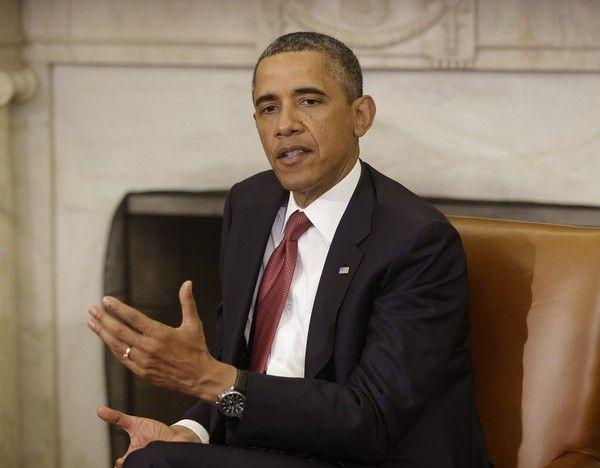
As a candidate, Barack Obama depicted himself as a new type of president, one who would rely on science to generate policy. Mr. Obama and his team successfully created an image of analytical academic, capitalizing on his position at the time of part-time lecturer. And even now, President Obama frequently reminds us and the press that he needs those ever-so-important facts, the data, before designing solutions for today's pressing problems facing the American people.
All too often, though, our elected leaders ignore the facts, especially when considering entitlement programs. The ObamaCare plan to dramatically expand Medicaid is a prime example where the facts are being ignored and instead, illogical entitlement expansion is the proposed solution.
Let's consider the data. The top peer-reviewed medical journals are filled with proof that Medicaid patients have worse outcomes than fully comparable patients with private insurance, outcomes sometimes even worse than those with no insurance at all. Owing to Medicaid's restrictive guidelines for diagnosis and treatment, Medicaid patients experience significantly more deaths, longer hospitalizations and more serious complications from major surgery, cancers, heart disease, interventional procedures, transplants and AIDS than equivalent patients with the same illnesses and same health status but with private insurance -- objective data-based conclusions proven by medical scientists in the world's top peer-reviewed medical journals like Annals of Surgery, Cancer, Journal of Heart and Lung Transplantation and theAmerican Journal of Cardiology. Medicaid outcomes are so shamefully poor that, when comparing patients with the same risk factors and same health status, Medicaid patients at times even fared worse than those with no insurance at all.
President Calls Drug Addiction a Health Problem
Lawmakers Hail New Opioid Rules -- But Call for More
No Opiates for the Masses?
Obamacare's Tax-Time Torment
Beyond outcomes, Medicaid insurance has been only a facade for millions of patients for years because they cannot even find doctors. More than one-third of primary care doctors and one-fourth of specialists already refused adding new Medicaid patients back in 2008 because Medicaid pays below costs. And from a 2009 survey of 15 large metropolitan areas, almost half of doctors in the five most commonly used medical fields refused Medicaid patients, about four times the percentage that refuse new private insurance patients.
And now, in Oregon's controlled, randomized study comparing thousands of previously uninsured, poor Medicaid applicants who received Medicaid to those who did not receive the insurance, we see further evidence that "comprehensive" government insurance failed to improve health beyond no insurance at all.
Adding millions more to the almost 60 million unsuspecting Americans who naively trust that their Medicaid insurance offers access to high-quality medical care would be, at best, a sad example of a well-intentioned but incompetent government. Instead of illusions, leadership in health care reform should focus on enabling the poor to have a truly substantive health care safety net. Rather than expanding Medicaid while eliminating more than $50 billion in disproportionate share supplements to hospitals serving the poor, our elected officials might start by looking at their ownFederal Employees Health Benefits Program. FEHBP is a successful working model of a premium support benefit, offering financial support for consumer choice among private plans. Whether basing reforms on FEHBP or other ideas, like the Hatch-Upton proposal, genuine leadership is essential. It doesn't take an intellectual giant to understand the facts, only an honest person to admit them.
This article originally appeaed in USA Today on May 14, 2013. It is reprinted with permission from the Hoover Institution, where the author is a fellow.

Congress Doesn’t Need Another Blame Game. It Needs To Find What’s Broken
Jarrod Bernstein • RealClearPolitics
Democrats Won the Midterms. Common Sense Won, Too
Jordanne Kemper • RealClearPolitics
The 120th Congress Shapes Up
Carolina Lumetta • RealClearPolitics
Flooding GOP Primaries With Democrats
Robert Natelson • RealClearPolitics
Washington Keeps Rewarding Oracle—Veterans Keep Paying the Price
Darin Gaub • RealClearPolitics
The Seeds of Unrestricted Warfare
John Teichert • RealClearPolitics
RCP Today
Top stories on RealClearPolitics
The Takeaway
Polling intelligence and analysis delivered to your inbox
World News
Featuring the latest world news
Policy
Featuring the latest policy news
Support Our Mission
As part of RealClearPolitics, authors aim to provide balanced, non-partisan analysis by presenting top reporting and commentary from all sides of the political spectrum.
Trusted by policymakers and citizens alike since 2000