
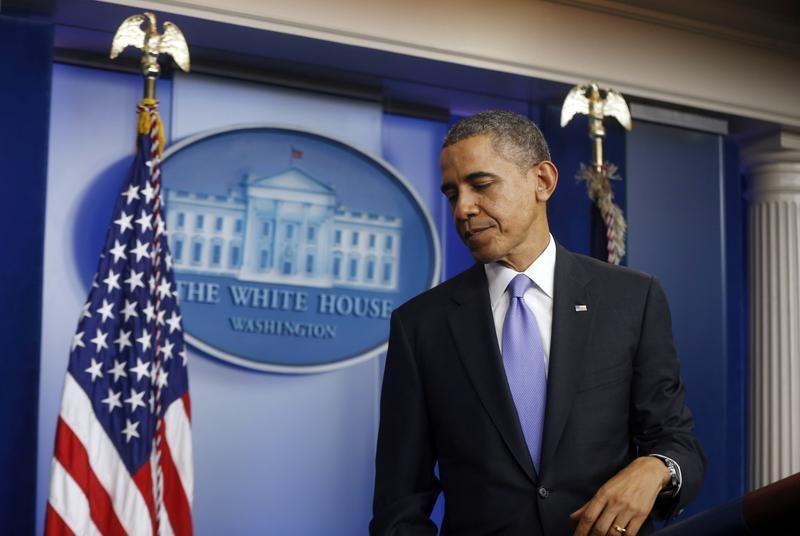
Obama Admits Mistakes But Remains Uncowed
Published Dec. 21, 2013 • Read time: 5m
Join the Conversation
0What did we learn from President Obama’s Friday news conference, the 99th of his presidency, besides the fact that he was really, really looking forward to his family’s vacation in Hawaii, which will extend through Jan. 5?
Some takeaways:
-- In his first public reactions to an expert panel’s recommendations about National Security Agency spying, the president said he will continue the government’s controversial program of stockpiling data drawn from Americans’ phone calls, which he called a “useful tool.” But he said altering the “structure” of the domestic surveillance program to store the metadata with phone providers’ or at independent repositories might be one way to bolster public trust.
“There continues not to be evidence that the particular program had been abused,” Obama told reporters during an hour-long discussion that capped a year he admitted was short on legislative victories and long on management messes. What worries the public is a perceived potential for government intrusion, not specific evidence of federal excesses under the guise of counterterrorism, he said.
The surveillance program, disclosed by exiled former contractor Edward Snowden and major U.S. and British newspapers, “could be redesigned in ways that give you the same information when you need it without creating these potentials for abuse, and that's exactly what we should be doing . . . evaluate all these things in a very clear, specific way and moving forward on changes,” Obama said.
-- Obama steered clear of speculating about Snowden’s legal fate, noting that the handling of felony charges against the leaker was a matter for the Justice Department and the courts, should Snowden’s temporary asylum in Russia end. Asked if amnesty was an option, the president sidestepped the question. Obama said that although the public discussion of spy programs was “needed,” he lamented the intelligence and diplomatic harm he blamed on Snowden’s revelations.
Obamas Host "Hamilton" Cast at White House
Obama Starts 2015 on the Upswing, But Can It Last?
Obama Tests His Sway Against a GOP-Run Congress
Obama Looks Past GOP in Promoting 2015 Agenda
“I believe that this is an important conversation that we needed to have,” the president conceded. “The way in which these disclosures happened have been damaging to the United States and damaging to our intelligence capabilities. And I think that there was a way for us to have this conversation without that damage.”
But changes in the way NSA gets to the data it gathers may result, Obama said, adding he would explain his decisions in January. “It is clear that whatever benefits the configuration of this particular program may have may be outweighed by the concerns that people have on its potential abuse,” he continued. “And if that's the case, there may be another way of skinning the cat.”
-- On another front, the president said the management and rollout of the Affordable Care Act’s insurance exchanges amounted to the “biggest mistake” of his bumpy year. “Obviously, we screwed it up,” he said. But he defended the law and the rescue operation under way since October’s rollout, disclosing that more than 1 million people selected coverage through federal and state exchanges that should take effect Jan. 1.
In 2014, the president said he will order unspecified changes to address problems he believes contributed to the fumbled implementation of his signature legislative achievement. Whether those changes will include firings or administrative overhauls -- tied to federal procurement of information technology, or lines of supervision, for example -- remained unclear. Obama and his aides have resisted firing any manager in charge of the ACA portfolio, and publicly defended Health and Human Services Secretary Kathleen Sebelius.
“I'm going to be making appropriate adjustments once we get through this year and we've gotten through the initial surge of people who have been signing up,” Obama said.
-- He predicted Republicans in Congress would forgo the temptation to revisit brinksmanship over the nation’s borrowing authority, which will hit a statutory cap some time next spring. If the GOP tries to exact concessions, he said, he will not negotiate. Though the 16-day government shutdown in the fall was debilitating for all concerned, Obama suggested it was so unpopular with the American public, it might have served a useful political purpose for 2014 and beyond.
“There have been times where I've thought: Were there other ways that I could have prevented those three, four weeks that hampered the economy and hurt individuals, families who were not getting a paycheck during that time? Absolutely,” he said in the White House briefing room.
“But I also think that in some ways, given the pattern that we have been going through with House Republicans for a while, we might have needed just a little bit of a bracing sort of recognition that this is not what the American people think is acceptable.”
Obama, mustering his optimism, said he wants 2014 to be “a year of action,” yet the policy proposals he discussed were holdovers, suggesting his Jan. 28 State of the Union address will sound familiar, albeit against a rosier backdrop of economic recovery.
Immigration reform; energy savings; wired classrooms and infrastructure spending; a higher minimum wage; and extension of unemployment insurance for those who will exhaust benefits at the end of December were among the policies Obama mentioned Friday.
Having previously announced the pending arrival of counselor John Podesta and health care overseer Phil Schiliro next year in the West Wing, accompanied by a few staff shuffles and resignations, the president said more turnover is ahead.
“People get tired; people get worn out. Sometimes, you need fresh legs.”
Heading into his sixth year and dogged by critics and low poll numbers, Obama might just as well have been speaking about himself.
“The end of the year is always a good time to reflect and see, what can you do better next year?” he said. “That's how I intend to approach it. I am sure that I will have even better ideas after a couple days of sleep and sun.”

Congress Doesn’t Need Another Blame Game. It Needs To Find What’s Broken
Jarrod Bernstein • RealClearPolitics
Democrats Won the Midterms. Common Sense Won, Too
Jordanne Kemper • RealClearPolitics
The 120th Congress Shapes Up
Carolina Lumetta • RealClearPolitics
Flooding GOP Primaries With Democrats
Robert Natelson • RealClearPolitics
Washington Keeps Rewarding Oracle—Veterans Keep Paying the Price
Darin Gaub • RealClearPolitics
The Seeds of Unrestricted Warfare
John Teichert • RealClearPolitics
RCP Today
Top stories on RealClearPolitics
The Takeaway
Polling intelligence and analysis delivered to your inbox
World News
Featuring the latest world news
Policy
Featuring the latest policy news
Support Our Mission
As part of RealClearPolitics, authors aim to provide balanced, non-partisan analysis by presenting top reporting and commentary from all sides of the political spectrum.
Trusted by policymakers and citizens alike since 2000