
Pennsylvania Redistricting
Partisan Redistricting Won't Fix Dems' Pennsylvania Disadvantage
COMMENTARY
Published Feb. 12, 2022 • Read time: 6m
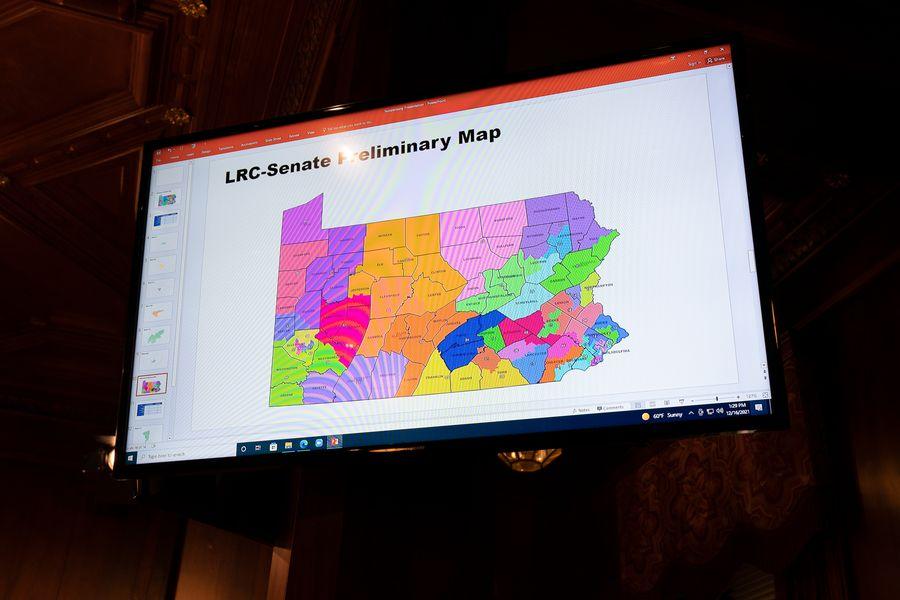
Earlier this month, Pennsylvania’s Supreme Court took over the state’s congressional redistricting process. The state’s lower Commonwealth Court was slated to draw the map following an impasse between Pennsylvania legislators and Gov. Tom Wolf. Now, the Democratic-majority Supreme Court will exercise its “extraordinary jurisdiction” power by choosing a map for the state’s shrinking delegation.
In recent weeks, the state’s high-stakes redistricting process has prompted hand-wringing and accusations from left-leaning media and Democrats alleging that Republicans, who enjoy a legislative majority in Harrisburg, have tipped the scales. Such claims carry weight in states like Texas and Ohio, where maps may unfairly benefit Republicans.
But in the Keystone State and across the U.S., the bigger threat to Democrats’ 2022 congressional prospects isn’t Republican-drawn gerrymanders. Instead, it’s a shrinking pool of voters – ideologically and demographically – for a party that has ceded its messaging and legislating to the progressive left. The farther one travels from Philadelphia and its wealthy inner suburbs, the more one sees Republicans gaining across demographics in Pennsylvania. There are simply no maps to be drawn for the state’s 17-member congressional delegation that can save each endangered incumbent Democrat.
In Pennsylvania and elsewhere, Democrats are becoming more ideologically homogeneous, clustered in cities, and less able to rack up votes among nonwhite voters who are actively leaving their party.
The FBI Gained Access; We'd Already Lost Our Privacy
Is Trump Right About NATO?
Arizona's Voting Rights Fire Bell
U.S. Officials Say 2 Americans Died in Brussels Attack
This trend emerged in recent decades, as self-identified Democrats – alongside their representatives in Congress – veered sharply to the left. But even during Barack Obama’s presidency, some “Blue Dog” Democrats – those with conservative bona fides – remained on Capitol Hill. Today, there are nearly no pro-life Democrats left in Washington, and the de facto position for even supposedly moderate candidates is an embrace of nuking the Senate filibuster, among other radical changes demanded by the party’s restive left flank. Voters increasingly hear the whims of the furthest-left members of the Democratic caucus, such as Rep. Alexandria Ocasio-Cortez, as representing the whole party. This is due partly to social media and its ability to amplify the most extreme messages, as well as a media corps that disproportionately shares the values of well-educated, elite progressives.
But these are not the values of regular Pennsylvania voters in regions like the Lehigh Valley, the anthracite coal region, or the southwest counties surrounding Pittsburgh.
Indeed, the Republican Party’s consistent statewide voter-registration gains indicate an electoral backlash against Democrats’ leftward turn. Reviewing net party registration, “blue” gains cluster in Philadelphia’s inner suburbs, extending west into the wealthy mid-state counties around Lancaster and Harrisburg, but then grind to a halt. Otherwise, the map is red, spanning from the Lehigh Valley and the massive “T” of central Pennsylvania to the areas around metro Pittsburgh and Lake Erie.
This voter trend, which intensified during the Trump era, could portend electoral bloodshed for endangered Democratic incumbents in working-class areas outside Greater Philadelphia. For example, in Rep. Susan Wild’s Lehigh Valley district – captured by Democrats in 2018 after years of representation by moderate Republicans – even minor attrition of working-class voters, who are reliant on the region’s logistics and manufacturing industries, would be her downfall. In 2020, Wild only narrowly survived a challenge from Republican Lisa Scheller; the two face a rematch this November. It’s hard to imagine Valley voters staying in Wild’s corner, with the concerns of national Democrats – federal election takeover bills and massive welfare spending in the form of “Build Back Better” – so far removed from those of working people.
Meanwhile, in Pennsylvania’s ancestrally Democratic northeast, Rep. Matt Cartwright is a liberal Democrat who continues to serve in Democratic leadership despite representing a heavily blue-collar, natural gas-producing district that supported Donald Trump in 2016 and 2020. The voters clustered around formerly industrial cities like Scranton, Hazleton and Wilkes-Barre are the descendants of factory workers and coal miners. They have less in common with the new Democrats than they do with Trump’s working-class coalition.
All this should be troubling to Democratic strategists – especially considering that both Wild and Cartwright’s districts are heavily Latino. In northeastern Pennsylvania, for example, scores of Dominican-Americans, alongside new immigrants, flocked to Hazleton starting in the 1990s to work in the area’s industrial parks. The latest polling shows that Hispanic voters are rapidly souring on the left’s social-justice agenda. An increasing number of Hispanics, moreover, are open to voting Republican. They’re now roughly split on the “generic ballot,” for example, and exit polling suggests they narrowly supported Republican Glenn Youngkin in his successful Virginia governor’s race.
These are voters that vulnerable Democrats can’t afford to lose. In Wild’s case, a 10-percentage point swing in Hispanic voters alone in her district, as it’s currently drawn, would lead her to lose the seat based on her 2020 performance. Cartwright would lose his seat with a 15 percent swing among Hispanic voters in his district – perfectly conceivable in this rapidly shifting political environment. And in both calculations, the incumbents would have to hold every non-Hispanic voter in 2022 – nearly impossible to imagine considering the Democrats’ dire polling overall, along with a historical tendency for the party in power to lose seats in the midterms.
With Democrats holding a razor-thin majority of ten seats in the House, these two districts matter in the party’s quest to hold a durable majority. And with diverse, working-class populations that are shifting rightward, both districts point to endemic issues for the Democratic Party that go well beyond allegations of Republican gerrymandering.
For now, the Democratic-controlled state Supreme Court will step in for the second time in five years to draw Pennsylvania’s congressional lines itself – likely in favor of Democrats.
But redistricting experts in Pennsylvania tell me that Democrats cannot help Wild without hurting Cartwright, and vice versa. There are simply no new Democratic voters to pick up this far afield from Greater Philadelphia. With both Wild and Cartwright having such tenuous grips on their districts, and with a Democratic Party that shows no signs of adjusting its message to bring back working-class voters, neither seat may be saved. These districts, and other working-class, diverse areas located far from city centers and flourishing suburbs, could both fall into Republican hands.

Congress Doesn’t Need Another Blame Game. It Needs To Find What’s Broken
Jarrod Bernstein • RealClearPolitics
Democrats Won the Midterms. Common Sense Won, Too
Jordanne Kemper • RealClearPolitics
The 120th Congress Shapes Up
Carolina Lumetta • RealClearPolitics
Flooding GOP Primaries With Democrats
Robert Natelson • RealClearPolitics
Washington Keeps Rewarding Oracle—Veterans Keep Paying the Price
Darin Gaub • RealClearPolitics
The Seeds of Unrestricted Warfare
John Teichert • RealClearPolitics
RCP Today
Top stories on RealClearPolitics
The Takeaway
Polling intelligence and analysis delivered to your inbox
World News
Featuring the latest world news
Policy
Featuring the latest policy news
Support Our Mission
As part of RealClearPolitics, authors aim to provide balanced, non-partisan analysis by presenting top reporting and commentary from all sides of the political spectrum.
Trusted by policymakers and citizens alike since 2000