
Obama, Congress Mull Steps to Curb Russia
Published March 4, 2014 • Read time: 7m
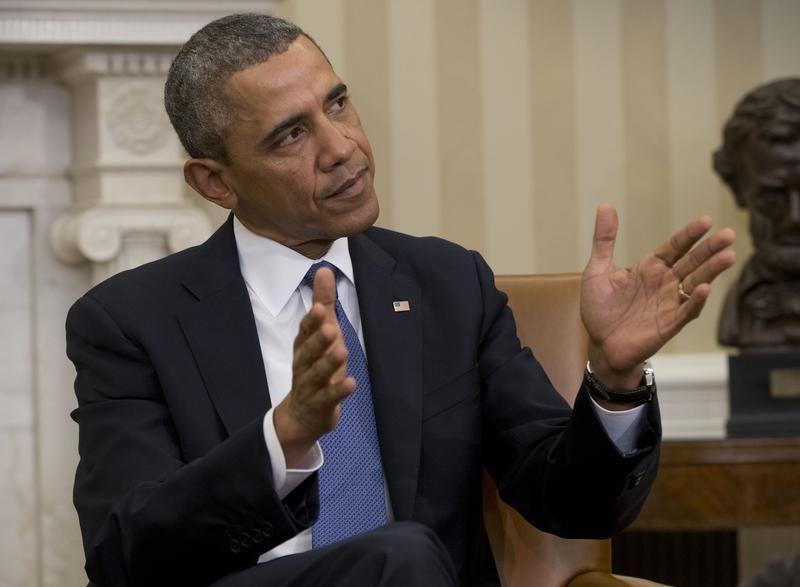
In a drama reminiscent of the U.S.-Soviet power rivalry decades ago, President Obama warned Russia on Monday to pull troops from Crimea or face possible international sanctions and diplomatic isolation.
Events in Ukraine, and administration disagreements with Germany about how to reckon with Russia’s assertive military behavior, challenged Obama’s leadership on multiple fronts amid a fraught period in U.S. relations with President Vladimir Putin.
Obama said Russia was in “violation of international law” after sending troops across its border -- an assertion repeated by U.S. Ambassador Samantha Power at the United Nations, and by Pentagon officials.
“What cannot be done is for Russia, with impunity, to put its soldiers on the ground and violate basic principles that are recognized around the world,” Obama said in reference to the thousands of Russian troops ordered by Putin into Ukraine’s southern, Russian-speaking peninsula. “I think the strong condemnation that it has received from countries around the world indicates the degree to which Russia is on the wrong side of history on this.”
(At a press conference Tuesday, Putin said he has no plans to send more troops into Ukraine, but reserved the right to do so if the Russian-speaking population there requests help in the face of "anarchy," multiple news sources reported.)
Obama had planned this week to focus on domestic policies woven into his newest budget blueprint -- a document intended to showcase political divisions between Democrats and Republicans leading up to the November elections. The president’s fiscal 2015 budget will be unveiled Tuesday.
The FBI Gained Access; We'd Already Lost Our Privacy
Is Trump Right About NATO?
Arizona's Voting Rights Fire Bell
U.S. Officials Say 2 Americans Died in Brussels Attack
Days before Obama expected to renew his call for Congress to grant millions of low-wage Americans a pay raise and to expand tax benefits, he found himself asking lawmakers to unite behind the people of Ukraine. In response, key lawmakers expressed bipartisan support Monday for swift action in Congress to help Russia’s Eastern European neighbor with $1 billion in U.S. aid.
“At this stage there should be unanimity among Democrats and Republicans that when it comes to preserving the principle that no country has the right to send in troops to another country unprovoked, we should be able to come up with a unified position that stands outside of partisan politics,” Obama said.
As Obama turned his attention to Congress, plenty of other people turned their attention to him, asking aloud how forceful the president would get with Putin and how significantly the administration’s foreign policy would change if Russia’s “invasion” of Ukraine, as numerous experts called it, continued.
“This is, I think, the most serious military/geopolitical crisis in Great Power relations since the Soviet Union fell,” said Charles Kupchan, professor of international affairs at Georgetown University. Kupchan, a senior fellow with the Council on Foreign Relations, discussed the Ukraine crisis with reporters Monday via a conference call organized by the CFR.
Putin’s military has “effectively invaded the Crimean peninsula and taken control of it,” Kupchan said. “They are essentially turning the Crimean into a Russian puppet state. … This is the stuff of the Cold War.”
Americans told Gallup pollsters last fall for the first time in 14 years that they viewed Russia as “an enemy,” and six in 10 Americans last month said they had unfavorable views of both Putin and Russia. Yet, Americans remain ambivalent about wading into another global crisis, especially militarily. A HuffPost/YouGov poll conducted last weekend found that just 14 percent of Americans believed the United States had a responsibility to get involved in Ukraine.
The president did not sketch out details of a U.S. aid package to Ukraine during his remarks Monday, which preceded a long-planned meeting with Israeli Prime Minister Benjamin Netanyahu. But he urged Congress to act swiftly. He said such assistance could bolster a government formed by the Ukrainian parliament last week in the wake of its ouster of former President Viktor Yanukovych.
Separately, Treasury Secretary Jack Lew, speaking by phone with counterparts in France and the United Kingdom on Monday, assured allies that America will work with other governments and partners “to provide as much support as Ukraine needs to restore financial stability and return to economic growth, if the new Ukrainian government implements the necessary reforms,” a senior Treasury official said in a statement.
Treasury confirmed Tuesday morning that the administration is developing, along with Congress and Ukraine's new government, a $1 billion package of loan guarantees, and is preparing to provide Ukraine with additional assistance and technical financial advisers.
In a statement, Lew said the loan guarantee assistance would be aimed at "protecting the most vulnerable Ukrainian households from the impact of the needed economic adjustment." The administration is also talking to Congress about approving the 2010 International Monetary Fund quota legislation, Lew added, which would bolster IMF's lending capacity to Ukraine.
Secretary of State John Kerry was to be in Ukraine to meet with the new government Tuesday.
Senate Foreign Relations Chairman Robert Menendez began drafting legislation with his committee to authorize at least $1 billion in loan guarantees to help shore up the Ukrainian economy, aides said. Menendez said his panel discussed with the White House possible sanctions “against individual Russians and Ukrainians that range from visa bans and asset freezes, to the suspension of military cooperation and sales, as well as economic sanctions.”
Senate Majority Leader Harry Reid also told reporters he believes U.S. assistance is appropriate. “I think Ukraine is in crisis and needs our help,” he said.
White House Chief of Staff Denis McDonough reached out to Senate Minority Leader Mitch McConnell over the weekend to discuss events.
A Foreign Relations Committee aide said it was unclear when the panel might vote on a measure. Deputy Secretary of State William Burns is scheduled to testify Thursday about the crisis.
House Majority Leader Eric Cantor directed GOP committee chairmen with jurisdiction to develop legislative plans to assist the Ukrainian government using loan guarantees. Cantor said lawmakers from both parties supported such aid, and he warned his colleagues against adding what he called “divisive provisions.”
“We should be focused on moving such a package as quickly as possible,” Cantor said.
Congressional leaders said they favored financial assistance, but they appeared to disagree about the utility and targets of possible sanctions against Russia and its oligarchs.
Like Menendez, Cantor said leaders would seek ways to punish Russian officials “and other individuals complicit in Russia’s efforts to invade and interfere with Ukraine’s sovereign affairs.”
Cantor did not elaborate, but said sanctions should wield “real consequences.” Earlier, Reid said the United States should push sanctions if it is joined by European partners.
Meanwhile, Sen. John McCain endorsed sanctions against Russia even as he criticized Obama’s overall foreign policy. He told members of the American Israel Public Affairs Committee gathered in Washington Monday that events in Ukraine were “the ultimate result of a feckless foreign policy in which nobody believes in America’s strength anymore.”
A Pentagon spokesman said late Monday that the Defense Department canceled for the time being all military-to-military engagements with Russia, including joint exercises, bilateral meetings, port visits and planning conferences.
“We call on Russia to deescalate the crisis in Ukraine and for Russian forces in Crimea to return to their bases, as required under the agreements governing the Russia Black Sea Fleet,” Pentagon Press Secretary Rear Adm. John Kirby said in a statement. There has been “no change to our military posture in Europe or the Mediterranean,” he added.

Congress Doesn’t Need Another Blame Game. It Needs To Find What’s Broken
Jarrod Bernstein • RealClearPolitics
Democrats Won the Midterms. Common Sense Won, Too
Jordanne Kemper • RealClearPolitics
The 120th Congress Shapes Up
Carolina Lumetta • RealClearPolitics
Flooding GOP Primaries With Democrats
Robert Natelson • RealClearPolitics
Washington Keeps Rewarding Oracle—Veterans Keep Paying the Price
Darin Gaub • RealClearPolitics
The Seeds of Unrestricted Warfare
John Teichert • RealClearPolitics
RCP Today
Top stories on RealClearPolitics
The Takeaway
Polling intelligence and analysis delivered to your inbox
World News
Featuring the latest world news
Policy
Featuring the latest policy news
Support Our Mission
As part of RealClearPolitics, authors aim to provide balanced, non-partisan analysis by presenting top reporting and commentary from all sides of the political spectrum.
Trusted by policymakers and citizens alike since 2000