
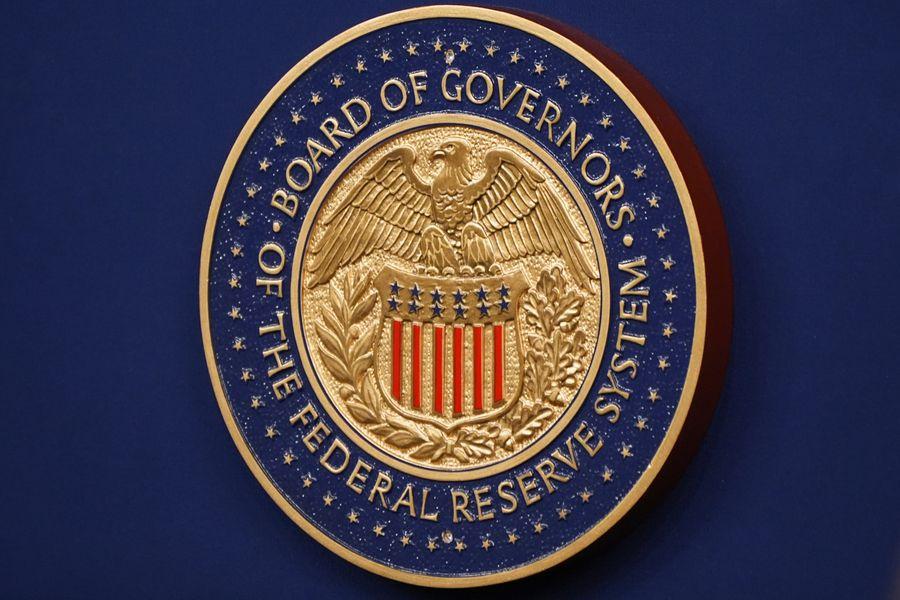
Federal Reserve Powell
The Fed's Job Isn't Finished Until Hiring Comes Back
COMMENTARY
Published Jan. 16, 2026 • Read time: 4m
The hard work of stabilizing the economy is beginning to pay off. Inflation has eased, productivity has strengthened, and cost pressures are receding across key sectors. The next and more consequential test is whether that progress translates into jobs. Small businesses, the engine of private-sector employment, are prepared to invest and hire, but only if capital becomes more accessible and affordable. The Federal Reserve’s next policy decision will determine whether this expansion reaches Main Street or stalls just short of it.
The labor market is sending a clear warning. Payroll growth averaged just 49,000 jobs per month in 2025, down sharply from 168,000 jobs per month in 2024. Private-sector hiring was among the weakest of any non-recessionary year in more than two decades. Subsequent revisions erased tens of thousands of previously reported jobs, revealing a labor market weaker than initially believed.
Layoffs reinforce the same message. Employers announced more than 1.2 million job cuts in 2025, the highest annual total since 2020 and among the largest on record. Firms typically respond to tighter financial conditions first by freezing hiring and reducing openings, then by cutting payrolls if elevated borrowing costs persist. For smaller firms that rely on bank credit rather than capital markets, lower interest rates reduce the carrying cost of payrolls and improve cash-flow predictability, helping stabilize employment decisions before temporary slowdowns become permanent job losses.
Volcker, Reagan & History
Preserving Their Monopoly on Monopoly Money
Prophets and Losses
Bernanke's Speech on Monetary Policy And It's International Implications
Inflation has clearly cooled. Headline inflation is running near 2.7 percent, with core inflation around 2.6% – within striking distance of the Federal Reserve’s 2% target. At the same time, productivity rose in the second half of 2025 while unit labor costs declined, easing a key inflation concern.
This combination – cooling inflation, rising productivity, and declining cost pressures – is exactly the environment in which hiring should accelerate. That it has not points to a different constraint: the cost of capital.
Hiring in the United States does not begin with multinational corporations or financial markets. It begins with small businesses. Firms with fewer than 500 employees account for nearly half of U.S. employment and have historically generated roughly two-thirds of net new private-sector jobs during economic expansions.
Yet small-business hiring lagged throughout much of 2025. Employment data by firm size show that smaller establishments experienced periods of job losses or negligible gains even as larger firms posted modest increases. Hiring momentum among small firms improved late in the year, underscoring their sensitivity to financing conditions.
Small businesses do not issue bonds or tap public equity markets. They rely on bank credit, equipment financing, and revolving lines of credit. Elevated interest rates raise hurdle rates, delay equipment purchases, and suppress hiring long before consumer demand visibly weakens.
This is why the One Big Beautiful Bill Act is so consequential. By making 100% expensing permanent, Congress lowered the after-tax cost of investment and improved cash flow for capital-intensive firms. Independent analyses show that full expensing increases after-tax returns by eliminating the tax penalty on long-lived assets.
A firm may be able to expense new equipment on paper, but if financing costs remain prohibitive, the investment still does not pencil out. Full expensing improves returns; lower interest rates make projects feasible. One without the other is insufficient. The intended growth effects of pro-investment tax policy depend on the cost of capital that allows businesses to act.
Further rate cuts would not represent a return to easy money. Prior to the pandemic, the federal funds rate ranged between 1.5% and 1.75%. Even with an additional 75-basis-point reduction, policy would remain well above those pre-COVID levels. The goal is not stimulus for its own sake, but alignment with economic reality.
The risk today is not runaway inflation. It is a labor market that softens quietly before weakening decisively. Monetary policy works with long and variable lags. Waiting too long risks turning a manageable slowdown into a deeper employment correction.
Small businesses are ready to lead the next phase of job creation. Inflation has cooled. Productivity is improving. Pro-investment tax policy is in place. What they need now is affordable capital.
The Fed’s job is not finished when prices stabilize. It is finished when growth once again produces jobs.
Support Our Mission
The Internet provides an endless stream of content. Not all of it is worth your time. That's why, every day, RealClearPolitics curates the most essential news and information—from all sides and across mediums. The links, videos, and podcasts curated here are the product of human judgment, not algorithms or AI. Please help power our mission of presenting a thoughtful, balanced public discourse through a tax-deductible donation.
Would you consider supporting us today?

Congress Doesn’t Need Another Blame Game. It Needs To Find What’s Broken
Jarrod Bernstein • RealClearPolitics
Democrats Won the Midterms. Common Sense Won, Too
Jordanne Kemper • RealClearPolitics
The 120th Congress Shapes Up
Carolina Lumetta • RealClearPolitics
Flooding GOP Primaries With Democrats
Robert Natelson • RealClearPolitics
Washington Keeps Rewarding Oracle—Veterans Keep Paying the Price
Darin Gaub • RealClearPolitics
The Seeds of Unrestricted Warfare
John Teichert • RealClearPolitics
RCP Today
Top stories on RealClearPolitics
The Takeaway
Polling intelligence and analysis delivered to your inbox
World News
Featuring the latest world news
Policy
Featuring the latest policy news
Support Our Mission
As part of RealClearPolitics, authors aim to provide balanced, non-partisan analysis by presenting top reporting and commentary from all sides of the political spectrum.
Trusted by policymakers and citizens alike since 2000