
Consumer Prices
Inflation Cools, Interest Rate Cuts Likely To Come
ANALYSIS
Published July 12, 2024 • Read time: 6m
On Thursday, the Bureau of Labor Statistics announced that the month-over-month Consumer Price Index, a measure of inflation, decreased by 0.1% in June, bringing the year-over-year CPI-measured inflation down to 3.0%. This was the first time since June 2020 that CPI-measured month-over-month inflation was negative, indicating a renewed cooling of inflation. If inflation continues this downward trend, interest rate cuts are likely from the Federal Reserve later this year.
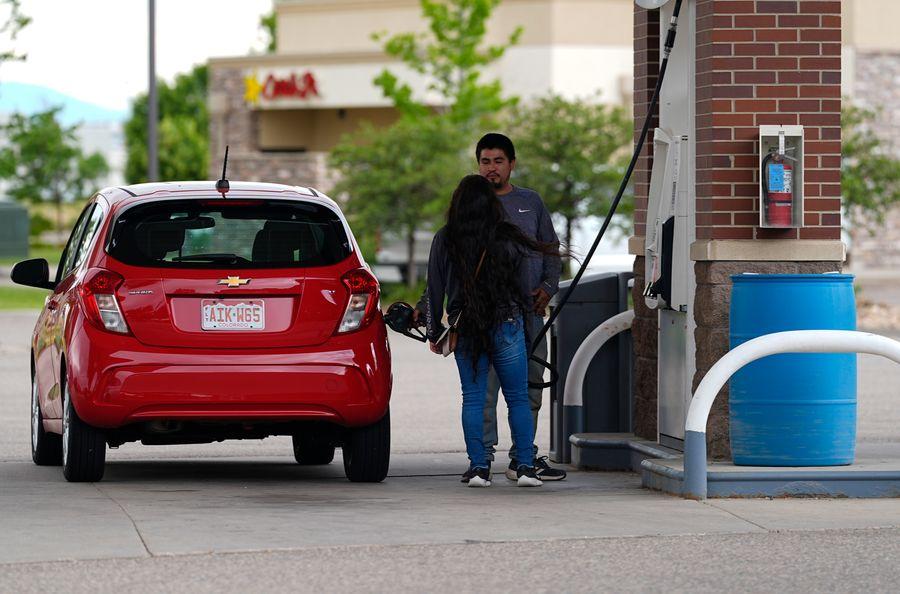
One of the most influential decreases in inflation was in the energy sector, which fell 2% in June, including a 3.8% drop in the price of gasoline. In May, inflation was similarly low, not increasing at all month-over-month, with a similar 2% decrease in the energy price index and a 3.6% decrease in gasoline prices.
In recent statements, the Federal Reserve has held the target range for the federal funds rate, the effective “minimum” interest rate, at 5.25-5.5%. The Federal Open Market Committee, which decides the federal funds rate, has reiterated multiple times that it does “not expect it will be appropriate to reduce the target range until it has gained greater confidence that inflation is moving sustainably toward 2 percent.”
It is important to note that the Federal Reserve’s primary inflation metric is the Personal Consumption Expenditures Price Index, not CPI. The June PCE numbers will be released later this month on July 26, and they usually mirror the CPI. In May, neither the PCE price index nor the CPI increased month-over-month, leading to a year-over-year PCE-measured inflation rate of 2.6%.
Volcker, Reagan & History
Preserving Their Monopoly on Monopoly Money
Prophets and Losses
Bernanke's Speech on Monetary Policy And It's International Implications
Earlier this year, it wasn’t clear that inflation was coming down. Despite a slowdown in PCE-measured inflation from its peak of close to 7.1% in June 2022 to 3% in June 2023, it has since plateaued and not fallen close to the Fed’s target of 2% on a year-over-year basis. In the first quarter of 2024, a renewed inflation scare occurred as the month-over-month PCE rose by 0.25-0.4% per month from January through April, which, if continued, would have led to inflation creeping back up to 4-5%.
Inflation cooling is good news for President Biden’s struggling election prospects, as high inflation has been one of the biggest issues he has faced throughout his presidency. The latest Economist poll found that across all genders, races, incomes, and political affiliations, inflation/prices are the most important issue. Unfortunately for Biden, only 33% of respondents and 22% of independents approved of how he has handled the issue of inflation.
In addition, according to the RCP Approval Rating Average, Biden’s lowest approval rating of 36.8% occurred when inflation was near its peak in July 2022. If the correlation holds, more inflation readings like those in May and June with slow-to-no inflation could help Biden swing voters on this key issue.
More low inflation readings could also give the Fed greater confidence to decrease interest rates multiple times before the end of the year. Although most still believe the Fed will keep interest rates constant after the FOMC meeting later this month, the CME FedWatch Tool, which shows what bettors predict about the future federal funds rate, on Thursday showed a 92.7% chance that the Fed will decrease the rate by at least 0.25% at the September meeting. One month ago, on June 11, before the May and June CPI and PCE inflation numbers were released, bettors predicted only a 52% chance of a rate decrease at September’s meeting.
Rising Unemployment and Slowing GDP Growth
Due to the Federal Reserve’s dual mandate of “maximum employment and stable prices,” the latest unemployment and GDP figures are also relevant to the Fed’s decision about rates. Recent data from the Bureau of Labor Statistics show the unemployment rate at 4.1%, up from 50-year lows of 3.4% in early 2023.
In addition, although there were marginal decreases in the first quarters of 2022, largely attributed to supply shocks and rising energy prices with the onset of the Russia-Ukraine war, the United States has fared better than most other developed nations from a GDP perspective. Since the COVID-19 pandemic, real GDP growth has consistently been above 2% since the third quarter of 2022.
On Tuesday, Federal Reserve Chair Jerome Powell reiterated this point in testimony before the Senate, saying that despite inflation, the U.S. economy has maintained consistent real GDP growth, which can’t be said of other developed economies: “The story for the last two years has been just how exceptional the performance of the U.S. economy has been. ... Clearly, the U.S. economy has performed very well compared to our advanced-economy colleagues.”
However, the latest GDP numbers from the first quarter of 2024 indicate a cooling of the economy, with only a 1.4% increase in GDP on an annualized basis. The first estimate of changes to real GDP for the second quarter of 2024 will be released by the Bureau of Economic Analysis on July 25. Current estimates from the Atlanta Fed’s GDPNow model predict 2% real GDP growth in the second quarter.
These renewed concerns over rises in the unemployment rate and a slowdown of GDP have led members of the Federal Reserve to signal that it has become a more significant focus, as opposed to the past two years, when the main concern was inflation. “Elevated inflation is not the only risk we face. Reducing policy restraint too late or too little could unduly weaken economic activity and employment,” said Powell on Tuesday.
Another factor that the Fed considers is the effect of uncertainty on the markets. In May, personal income increased by 0.5% month-over-month, while personal spending rose by only 0.2%, meaning that spending increased by less than income, indicating some increased savings. While some of the difference in the figures may be due to measurement error, Menzie Chinn, a professor of economics at the University of Wisconsin, told RCP that some of this is possibly due to uncertainty.
“People don’t consume everything they get in income; sometimes they consume more, but sometimes they consume less, and partly that’s due to uncertainty. ... Let’s say uncertainty was rising. You’re not sure you’re going to keep your job; you might say, ‘I’m going to save a little bit more,’” said Chinn. Rising uncertainty about the future, including doubts about whether President Biden will remain the Democratic Party nominee and the economic outlook depending on the upcoming election results, could lead to an economic slowdown as people save more and spend to prepare for an uncertain future.

Congress Doesn’t Need Another Blame Game. It Needs To Find What’s Broken
Jarrod Bernstein • RealClearPolitics
Democrats Won the Midterms. Common Sense Won, Too
Jordanne Kemper • RealClearPolitics
The 120th Congress Shapes Up
Carolina Lumetta • RealClearPolitics
Flooding GOP Primaries With Democrats
Robert Natelson • RealClearPolitics
Washington Keeps Rewarding Oracle—Veterans Keep Paying the Price
Darin Gaub • RealClearPolitics
The Seeds of Unrestricted Warfare
John Teichert • RealClearPolitics
RCP Today
Top stories on RealClearPolitics
The Takeaway
Polling intelligence and analysis delivered to your inbox
World News
Featuring the latest world news
Policy
Featuring the latest policy news
Support Our Mission
As part of RealClearPolitics, authors aim to provide balanced, non-partisan analysis by presenting top reporting and commentary from all sides of the political spectrum.
Trusted by policymakers and citizens alike since 2000