
Climate Change Nuclear Town
SCOTUS Must Affirm EPA Role in Regulating Coal Emissions
COMMENTARY
Published Feb. 26, 2022 • Read time: 5m
On Monday, the Supreme Court will hear oral arguments in a case that could have profound consequences for our ability to confront the rising costs and mounting dangers of climate change.
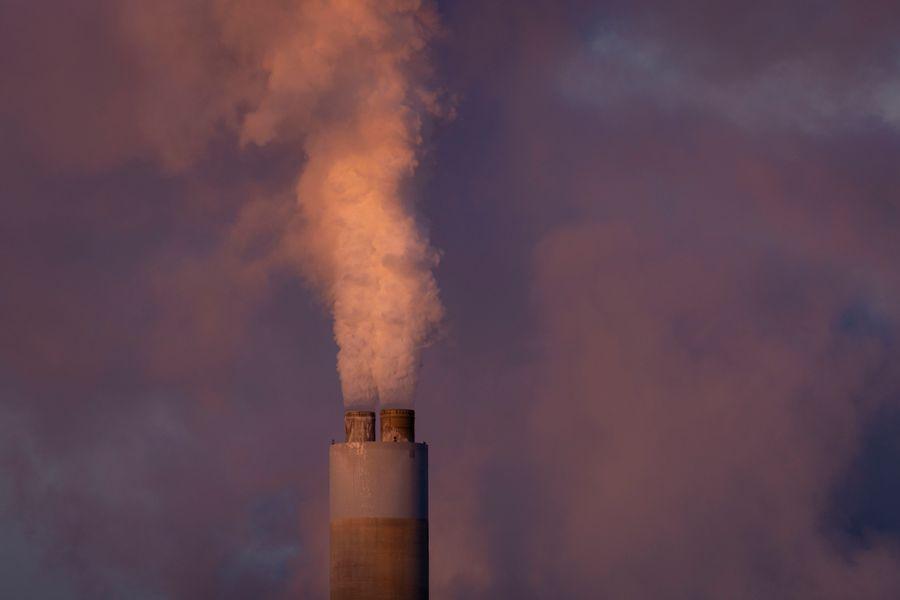
Just as the nation is poised to take the climate action we so urgently need, the coal industry wants the high court to constrain the federal government’s authority to limit carbon pollution from the nation’s largest industrial source: power plants that burn fossil fuels.
The coal argument should be rejected. When an industry inflicts growing damage and risk on the nation and its people, it’s the business model, not our laws, that must change. In West Virginia v. the U.S. Environmental Protection Agency, two coal companies have joined with a group of states dependent on power from fossil fuels in an effort to drastically narrow the EPA’s authority to limit the carbon emissions driving the climate crisis.
Congress assigned the EPA both the authority and the duty to limit that pollution, under the Clean Air Act. The Supreme Court affirmed that authority in three previous cases, including a unanimous 2011 opinion in American Electric Power v. Connecticut, specifically holding that the law “speaks directly” to carbon pollution from power plants, obligating the EPA to set standards to cut those emissions.
Now the coal interests are seeking to block the EPA from addressing this pollution through anything more than baby steps – such as efficiency tune-ups that would cut carbon pollution from these plants by less than one percent. The coal interests suggest that by setting any more effective pollution standards, the EPA would be somehow “seizing control over electricity production nationwide.”
He's Mean, But Is He at Least Bright?
Supreme Hypocrisy
It's Time to End ALL Lame-Duck Sessions
The Court Fight Is About Democracy
Nonsense. Setting speed limits on interstate highways isn’t tantamount to taking over the trucking industry. Building codes don’t put construction in government hands. And limiting industrial carbon pollution doesn’t put the EPA in charge of generating electricity. It’s part of the agency’s mission to protect the environment and public health, while the power industry and the states determine how electricity is produced.
What’s really going on here is that coal is losing ground in the marketplace to cleaner, smarter ways to power our future. Coal generates 19% of the nation’s electricity, down from 45% in 2010, partly due to a five-fold increase in wind and solar power.
The coal industry understands, also, that seven in ten Americans want federal limits on carbon pollution. This case is the industry’s last-ditch attempt to get the judiciary to bail out coal at the expense of public health and welfare.
Propping up the coal industry, though, is no reason to overturn the will of Congress and thwart the government’s ability to confront the existential environmental crisis of our time. Last year alone, storms, floods, wildfires and other weather and climate disasters resulted in $145 billion in damage and killed nearly 700 people nationwide. That doesn’t include the estimated $820 billion in health costs inflicted on this country each year by climate and fossil fuel hazard and harm.
All of this, and more, will get worse, the science tells us, unless we cut carbon emissions and other greenhouse gases in half by 2030 and stop adding them to the atmosphere altogether by 2050. Power plants are 25% of the problem, coughing up more than 1.4 billion metric tons of carbon pollution per year, chiefly by burning coal and gas. There’s no reason this pollution should go unabated. Limiting it isn’t central planning: it’s the only responsible public response.
The Obama administration tried to set limits on this pollution through the Clean Power Plan, but it was never implemented. Court challenges delayed it, then President Trump repealed it. A federal court later struck down Trump’s effort to replace it with a plan that did next to nothing to clean up power plants.
Now the Biden administration is poised to propose limits on this pollution later this year. The administration is vigorously defending its statutory authority to do so, in this case supported by power companies, responsible states, and a coalition of health and environmental groups, led by the American Lung Association and including my organization, the Natural Resources Defense Council.
There’s broad public and legal support for EPA authority to set those limits, as attested to in friend-of-the-court filings from climate scientists, the American Medical Association and other public health advocates, prominent legal scholars, and others.
Even the investor-owned power industry has asked the Supreme Court to affirm the EPA’s authority as the best way “to ensure that the Nation’s emissions-reduction policies minimize impact on consumers and avoid harm to U.S. industry and the economy.”
This case, in the end, is about one thing: whether our government has the tools it needs to confront the existential environmental and health challenge of our time. When it comes to setting commonsense limits on the carbon pollution from power plants, the court has answered that question in the affirmative. It should do so once more.

Democrats Won the Midterms. Common Sense Won, Too
Jordanne Kemper • RealClearPolitics
The 120th Congress Shapes Up
Carolina Lumetta • RealClearPolitics
Flooding GOP Primaries With Democrats
Robert Natelson • RealClearPolitics
Washington Keeps Rewarding Oracle—Veterans Keep Paying the Price
Darin Gaub • RealClearPolitics
The Seeds of Unrestricted Warfare
John Teichert • RealClearPolitics
The Primary System Is Losing the Next Generation
Sean Trende • RealClearPolitics
RCP Today
Top stories on RealClearPolitics
The Takeaway
Polling intelligence and analysis delivered to your inbox
World News
Featuring the latest world news
Policy
Featuring the latest policy news
Support Our Mission
As part of RealClearPolitics, authors aim to provide balanced, non-partisan analysis by presenting top reporting and commentary from all sides of the political spectrum.
Trusted by policymakers and citizens alike since 2000