
Memo to Chuck Schumer: Don't Filibuster Gorsuch
Commentary
Published Feb. 4, 2017 • Read time: 4m
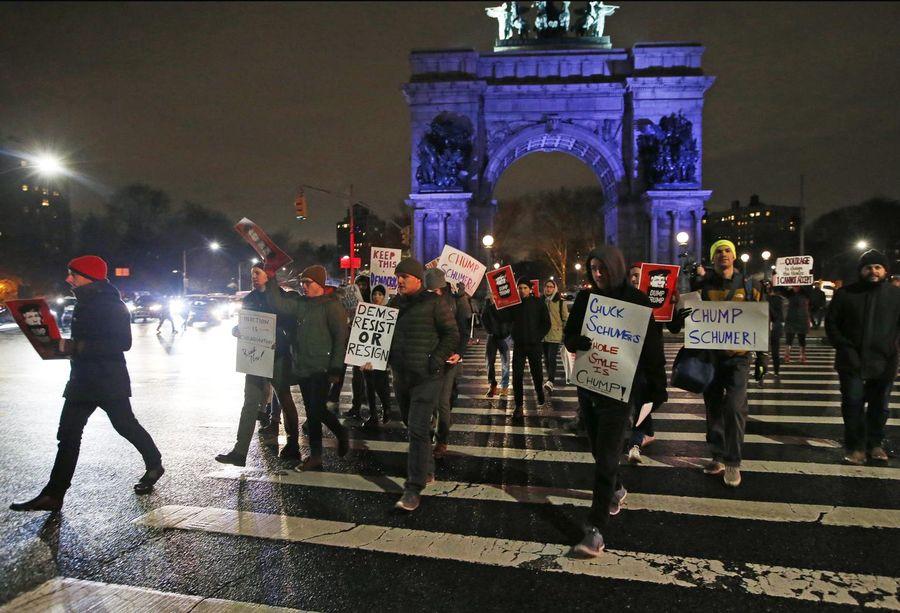
Chuck Schumer is in an unenviable position. Thousands protest outside his Brooklyn home day and night, wielding signs that tell him to “Get a spine, Chuck.” Having long awaited his present position as Democratic leader in the Senate, he seems much less comfortable with his crowning as head of the “resistance” to President Trump.
Feeling the heat, Schumer’s Democratic colleagues have been searching for ways to demonstrate solidarity with their enraged base. Filibustering the Supreme Court nomination of Neil Gorsuch presents an excellent occasion to do just that: It’s high-profile, has a contentious history behind it, and provides the opportunity to plant a visible flag of Democratic opposition just weeks into the Trump presidency.
But such a move would also likely mean the end of the judicial filibuster, as Schumer knows and as Trump has already egged on Majority Leader Mitch McConnell to do. Though a filibuster hasn’t been successfully carried out in a Supreme Court fight since 1968, it remains a valuable moderating force in considering nominees. Presidents are forced to select picks who’ll be met with Senate consensus greater than just a simple majority. The issue of Supreme Court nominations was of particular importance this past election cycle: Both parties ran presidential campaigns anticipating the possibility of multiple vacancies to fill over four (and possibly eight) years.
So why waste the device, which could be “nuked” by a simple GOP-administered rules change, on Gorsuch? The reception on the right to the strong constitutionalist has been unanimously positive --glowing, even -- regardless of feelings about Trump. More surprising was the reaction among many on the left. Amid fury towards the new president for practically everything else, many liberal writers and legal experts were relatively restrained, some complimentary. Acting Solicitor General under Obama Neal Katyal took to the New York Times in a piece titled “Why Liberals Should Back Neil Gorsuch.” Melissa Hart, a law professor at the University of Colorado and Democrat, wrote in the Washington Post: “Judge Gorsuch is brilliant. He is a beautiful writer. He is a warm, decent and thoughtful man.” Even Slate’s Mark Joseph Stern mustered up, “Neil Gorsuch Is Not a Villain.”
He's Mean, But Is He at Least Bright?
Supreme Hypocrisy
It's Time to End ALL Lame-Duck Sessions
The Court Fight Is About Democracy
One pro-filibuster argument being made is that if it’s not used this round, the filibuster will surely get nuked when the next vacancy occurs -- should, say, Ruth Bader Ginsburg step down, leaving the court’s ideological makeup in the balance. The problem here is that this thinking presumes every nominee is identical in jurisprudence and in Republicans’ eyes, and that every proceeding is little more than a party-line vote. Realistically, though, the GOP is not a monolithic bloc; ongoing defections in the Betsy DeVos nomination by Susan Collins and Lisa Murkowski make this clear. And during the last confirmation process for a Republican-nominated justice, Samuel Alito – George W. Bush’s second choice for the spot after a bipartisan effort sank his ill-chosen first pick -- GOP support wasn’t quite unanimous, either.
Recent history demonstrates that ending mechanisms designed to protect minority power in the Senate often results in buyer’s remorse. Harry Reid nixed the filibuster for presidential Cabinet appointments in 2013, which Democrats went on record as regretting in November. Why risk getting it pulled vis-a-vis judicial appointments on a pick as seemingly inoffensive as Gorsuch? Should the filibuster for both Supreme Court and Cabinet appointments disappear in quick succession, a time-honored legislative function will have gone the way of the dinosaur.
Which Democrats would lose out most from a change (and the ugly political fallout it would precipitate)? Schumer is not in danger; he was just re-elected in a deep blue state. Will some of his constituents be angry that the nomination proceeds with a straight up-or-down vote? Sure, but those same people have been literally chanting, “Filibuster everything.” The reality is that those most immediately vulnerable -- senators up for re-election in 2018 -- come disproportionately from heavily pro-Trump states. While skepticism about triggering the filibuster was already growing by the time of the high court announcement, there’s little coincidence about which incumbents sound most hesitant with regards to blocking Gorsuch.
Anger over some of the genuine nastiness around Merrick Garland’s failed nomination last year may tempt a vengeful response among Democrats. But Schumer should recognize that avoiding a greater fight over the filibuster allows them to more constructively channel outrage at Trump’s other political moves, preserves important minority rights in the Senate, and avoids heaping unnecessary risk on the backs of red-state Democrats up for re-election next year. The Senate was designed to move ponderously, with parliamentary rules and mechanisms intended to defend minority opinions and incentivize consensus. Why hazard further degrading those protections over a man like Neil Gorsuch?

Jon Finer’s Old and Dangerous ‘New Approach’ to Israel
Peter Berkowitz • RealClearPolitics
The President Deserves Better
John Ullyot • RealClearPolitics
Congress Doesn’t Need Another Blame Game. It Needs To Find What’s Broken
Jarrod Bernstein • RealClearPolitics
Democrats Won the Midterms. Common Sense Won, Too
Jordanne Kemper • RealClearPolitics
The 120th Congress Shapes Up
Carolina Lumetta • RealClearPolitics
Flooding GOP Primaries With Democrats
Robert Natelson • RealClearPolitics
RCP Today
Top stories on RealClearPolitics
The Takeaway
Polling intelligence and analysis delivered to your inbox
World News
Featuring the latest world news
Policy
Featuring the latest policy news
Support Our Mission
As part of RealClearPolitics, authors aim to provide balanced, non-partisan analysis by presenting top reporting and commentary from all sides of the political spectrum.
Trusted by policymakers and citizens alike since 2000