Malloy May Face Tough Re-election Fight in Conn.
Published Jan. 28, 2013 • Read time: 6m
HARTFORD, Conn. -- A one-two punch of recent disasters, coming on the heels of a difficult first two years in office, has made all of the previous challenges facing Connecticut Gov. Dan Malloy seem almost quaint in comparison.
First came the once-in-a-generation Hurricane Sandy. While the super storm did not devastate his state’s coastline to the degree it did shore communities in New York and New Jersey, Sandy nonetheless caused four fatalities and hundreds of millions of dollars in damage in Connecticut.
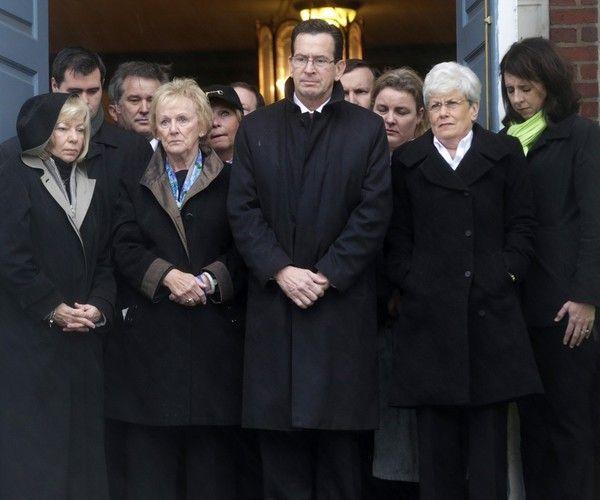
Then in December, a quiet morning for the governor filled with budget talks and holiday planning turned into indescribable horror when 20 young children and six adults were massacred at Sandy Hook Elementary School in Newtown.
After Malloy arrived on the scene, the typically stern-faced, buttoned-down former prosecutor took it upon himself to notify the families who had been awaiting news in a nearby firehouse that their loved ones were not coming back.
The moment served as an extreme example of Malloy’s willingness to make painful executive decisions and absorb the consequences -- a trait for which his defenders invariably praise him.
But after enacting the largest package of tax increases in state history and facing another projected budget shortfall of about $365 million, the first-term Democrat will need to harness more than his own assertiveness in order to fend off a difficult re-election challenge that is expected next year.
Among the looming political obstacles for Malloy is this: Disaster aftermaths -- and other circumstances outside his control -- may well supersede his pre-existing agenda.
Kids' Lives Matter Too
In a Corner of Ohio, Lessons of 2016
2016 Presidential Election Could Decide State Legislative Races
McCaskill Says No to Run for Missouri Governor
But the 57-year-old governor does not give the impression of someone easily frazzled by such anxieties. Asked on Friday whether he was concerned that any new initiatives he hoped to enact over the next two years might be eclipsed by drawn-out debates over gun control and the state’s fiscal tribulations, Malloy offered a touch of Chris Christie-esque pugnacity in dismissing the question’s premise.
“Yeah, you’re new here,” he told a reporter. “I don’t stop. We have big initiatives.”
After mounting an unsuccessful gubernatorial run in 2006 and having served for 14 years as the mayor of Stamford -- Connecticut’s fourth largest city -- Malloy ascended to the Governor’s Residence in early 2011 after eking out a victory (less than 7,000) votes over Republican Tom Foley, a former U.S. ambassador to Ireland.
Upon entering office, Malloy faced what was then the nation’s largest budget gap (as calculated on the basis of population). Calling for “shared sacrifice,” he trimmed spending significantly and pushed through the state legislature the massive package of tax hikes, which faced significant resistance and contributed to his declining popularity among voters.
In his second year in office, Malloy pushed through a sweeping education reform bill, which he signed into law last May. Last fall, the Democrat unveiled a comprehensive energy infrastructure plan for the state, which includes an expanded focus on natural gas use. Several major transportation initiatives are on the agenda this year.
But Connecticut’s fiscal woes continue to pose his most daunting challenge.
In asserting the effectiveness of his leadership, Malloy’s defenders often cite the financial mess he inherited from the previous Republican administration, and argue that the state is now on the right track.
“Most people, I think, would agree with that assessment,” said Malloy spokesperson Andrew Doba. “Do we have a ways to go? Yeah, we have a deficit this year, which we will address. Without blaming anyone, it would be naïve to think we’re not still dealing with decisions that were made before we got here.”
All but one poll conducted late last year have shown Malloy’s approval rating below 50 percent, and national Republicans see him as one of their most inviting gubernatorial targets in 2014.
At the Republican National Committee’s winter meeting in Charlotte, N.C., last week, newly re-elected RNC Chairman Reince Priebus emphasized that the GOP must compete in every state, and Republican leaders are particularly eager to regain the foothold in New England that they have by and large lost in recent years.
“The Malloy administration has failed the people of Connecticut across the board, and Gov. Malloy's absolutely one of the most vulnerable Democratic governors in the country as we look ahead to the midterms,” said RNC spokesperson Tim Miller. “Chairman Priebus is committed to competing aggressively in all 50 states, and Connecticut provides a good opportunity for us to add to our 30 governorships and be successful in a state that has recently been controlled by Democrats.”
Malloy has not yet announced whether he plans to run for re-election but is widely expected to do so. Chatter in the halls of the state capitol, however, has suggested that he might be interested in a job in Washington with the Obama administration -- chatter Malloy has dismissed out of hand.
Unlike his more prominent gubernatorial colleagues in the tri-state area -- New York Democrat Andrew Cuomo and New Jersey Republican Chris Christie -- Malloy is not thought to harbor presidential ambitions, at least not in 2016.
Foley has already said publicly that he will seek a rematch with Malloy in two years, but the former ambassador may have to survive a crowded primary fight to make it to the general election. Among other state Republicans mentioned as potential challengers to the incumbent are House Republican Leader Larry Cafero, Senate Minority Leader John McKinney and former Lt. Gov. Michael Fedele, who lost a close race to Foley in the 2010 GOP gubernatorial primary.
Connecticut Republican Party Chairman Jerry Labriola predicted that Malloy would have no choice but to own the state’s economic problems come 2014 and would be particularly vulnerable without the benefit of a Democratic presidential candidate’s coattails to ride in this blue state.
“His signature initiative is the largest tax increase in the history of Connecticut, and that is no small feat to impose that level of burden on the citizens of Connecticut,” Labriola said. “That’s something he will have to defend. He declared an economic crisis, blamed his predecessors, taxed the hell out of us, and then has been engaged in Soviet-style central planning with wasteful boondoggles.”
Next month, Malloy is expected to make broad recommendations for a new two-year budget. And in March, he will hear a preliminary list of recommendations from a 16-member panel of experts whom he tasked with reviewing state policies on guns, school violence, and mental health.
As he gears up for his expected re-election fight, Malloy appears set on echoing the carefully optimistic tone that President Obama employed on the campaign trail last fall.
“We’re not where we want to be,” Malloy said of Connecticut’s economy last week. “But we’re making progress.”

A RealClear Thanksgiving: Investing in a Better Future
David DesRosiers • RealClearPolitics
Trump’s Newsom Problem: Antagonist-in-Chief
Carolina Lumetta • RealClearPolitics
America’s Free Spirit
John Maxwell Hamilton • RealClearPolitics
The GOP Majority Should Go Out in Glory
Daniel McCarthy • RealClearPolitics
Republican Majorities Could Return Sooner Than Expected
J.T. Young • RealClearPolitics
The Danger Before the Attack
Leslie J. Sullivan • RealClearPolitics
RCP Today
Top stories on RealClearPolitics
The Takeaway
Polling intelligence and analysis delivered to your inbox
World News
Featuring the latest world news
Policy
Featuring the latest policy news
Support Our Mission
As part of RealClearPolitics, authors aim to provide balanced, non-partisan analysis by presenting top reporting and commentary from all sides of the political spectrum.
Trusted by policymakers and citizens alike since 2000