
The Danger Before the Attack
What Washington Owes the Public in the Iran War
Published Nov. 23, 2026 • Read time: 7m
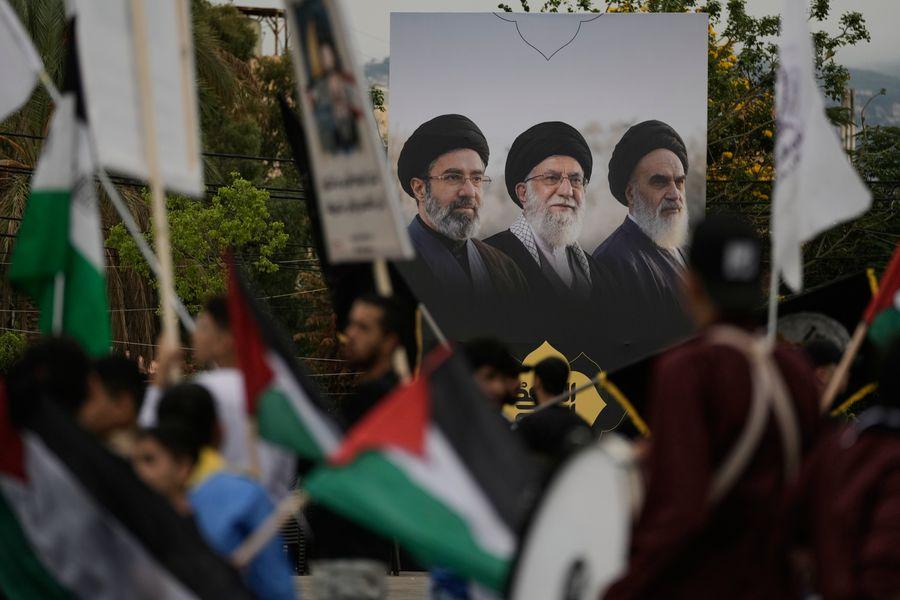
Pearl Harbor and September 11 united Americans after catastrophe. The Iran campaign asks them to judge whether sustained force can prevent one. Partisan loyalty helps explain the divide over Iran, but Americans across party lines are questioning whether the war should continue. Washington should state what it expects further military action to accomplish and how it will verify that Iran’s ability to build a nuclear weapon has been reduced.
The United States need not wait for a nuclear attack before acting against a grave danger. But it cannot ask Americans to support an open-ended war on the strength of a danger alone. After more than eight months of conflict with Iran, the Trump administration owes the country a public account of what its campaign has achieved, what remains beyond its ability to verify, and what further fighting would accomplish. The case for preventing an Iranian bomb is strong. The case for continuing this war depends on whether continued force can achieve that end.
That distinction is especially urgent as Congress revisits the war after the midterm elections. A November Reuters/Ipsos poll found that 71% of Americans, including 93% of Democrats and 51% of Republicans, wanted Congress to pass legislation ending the conflict. Party loyalty helps explain the gap, but it cannot explain away opposition that extends into the president’s own party. The administration will have to answer doubts about the campaign itself.
Why the public rally is different
Over Here: Competence Amid Repulsive Politics
We're Not a Poor Country, Donald
What America Should Learn from the Attack in Brussels
Anti-Muslim Rhetoric Profits the Enemy
Before Pearl Harbor, many Americans wanted Nazi Germany defeated without sending American soldiers into another European war. That position lost its force after Japan attacked and Germany declared war on the United States. After September 11, the public likewise knew the country had been attacked and had a clear initial purpose: to disrupt al-Qaeda and deny it a safe haven. A November 2001 Gallup poll found 92% support for military action in Afghanistan, including 90% among Democrats and 96% among Republicans. That agreement did not settle what the United States should do in Afghanistan for the next 20 years.
Neither precedent tells us that Washington must wait for catastrophe. The 9/11 Commission documented what can happen when warnings go unheeded, or agencies fail to act on them. But an attack can settle a question that preventive action leaves open: whether the danger warrants fighting now. In Iran’s case, Americans have to judge both the risk of waiting and the chances that continued fighting will actually reduce that risk. A convincing account of the threat answers only the first question.
What the campaign has yet to prove
Iran’s nuclear record gives Washington ample reason for concern. The 2015 nuclear deal placed verifiable constraints on the program for a time. It did not settle questions about Iran’s missiles or regional conduct. After the United States withdrew in 2018, Iran moved away from its nuclear commitments. That history cuts both ways. Diplomacy did not permanently settle the nuclear dispute, but verified limits were possible. The United States should judge military pressure partly by whether it can secure stronger and more durable limits than diplomacy did before.
The immediate test is Iran’s enriched uranium. The International Atomic Energy Agency’s September report put its last estimate, for June 2025, at roughly 441 kilograms enriched up to 60%. That was an estimate for a specific date, not an inventory of what Iran has today. It gave good reason to worry that Tehran wanted the option of building a weapon quickly; it did not show that its leaders had ordered a bomb built. As of Nov. 13, according to the Associated Press, inspectors still had not been allowed into sites damaged in the June 2025 strikes, and Tehran said it would not discuss resuming monitoring while under threat of further attacks.
An airstrike can damage a facility without telling us what happened to the material associated with it. That gap is central to judging the war. Military pressure could give Washington bargaining power, but continued strikes could also leave inspectors shut out. The administration should explain how it expects to move from pressure to verification, including what reciprocal steps it would consider in exchange for credible access and accounting. Without a plausible answer, battlefield damage is an incomplete measure of progress. The distinction matters when officials say the program has been set back. Damage to a facility may buy time, but the value of that time depends on what Washington can do with it. A pause that gives negotiators a chance to restore inspections offers a benefit the public can understand. A pause after which no one can say where the material went leaves much of the original uncertainty in place.
The costs warrant the same precision. The Congressional Budget Office estimated about $38 billion in additional military costs through Aug. 1, above ordinary peacetime operations. Reuters reported on Oct. 28 that a later Pentagon estimate exceeded $47 billion, including projected munitions replacement costs. The estimates cover different periods and use different accounting methods. The American military toll has been far lower than in the longer wars that followed Pearl Harbor and September 11, but those wars offer a poor benchmark for deciding what another month in Iran would buy. Congress should weigh the additional costs and risks of continuing, including civilian harm and escalation, against the nuclear gains the administration can reasonably show.
What Washington should tell Congress
The administration should say plainly whether it seeks to delay Iran’s program or to secure a settlement that keeps it constrained over time. A delay can have real value if the United States uses the time it buys to reach an enforceable agreement. It cannot be presented as a lasting solution. If the goal is an agreement, the administration should tell Congress how inspectors would regain access, account for the stockpile, verify any removal or dilution, and detect a renewed effort to enrich uranium beyond agreed limits. It should also say what happens if Iran refuses access, and what evidence would make Washington reconsider whether further fighting is worth the cost.
Some of the evidence must be presented in classified briefings. The public can still be told which objectives have been met, which judgments depend on intelligence assessments, and which facts inspectors have independently verified. Serious disagreements might remain over whether the risk justifies continued force. At least Congress and the public would have a common set of claims to examine, and a basis for deciding whether to back another phase of the campaign. Congress should also ask the administration to explain in advance how it would interpret a mixed result. If inspectors gain access to one site but cannot account for material believed to be elsewhere, that is progress, but it is not an inventory. Regular reports should make such distinctions in plain language. They would give lawmakers a way to judge whether the campaign is moving toward its stated purpose or whether the strategy needs to change.
Pearl Harbor and September 11 explain why Americans rally after an attack. They cannot supply the consent that a preventive war must earn for itself. Washington should ask Americans to judge this campaign by whether Iran is less able to build a nuclear weapon and whether that reduction can be verified and sustained. If the administration cannot yet make that case, its first obligation is to say what it still does not know.
Support Our Mission
The Internet provides an endless stream of content. Not all of it is worth your time. That's why, every day, RealClearPolitics curates the most essential news and information—from all sides and across mediums. The links, videos, and podcasts curated here are the product of human judgment, not algorithms or AI. Please help power our mission of presenting a thoughtful, balanced public discourse through a tax-deductible donation.
Would you consider supporting us today?
The Danger Before the Attack
Leslie J. Sullivan • RealClearPolitics
Jon Finer’s Old and Dangerous ‘New Approach’ to Israel
Peter Berkowitz • RealClearPolitics
The President Deserves Better
John Ullyot • RealClearPolitics
Congress Doesn’t Need Another Blame Game. It Needs To Find What’s Broken
Jarrod Bernstein • RealClearPolitics
Democrats Won the Midterms. Common Sense Won, Too
Jordanne Kemper • RealClearPolitics
The 120th Congress Shapes Up
Carolina Lumetta • RealClearPolitics
RCP Today
Top stories on RealClearPolitics
The Takeaway
Polling intelligence and analysis delivered to your inbox
World News
Featuring the latest world news
Policy
Featuring the latest policy news
Support Our Mission
As part of RealClearPolitics, authors aim to provide balanced, non-partisan analysis by presenting top reporting and commentary from all sides of the political spectrum.
Trusted by policymakers and citizens alike since 2000