Election 2026 South Carolina Senate
The $12 Billion Illusion: Why GOP Losses Demand a Different Investment
COMMENTARY
Published Nov. 4, 2026 • Read time: 5m
Last night’s results were a receipt, not a mystery.
Democrats took control of both the House and the Senate.
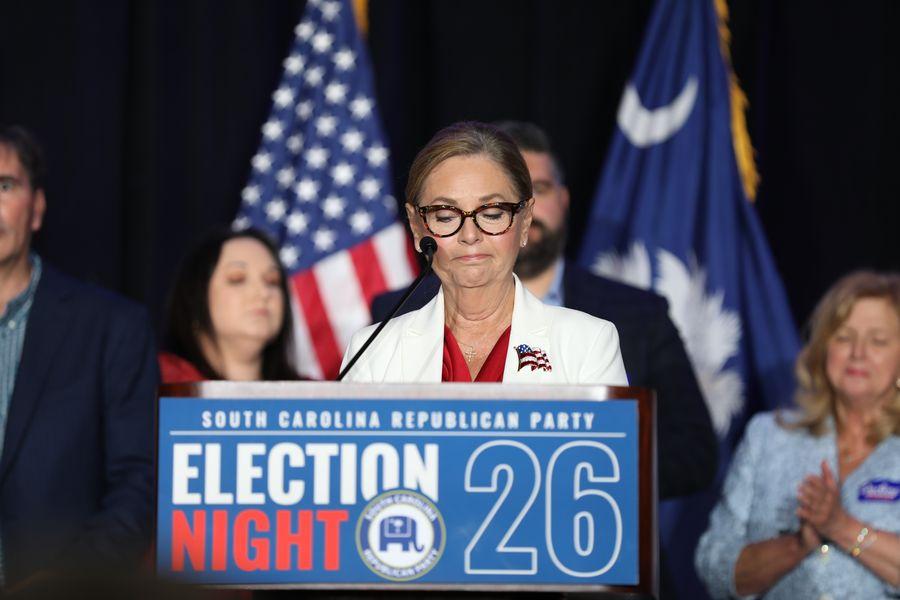
They flipped the Texas Senate seat (James Talarico over Ken Paxton) and the governor’s office, won a Kansas Senate seat for the first time since 1932, and took South Carolina with Annie Andrews defeating Darline Graham Nordone.
Iowa, North Carolina (Roy Cooper over Trump-backed Michael Whatley), Ohio, and others followed.
Trump’s hand-picked candidates lost in places long treated as safe. Yes, voters proved clear unhappiness over prices and the direction of the country.
Conservative donors spent heavily to prevent exactly this.
OpenSecrets projects roughly $11.9 billion in total federal spending for the cycle – the most expensive midterm on record – while AdImpact tracked more than $11 billion in advertising and reservations. Outside groups and dark money poured in billions more.
Texas Senate advertising alone ran into the hundreds of millions.
The money moved through the usual channels: media buyers, consultants, pollsters, and the permanent campaign industry. It produced temporary name recognition and permanent consultant invoices. It left weaker communities and no durable habit of consistent voting.
The predictable reaction has already begun.
The right will blame poor candidates. Paxton’s scandals, Graham’s status as a family stand-in, and other shortcomings will be cited as the decisive factors in race after race. “Candidates matter” is what major headlines will show. “A better crop of candidates would have helped” will enter group chats of donors across America.
Portman-Strickland Senate Race Finally Set in Ohio
Portman Wastes No Time Attacking Strickland
Strickland Skirts Primary Debates in Ohio Senate Race
Senate Says Climate Change Is Real
But treating candidate quality as the primary explanation is a red herring that guarantees we will repeat the same cycle.
The left does not lose elections because its candidates are strong. It wins because it has spent years building permanent assets that deliver voters who turn out for values and fundamentals regardless of who is on the ballot.
This year proved we have one of the most emotionally driven voting blocks in our history. And it is a behavior those on the right need to come to understand.
The left focuses on building the habit of voting. And a habit of staying true to one’s values, regardless of how radical it may seem.
The left has spent decades investing in something far more powerful than individual political campaigns: permanent, sophisticated grassroots infrastructure designed to influence American culture, communities, and elections for generations.
Organizations and initiatives such as the Democracy Alliance, the former Arabella Advisors network, the story laid out in the Colorado Blueprint, and the organizing model pioneered by Obama for America demonstrate the power of sustained investment in local leadership, community relationships, sophisticated data systems, and year-round engagement.
Their success is rooted in a fundamental understanding: Lasting influence is built through trusted relationships, not simply political advertisements or election-year spending. Their messengers are neighbors, parents, and respected community leaders who are already embedded in the communities they seek to reach.
This infrastructure does not disappear when an election ends or a candidate loses. It remains in place, building relationships, developing leaders, expanding its reach, and preparing for the next opportunity.
The lesson for donors is clear: Campaigns come and go. Infrastructure compounds. When individual candidates struggle, established grassroots networks provide continuity and resilience. When candidates succeed, those same networks can amplify their momentum.
The greatest long-term opportunity is not simply funding the next election cycle. It is investing in the enduring institutions, leadership, and relationships capable of shaping America’s future well beyond any single election.
Abdul El-Sayed’s win in Michigan is a recent case in point.
A progressive closely associated with Alexandria Ocasio-Cortez and Bernie Sanders, the first Muslim elected to the Senate, and the target of a last-minute endorsement of his Republican opponent by his own primary rival, he still won. Democratic voters showed up for their values and fundamentals. On our side, the same pattern of disappointment is routinely diagnosed as a candidate problem.
Our side has largely done the opposite.
We fund episodic, transactional politics optimized for media buys and consultant revenue.
We light up for a few months every two years, spend at industrial scale on broadcast and digital ads (often $100 - $500 per incremental vote in competitive markets), then go dark. Cost-per-vote calculations for entire cycles have run around $90 overall in recent midterms; the marginal cost in the places that decide control is far higher, with early 2028 fundraising already circulating four-figure cost-per-incremental-vote estimates.
Between elections, that infrastructure dissolves.
The left has invested in permanent infrastructure that compounds over time, while the right too often funds temporary campaigns that disappear after Election Day. Relationships fade, voter engagement declines, and each election cycle begins with the costly task of rebuilding what should already exist.
The consequences are clear. The left has cultivated voters who consistently mobilize around shared values, regardless of the candidate. The right remains too dependent on individual candidates to inspire participation, mistaking an infrastructure failure for a candidate problem.
What we need is permanent grassroots capacity: trusted community networks, year-round engagement, local leadership development, and sustainable funding that survives election cycles. Stronger candidates will emerge from stronger communities, but we cannot wait for the perfect candidate to build the infrastructure necessary for lasting success.
Campaigns win elections. Permanent infrastructure builds movements capable of winning for generations.
Last night’s losses will produce the usual postmortems: better messaging, different candidates, more spending next time.
But the underlying failure is the continued decision to pour capital into an industry optimized for short-term consultant revenue rather than durable communities, incubating real homegrown leaders, and consistent voters.
Billions were spent in 2026. The permanent results are negligible.
The alternative is clear. Will we wake up and invest in building year-round capacity now? Or will we wait around for a year and then burn a bunch of money yet again in service to our nation’s slide toward El-Sayed and AOC?
America’s conservative donor class, this is a wake-up call. The shellacking is the signal, and permanent infrastructure is the response.
Support Our Mission
The Internet provides an endless stream of content. Not all of it is worth your time. That's why, every day, RealClearPolitics curates the most essential news and information—from all sides and across mediums. The links, videos, and podcasts curated here are the product of human judgment, not algorithms or AI. Please help power our mission of presenting a thoughtful, balanced public discourse through a tax-deductible donation.
Would you consider supporting us today?

A RealClear Thanksgiving: Investing in a Better Future
David DesRosiers • RealClearPolitics
Trump’s Newsom Problem: Antagonist-in-Chief
Carolina Lumetta • RealClearPolitics
America’s Free Spirit
John Maxwell Hamilton • RealClearPolitics
The GOP Majority Should Go Out in Glory
Daniel McCarthy • RealClearPolitics
Republican Majorities Could Return Sooner Than Expected
J.T. Young • RealClearPolitics
The Danger Before the Attack
Leslie J. Sullivan • RealClearPolitics
RCP Today
Top stories on RealClearPolitics
The Takeaway
Polling intelligence and analysis delivered to your inbox
World News
Featuring the latest world news
Policy
Featuring the latest policy news
Support Our Mission
As part of RealClearPolitics, authors aim to provide balanced, non-partisan analysis by presenting top reporting and commentary from all sides of the political spectrum.
Trusted by policymakers and citizens alike since 2000