
Strickland Skirts Primary Debates in Ohio Senate Race
Published March 10, 2016 • Read time: 6m
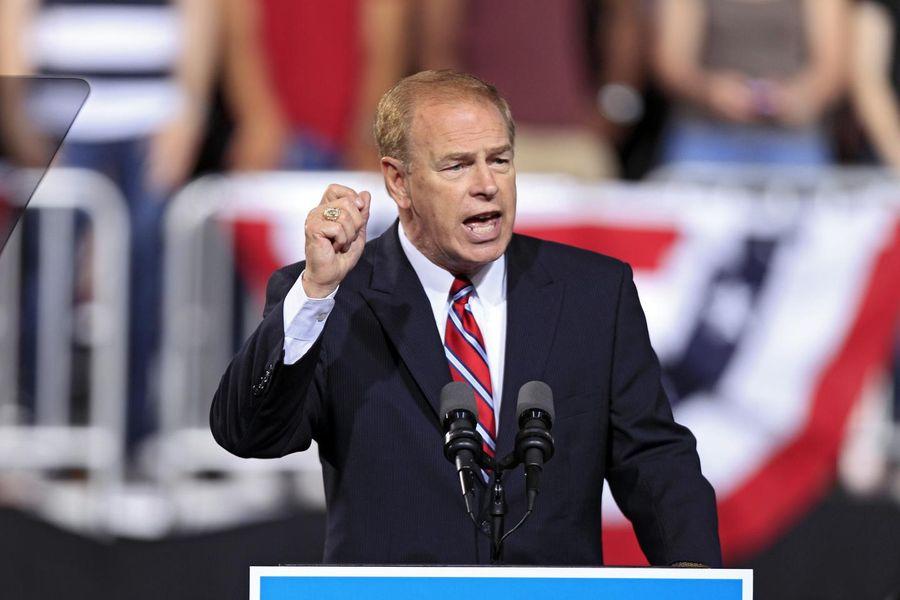
Former Ohio Gov. Ted Strickland has employed an age-old front-runner strategy in his bid to become his state’s Democratic nominee for senator: Don’t debate your opponent.
P.G. Sittenfeld, the energetic Cincinnati City Council member running against Strickland, sent a steady barrage of requests and challenges for debates for 10 months, but Strickland never budged on his position, refusing a number of times to spar with his rival.
Tuesday’s primary will determine whether Strickland’s strategy of looking past the primary and focusing on incumbent Republican Sen. Rob Portman in November will pay dividends. The general election is expected to be one of the top Senate races as Democrats try to win back control of the upper chamber.
The Strickland calculus is simple: As a former governor, he enjoys nearly universal name recognition in the state, while Sittenfeld, who has spent four years on the Cincinnati council, is not well known elsewhere in Ohio. To appear together on a debate stage would have provided Sittenfeld with a spotlight to increase his name ID, lessening Strickland’s strong advantage. A recent Quinnipiac poll showed the former governor with 42 percent/31 percent favorability rating with only a quarter of Ohioans holding no opinion of him. For Sittenfeld, 85 percent of voters – including 80 percent of Democrats – hadn’t heard enough to form an opinion.
“This is not somebody who had any profile outside of his home city and I think the Strickland campaign felt that anything they did with Sittenfeld just ... shined Strickland’s light on Sittenfeld,” said David Niven, a professor of political science at the University of Cincinnati and a former speechwriter for Strickland.
Tim Burke, the chairman of the Hamilton County Democratic Party – which includes Cincinnati – called it a “tactical decision” for the front-runner to avoid debates.
“I think, had there been debates, that P.G. would have matched up very well with Ted and that may be exactly why Ted chose not to debate him, that he didn’t want to give him that kind of forum,” said Burke, who cast an early vote for Sittenfeld. “It would have helped P.G., I don’t think there’s any question about that. I think it would have given him more attention.”
Despite the lack of public debates, the candidates did square off in an hour-and-a-half endorsement interview with the Cleveland Plain Dealer last month, which also featured a third candidate, occupational therapist Kelli Prather.
Sittenfeld went after his chief opponent early in that forum for avoiding debates, calling his stance “imperial” and saying Strickland’s decision “takes Democratic primary voters for granted.”
“I don’t think that anybody that wants to run to be the Democratic nominee for the United States Senate should shy away from standing side by side with your opponents and articulating differences on the issues that you have there,” Sittenfeld said.
Strickland responded by saying he isn’t a “ghost candidate,” or hiding from the campaign trail, but that voters would decide on March 15 and he would accept their decision.
“I just haven’t given my opponent, P.G. Sittenfeld, the platform that quite frankly I don’t think he’s earned through his own effort and work,” he said.
Ultimately, the Plain Dealer endorsed Sittenfeld, citing the lack of debates as one of the reasons. Strickland faced pressure from other newspapers across the state to accept his opponent’s challenge. The Toledo Blade, Akron Beacon Journal, Marietta Times, Cannon Repository and Plain Dealer all issued editorials calling for debates, and the Beacon Journal joined Cleveland’s paper in endorsing the city councilman.
Sittenfeld’s campaign blasted out emails every time one of those editorials was published, and tried other tactics to draw attention to Strickland’s stance on debates. During a debate at the City Club in Cleveland, which Strickland didn’t attend, Sittenfeld used an empty chair to highlight the former governor’s absence when talking about gun control, an issue the challenger has made central to his campaign.
Some Sittenfeld supporters also tried to put pressure on the better-known candidate. Former Ohio Gov. Richard Celeste, who ran the state for two terms in the 1980s and early ’90s, endorsed Sittenfeld and said he was “disappointed” in the lack of debates. He said he disagreed with the notion that primary debates fracture the party or bleed resources that should be saved for November.
“I believe that robust primaries with robust debates are great for the political process and great for all our people,” he said in February when announcing his endorsement. “Frankly, I’m disappointed that the Ohio Democratic Party hasn’t sponsored debates to help Ohio Democrats know their candidates and make wise choices."
Brian Wright, a Democratic strategist in the state unaffiliated with either campaign, gave the opposite assessment: He said Strickland’s campaign was wise to avoid wasting valuable resources on a primary he’s likely to win, saving his focus instead for November.
“Resources are tight and you really have to make a rational, smart decision about where to use them, and focusing on Rob Portman, who is the real challenger, is a good move,” Wright told RealClearPolitics. “What you see in his campaign is they’re just keeping a more realistic picture of what the landscape is, that this is a Portman-Strickland race and not a Strickland-P.G. Sittenfeld race.”
Dale Butland, a spokesperson for Sittenfeld’s campaign, said that Strickland’s front-runner strategy of avoiding debates might have paid off in a normal year, but predicted that the former governor would pay a price for it in an election cycle where voters have voiced a desire for outsiders and new voices.
“I’m not sure it’s a good strategy this year when I think people are fed up with politics as usual,” Butland told RCP. “I think they’re fed up with the imperial attitude that Gov. Strickland’s position reflects.”
He added that Sittenfeld’s campaign has launched TV ads in the state’s main media markets to boost his name ID, and said internal indicators suggest he’ll outperform public polls, but declined to elaborate beyond saying he had “evidence that there has been movement.”
Burke, who voted for Sittenfeld, said he would have no problem backing Strickland if he’s the nominee, and said he thinks state Democrats will rally around whoever prevails Tuesday. Regardless of that outcome, he praised the campaign Sittenfeld has run to this point.
“He has made a hell of a lot of friends, he’s impressed an awful lot of people – probably pissed off some people as well by staying in the race,” Burke said. “But P.G. is going to be around this Democratic Party for a very long time, and what happens on Tuesday, even if he should not be successful, this is not going to be the last time we hear of P.G. Sittenfeld, he’s a terrific young candidate."






RCP Today
Top stories on RealClearPolitics
The Takeaway
Polling intelligence and analysis delivered to your inbox
World News
Featuring the latest world news
Policy
Featuring the latest policy news
Support Our Mission
As part of RealClearPolitics, authors aim to provide balanced, non-partisan analysis by presenting top reporting and commentary from all sides of the political spectrum.
Trusted by policymakers and citizens alike since 2000