
Obama Says He's Hopeful About Budget Deal
Published Dec. 21, 2012 • Read time: 9m
President Obama said Friday evening that a small rescue package or series of bills may be necessary after Christmas to keep middle-class and unemployed Americans from being harmed after Jan. 1 as spending cuts and tax hikes set to impact everyone take effect automatically.
The larger, $4 trillion deficit-cutting effort that hit yet another snag in the House Thursday night remained his fiscal goal, the president said. But referring to himself as a “hopeless optimist,” Obama suggested that 2012 might end in deeply partisan divisions.
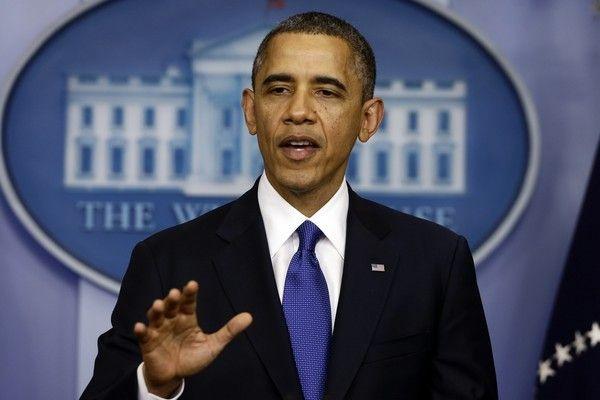
In a seven-minute statement in the White House briefing room, Obama said he spoke with House Speaker John Boehner and met with Senate Majority Leader Harry Reid to discuss next steps. He described the fallback plan as an effort to pass, perhaps in a series of measures, elements of a fiscal package that attract bipartisan agreement.
He said those elements can include: extending middle class tax cuts for families earning less than $250,000; extending unemployment insurance benefits, set to expire for as many as 2 million people at the end of the year; and what he called provisions that lay “the groundwork for further work on both growth and deficit reduction.”
Obama said he believed the fallback proposal was “an achievable goal” that can be enacted after Christmas.
Shortly after his statement, the president and his family flew to Hawaii for the holidays. He originally hoped to return to Washington on Jan. 6, and the president can sign legislation when away from the White House, but it was widely expected that he would return before the end of the year.
Gavin Newsom's Misguided Redistricting Initiative
A Warning Against the Overuse of Sanctions
Open The Books on the California State Checkbook
Senate Passes Bill Addressing Heroin, Opioid Crisis
In a statement Friday, Reid said the fallback Democrats have in mind would include averting the $1 trillion across-the-board discretionary spending cuts known as sequestration.
But the president did not explicitly mention other expiring provisions of the so-called fiscal cliff: a remedy for the alternative minimum tax, set to hit middle-class families in the new year; the 2 percent payroll tax holiday, set to disappear from all workers’ paychecks Jan. 1; and an adjustment to prevent a steep reduction in reimbursement to physicians under Medicare, which Congress has repeatedly dodged with annual fixes.
The president also said nothing about raising the nation’s borrowing authority, which has been a point of contention with Republicans and a key White House demand as a prerequisite for any signature by the president. The Treasury Department believes the nation will need to seek approval from Congress to borrow more to meet U.S. obligations by next spring.
The president, appearing relaxed and striking an upbeat note, called the interregnum over Christmas a period to “cool off” and regroup.
“As we leave town for a few days to be with our families for the holidays, I hope it gives everybody some perspective,” he said. “Everybody can cool off; everybody can drink some eggnog, have some Christmas cookies, sing some Christmas carols, enjoy the company of loved ones.”
Boehner spokesman Brendan Buck, responding to the president’s comments, said the speaker remains hopeful Obama is “finally ready to get serious about averting the fiscal cliff. . . . Speaker Boehner will return to Washington following the holiday, ready to find a solution that can pass both houses of Congress.”
Earlier in day, only hours after fellow party members revolted against his backup plan to avert the fiscal cliff, Boehner said there is a way for those at both ends of Pennsylvania Avenue to agree on a solution. But as for precisely how the deeply divided sides will arrive at that point, the prayerful Boehner said, “God only knows.”
The nation’s leading Republican suffered a humiliating blow Thursday evening when he and his leadership team could not corral enough GOP support for a proposal that would protect current tax rates for 99 percent of Americans, and had to call off a vote scheduled for that night. The impasse jolted lawmakers as well as financial markets and called into question the fate of Boehner’s speakership along with the country’s fiscal stability.
Boehner said the defecting conference members were concerned about voting for any kind of tax increase, and denied that their opposition threatened his leadership post.
“There was a perception created that the vote last night was going to increase taxes. Now, I disagree with that characterization of the bill. But that impression was out there, and we had a number of members who just really didn’t want to be perceived as raising taxes. That was the real issue,” the Ohio congressman told reporters. “They weren’t taking it out on me,” he said, with Majority Leader Eric Cantor standing at his side in solidarity. A day earlier, the pair assured reporters that they would have the votes needed for passage.
“Because of the political divide in the country, because of the divide here in Washington, trying to bridge these differences has been difficult. If this were easy, I guarantee you this would have been done decades before,” Boehner explained. He insisted that he would continue to negotiate with the president to find a solution.
The speaker asked the Senate to take up a House-passed bill that would extend current tax rates for all income earners, restating a recurring theme: We have done our part; now it is up to the upper chamber to finish the job.
“The House has passed a bill to extend all the current tax rates. We did it on Aug. 1. It’s been sitting in the Senate. We passed a bill to replace the sequester. At some point, the United States Senate has to do something,” he said. “What we were trying to do this week was to basically jump-start and try to kick into gear some action by the Senate to avert these tax increases going into effect on January 1st.”
Lawmakers left the Capitol on Friday until further notice, creating more uncertainty in Washington and on Wall Street. Before Obama spoke late Friday, four possible solutions had emerged, all of which pose a challenge to the Republican leader. The House could take up either the president’s proposal of $1.2 trillion in new revenue -- raising taxes to nearly 40 percent on incomes over $400,000 -- and $930 billion in spending cuts, or vote on a Senate bill that would extend current rates on incomes under $250,000. It is unlikely Boehner would allow either plan to come to the floor because, as Thursday evening’s events showed, few Republicans would support it. (The measures could pass with support from all Democrats and some Republicans. One of them, Arizona Rep. Jeff Flake, told RCP he would back the $250,000 threshold because it would allow lawmakers to move on from the tax issue and force the president’s hand on seriously cutting spending.)
Boehner said he was proud of his conference, even though they had weakened his negotiating hand. “They do a great job on behalf of their constituents and, frankly, a great job on behalf of our country,” he said. But the unwillingness of enough of them to budge on rates has raised the question of whether Boehner can win support from the Republican majority for any deal -- or whether he will have to rely on Democrats. A third alternative would be to go over the so-called cliff and determine whether the reaction of the markets and the American people forces a concession on tax rates. Boehner and Cantor, though, have rejected that option.
A fourth possibility is that the president could work out a deal in the Senate with the help of Harry Reid and Republican Leader Mitch McConnell, a savvy strategist who is up for re-election in two years. On the Senate floor Friday, however, the Kentucky lawmaker faulted the opposition for the current predicament. “So Democrats spent all day yesterday defeating a bill that would have made current tax rates permanent for more than 99 percent of Americans -- and they laughed about it. I don’t know if anybody’s looked at a calendar lately, but we’re out of time here, folks,” he said.
McConnell repeated his call for the president to lead. But he also proposed an offer of his own: bring up the House bill extending current rates for all, and allow amendments.
“If Senator Reid has a plan that can get 60 votes in the Senate, break through the disarray in his own caucus and build bipartisan support, offer that as an amendment and then let’s vote,” he said. “And then let’s go to conference with the House of Representatives. They’ve already passed a bill, one that I support, to prevent a tax hike on all Americans and reform the tax code. . . . It's called legislating, folks. It's what Congress used to do.”
Reid, however, dismissed the idea. “I like John Boehner, but gee whiz, I mean this is a pretty big political battering he’s taken,” the Nevada Democrat said on the Senate floor Friday. Instead, he urged Boehner to “bring in the Democrats.”
“What he should do is allow a vote in the House of Representatives on a bipartisan bill. It will pass. Democrats will vote for it, some Republicans will vote for it. That’s what we’re supposed to do. But he’s trying to pass everything with that [GOP] majority that he has that can’t agree on anything among themselves.”
Time, however, may end up pressuring both sides: The clock has ticked down to just 10 days, and the leaders’ schedules do not help. Reid and other Senate colleagues will fly to Hawaii this weekend to attend the funeral of Daniel Inouye. The president’s schedule on Friday was packed with other commitments (including speaking at Inouye’s memorial service in Washington). Later, Obama nominated Massachusetts Sen. John Kerry to replace outgoing Hillary Clinton as secretary of state. He took no questions from pool reporters about the fiscal cliff.

Congress Doesn’t Need Another Blame Game. It Needs To Find What’s Broken
Jarrod Bernstein • RealClearPolitics
Democrats Won the Midterms. Common Sense Won, Too
Jordanne Kemper • RealClearPolitics
The 120th Congress Shapes Up
Carolina Lumetta • RealClearPolitics
Flooding GOP Primaries With Democrats
Robert Natelson • RealClearPolitics
Washington Keeps Rewarding Oracle—Veterans Keep Paying the Price
Darin Gaub • RealClearPolitics
The Seeds of Unrestricted Warfare
John Teichert • RealClearPolitics
RCP Today
Top stories on RealClearPolitics
The Takeaway
Polling intelligence and analysis delivered to your inbox
World News
Featuring the latest world news
Policy
Featuring the latest policy news
Support Our Mission
As part of RealClearPolitics, authors aim to provide balanced, non-partisan analysis by presenting top reporting and commentary from all sides of the political spectrum.
Trusted by policymakers and citizens alike since 2000