
Senate Virus Outbreak
Rethinking the National COVID-19 Strategy
COMMENTARY
Published Jan. 14, 2022 • Read time: 4m
In June, President Biden proudly announced that if you had been vaccinated, you could enjoy the Fourth of July without worry. This optimism was premature. After nearly 500 million doses of coronavirus vaccines have been placed in Americans’ arms, cases have again been surging.
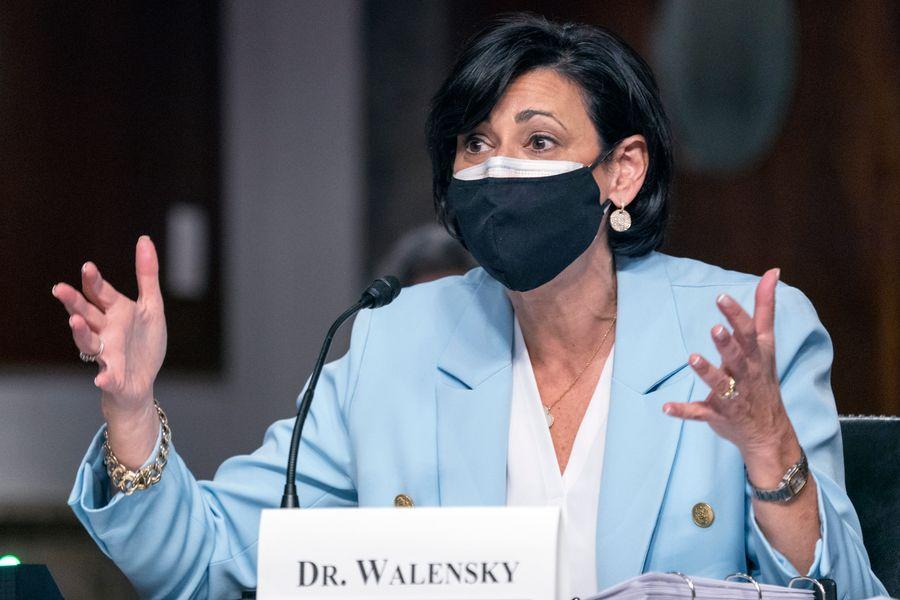
On Jan. 12, more than 1.4 million cases were reported, and the daily average is now more than 738,000. That is 37 times higher than the rate last spring. The current numbers are almost certainly an undercount. People who use at-home tests are often not registered in databases, and millions of others are simply unable to obtain a test. Yet just a few weeks ago, an article in the Journal of the American Medical Association, co-authored by CDC Director Rochelle Walensky, proclaimed, “Now, it is possible to assert that COVID-19 is largely a vaccine-preventable disease.”
Is it really?
The U.S. medical strategy has focused almost exclusively on vaccines. A relentless stream of “breakthrough” infections, new safety concerns, and the continual emergence of new mutations suggest that doubling down on failing strategies not only leads to public frustration. It also inhibits us from exploring alternatives. Doing more of the same in the face of the omicron crisis does not evoke confidence or gain the public’s trust.
Despite the value of vaccinations and boosters at lowering hospitalizations, the assurances that the benefit would be long-term, if not life-long, have not panned out. The systematic clinical trials showing a 95% efficacy rate only evaluated participants two months after their second jab. It soon became apparent that vaccines approved in the U.S. lose their protective edge within three to four months. Pfizer also announced that two doses in younger children are not protective.
President Calls Drug Addiction a Health Problem
Lawmakers Hail New Opioid Rules -- But Call for More
No Opiates for the Masses?
Obamacare's Tax-Time Torment
In studies evaluating booster shots, follow-up times were even shorter. The Moderna and Pfizer booster trials followed participants for only one month and in an influential Israeli booster study, participants were followed for only 12 days. With longer follow-up, more cases have emerged. A recent study from Israel observed that 6.6% of those who had received two doses of vaccine tested positive and even among those who had recently received a third shot, 1.8% had positive tests. Breakthrough infections of the omicron variant appear to be much higher. Instead of questioning the durability of the vaccine response, there has been a move to simply change the definition of “fully vaccinated.” Israel is now giving a fourth shot and there is pressure to do the same in the United States. Yet European regulators are warning that frequent boosters may weaken the body’s immune response.
Vaccines do appear to reduce the severity of the infections and, thus, lower the number hospitalizations. Yet, the explosion in new cases is still causing massive disruption to communities, families, and workplaces. Now, two years into the pandemic, we must acknowledge that social policies, medical therapeutics, and yes – even vaccines – have had only limited success. We support the use of and continued development of safe and effective vaccines. But, it is time to recognize the current vaccines are imperfect tools for preventing infection or transmission, let alone the challenges of new very divergent variants. The vaccines were designed to reduce symptoms, which is an evolving science, not settled science.
Overconfidence in vaccines has consequences. Unvaccinated people have been fired/shunned from bars, restaurants, workplaces, and yes, even family gatherings. Yet these places/events remain hotbeds for breakthrough infections. Workplaces that have achieved nearly universal vaccination are now reporting by far the highest rates of new cases they have seen. We are in trouble, and it is incumbent upon us to build better biologic and behavioral tools to mitigate the threat with renewed urgency.
We must reinvigorate new science that explores all evidence-based pathways to immunity. Natural infection and traditional vaccines, such as inactivated/dead virus, should be properly compared to mRNA and recombinant vaccines; the unvaccinated provide a much-needed control group in this regard. We also need a realistic testing plan that uses measures properly vetted by the regulatory agencies and provide standardized testing protocols globally. Celebrating progress is important. But let’s not celebrate our way to complacency. Evolving problems require creative new thinking.

The Danger Before the Attack
Leslie J. Sullivan • RealClearPolitics
Jon Finer’s Old and Dangerous ‘New Approach’ to Israel
Peter Berkowitz • RealClearPolitics
The President Deserves Better
John Ullyot • RealClearPolitics
Congress Doesn’t Need Another Blame Game. It Needs To Find What’s Broken
Jarrod Bernstein • RealClearPolitics
Democrats Won the Midterms. Common Sense Won, Too
Jordanne Kemper • RealClearPolitics
The 120th Congress Shapes Up
Carolina Lumetta • RealClearPolitics
RCP Today
Top stories on RealClearPolitics
The Takeaway
Polling intelligence and analysis delivered to your inbox
World News
Featuring the latest world news
Policy
Featuring the latest policy news
Support Our Mission
As part of RealClearPolitics, authors aim to provide balanced, non-partisan analysis by presenting top reporting and commentary from all sides of the political spectrum.
Trusted by policymakers and citizens alike since 2000