
Financial Markets Wall Street Twitter Dorsey
Elon Musk and Twitter: How to Rescue Free Speech
COMMENTARY
Published April 20, 2022 • Read time: 7m
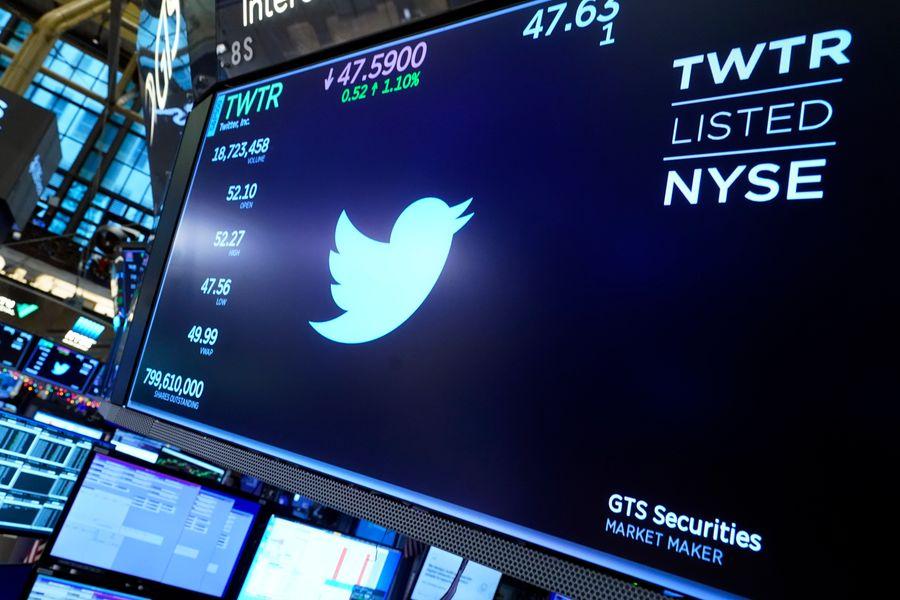
Elon Musk, the tech multi-billionaire, has acquired a 9% stake in Twitter. He is proposing a full acquisition, ostensibly to reform Twitter and better protect free speech and political debate on Big Tech social media. If Musk is sincere in his statements, Americans should say: Go, Elon, go!
Twitter’s decision to block the New York Post and its Hunter Biden “laptop from Hell” story, in the critical days before the 2020 presidential election, is one of the worst media scandals in U.S. history. Twitter’s decision to ban Donald Trump proves that Twitter feels empowered to censor any speaker – no matter how central to a full political debate – even before the content of the banned speech is knowable.
The United States was founded with the Enlightenment era's premise that vigorous (even highly uncomfortable) speech and debate are necessary for self-government. Hence, the First Amendment of the Constitution protecting such speech. Even incorrect political positions are protected, in the belief that the public is ultimately benefited by openly examining (and, presumably, eventually rejecting) these errors.
Some types of speech are blocked even under First Amendment jurisprudence (extreme pornography, for example, or unauthorized disclosure of military secrets.) In a landmark 1969 case, the Supreme Court employed a stringent two-pronged test to determine whether states could curb speech advocating crime or violence. The court ruled that states can only criminalize speech, no matter how vile or incendiary, that is “directed at inciting or producing imminent lawless action and likely to incite or produce such action.” In other words, our national institutions have spent the last 240 years carefully defining exactly where to draw the line, to balance free speech with a civil society.
When Protesters Trample Trump's Rights
Donald Trump Should Read Up on Libel Laws
The Left May Well Get Trump Nominated
Trump Foes Should Stay Off His Stage
Twitter and Big Tech have refused to follow these First Amendment standards, and instead have imposed their own rules, even for an American audience engaging in political speech during election campaigns. Facebook has gone so far as to create its own "Facebook court" to, in effect, overrule the U.S. Supreme Court. Others, like Twitter, block speech as their managers, staff, or black box algorithms may arbitrarily dictate.
Twitter and Big Tech claim that they are free to ban whomever and however they choose. After all, they argue, the First Amendment applies to the government, not to private citizens or private sector companies. While it’s true that the First Amendment, in general, applies to the government, there are two key exceptions where private sector companies are required to protect free political speech. Twitter and its Big Tech brethren increasingly fit both exceptions.
First, there is the “de facto town square” or “company town” rule, as embodied in the Supreme Court case, Marsh v. Alabama. In that case, the high court ruled that a town built and owned by a company could not ban free speech on its privately-owned sidewalks. The company's property had become so equivalent to the public square that First Amendment protections would apply. Similarly, as the social media giants become more and more dominant as the location for our national political debates, they too approach a tipping point where they become our modern public square, and where the Marsh standard applies.
As Justice Kennedy wrote in another major free speech case, Packingham v. North Carolina: “A fundamental principle of the First Amendment is that all persons have access to places where they can speak and listen, and then, after reflection, speak and listen once more. The court has sought to protect the right to speak in this spatial context.”
“While in the past there may have been difficulty in identifying the most important places (in a spatial sense) for the exchange of views,” Kennedy continued, “today the answer is clear. It is cyberspace – the ‘vast democratic forums of the Internet in general, and the social media in particular.’”
Although lower courts have been reluctant to apply Marsh to Big Tech social media, the facts keep evolving. As Twitter and Facebook have become more politically dominant, they have become more appropriate for the Marsh standard. Twitter, especially, has been censoring precisely the kind of political discourse that lawmakers and courts have protected in the past. Accordingly, previous precedents – both in statute and in case law – that treated Big Tech as immune to the First Amendment may no longer hold sway.
Second, speech at private companies can be regulated by the "telephone company, common carrier" exception. A local telephone company, for example, could not simply choose to deny telephone service to all Republicans during an election while providing service to all Democrats, even though the telephone company has private sector stockholders. At least since the regulation of the railroads in the late 1800s, government has applied utility-style regulation under the Commerce Clause, requiring even privately owned companies to serve public interests when normal market competitive forces are too weak to compel proper behavior.
Antitrust authorities in both the U.S. and Europe have repeatedly found the Big Tech social media giants (Facebook/Google/Twitter) to be just these types of anti-competitive, oligopolistic enterprises. Like a telephone company, a Big Tech social media giant is a market-dominant communications network and can be mandated to be a common carrier of all American political debate messages for an American audience, under First Amendment standards.
There is a third option, however, and this is where Elon Musk comes in. The private shareowners of Twitter could simply choose to take the right path for democracy without government mandate. This is Musk's proposal. Even if he is defeated, Twitter and its fellow Big Tech giants might wake up to the issue and fix it themselves.
So what should the media companies do?
The most obvious answer is that, as a minimum, the Big Tech sites should all establish a "free speech zone" on their sites: a place where American users, at least, could access any political speaker for any speech that our nation's laws allow to be made in an American public square. In other words, if Donald Trump or the New York Post could speak in Central Park, they can speak on Twitter. The limitations on speech would only be those established under the centuries of First Amendment jurisprudence, not by a private company's whim. If a speaker does cross a legal line, such as incitements to imminent lawless actions or criminal conspiracies, the Big Tech companies could inform the legal authorities, who would prosecute such speech in the actual courts under actual laws, just as they would for the same speech made in a physical public square.
Let's also agree on some definitions. If the social media giants and their algorithms choose to amplify a message, they are, in effect, expanding and publishing that message, and can be held liable like other publishers. (For example, if Twitter takes my libel against one person, and then blast it to an audience of billions – say to earn extra ad dollars – then Twitter is part of the libel along with me.) Similarly, if the social media giants and their algorithms suppress a message, they are "censoring," and this censorship would not be permitted for political speech that would have been protected in the public square. If the giants merely host communication, so that speakers and listeners have a place to find each other without amplification or suppression, then they are no different than a phone company carrying phone calls. They must host speech protected under the First Amendment, but they are not themselves liable or responsible for the message sent.
For hundreds of years, the “liberal” position has been that free speech and debate should be protected, as a path to truth and human fulfillment. For the last few years, the “progressive” position has been that free speech is destabilizing – and even a form of “violence” – and must be curtailed and controlled. For the good of our nation, the shareholders of Twitter should favor classical liberalism over modern progressivism, with or without Elon Musk.

Congress Doesn’t Need Another Blame Game. It Needs To Find What’s Broken
Jarrod Bernstein • RealClearPolitics
Democrats Won the Midterms. Common Sense Won, Too
Jordanne Kemper • RealClearPolitics
The 120th Congress Shapes Up
Carolina Lumetta • RealClearPolitics
Flooding GOP Primaries With Democrats
Robert Natelson • RealClearPolitics
Washington Keeps Rewarding Oracle—Veterans Keep Paying the Price
Darin Gaub • RealClearPolitics
The Seeds of Unrestricted Warfare
John Teichert • RealClearPolitics
RCP Today
Top stories on RealClearPolitics
The Takeaway
Polling intelligence and analysis delivered to your inbox
World News
Featuring the latest world news
Policy
Featuring the latest policy news
Support Our Mission
As part of RealClearPolitics, authors aim to provide balanced, non-partisan analysis by presenting top reporting and commentary from all sides of the political spectrum.
Trusted by policymakers and citizens alike since 2000