
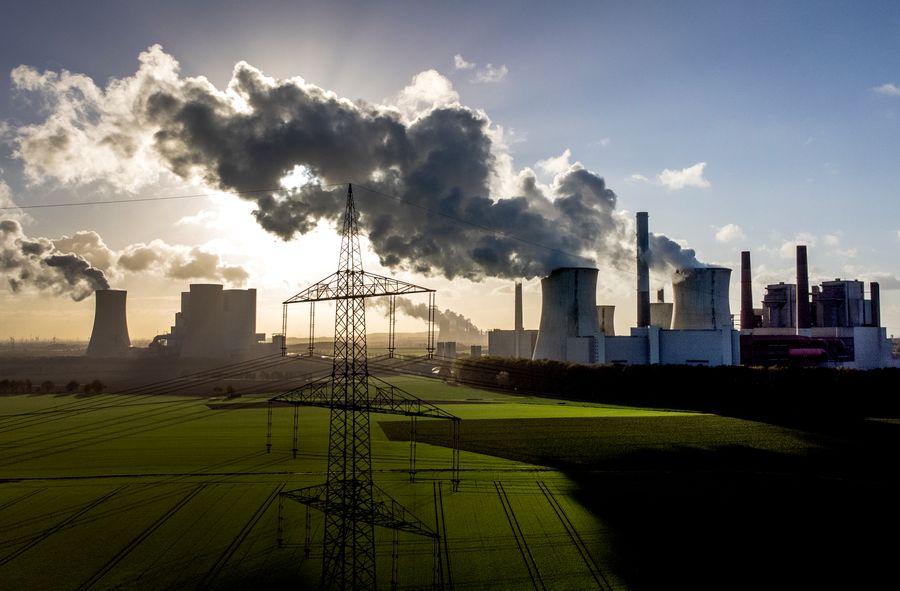
Climate Emissions Grow
The New Rules Needed To Build on Climate Gains
COMMENTARY
Published March 17, 2023 • Read time: 5m
The strategic climate investment President Biden and Congress enacted last summer is driving a heartland manufacturing renaissance with clean energy at its core, positioning the country for dramatic cuts in dangerous greenhouse gas emissions.
The coming weeks are critical for building on these important gains, as the Biden administration takes up new standards to limit carbon pollution from our cars, trucks, and dirty power plants.
That’s the essential next step in making sure the country receives the maximum possible benefit from the clean energy investment – $370 billion over ten years – contained in the Inflation Reduction Act.
It’s off to a remarkably good start. Since Biden signed the act into law last summer, companies have announced at least $64 billion to build or expand renewable power stations or factories to make solar panels, wind turbines, or advanced batteries for electric vehicles.
That investment will create, at last count, more than 53,000 well-paying jobs in red states and blue like Michigan, Ohio, Georgia, and many others.
It will strengthen the domestic supply chain for equipment and materials that are increasingly important to a modern economy. And it will cut the cost of wind and solar equipment – already less, in most cases, than new plants that burn coal or gas – another 20-60%.
A recent Morgan Stanley report lists the soaring clean energy investment as one factor helping to drive “an investment and business reengineering boom” that will boost productivity, improve competitiveness, and drive economic growth.
Senate Heads Toward Approval of Keystone XL Pipeline Bill
GOP Senators Make Case for Keystone; Scott Walker Off To N.H.; FDR on Baseball
New GOP Senators Make Economic Case for Keystone
GOP Stays Stubborn About Climate Change
And by speeding the shift to electric vehicles while generating renewable power on its own soil, the United States can help break its dependence on the fossil fuels that drive climate change, hold our families and businesses hostage to global price shocks beyond our control, and pad the war chests of belligerent petrol states like Russia.
These incentives, as effective as they are, were always intended to complement a suite of new rules and standards to further cut emissions.
The incentives alone have positioned the country to cut its carbon pollution and other greenhouse gas emissions by about 40%, compared to 2005 levels. To avert the worst of the mounting climate crisis, though, Biden has pledged to cut those emissions 50-52%.
Getting the rest of the way there will require rules and standards to limit this dangerous pollution from three sources that, together, account for about half of all U.S. greenhouse gas emissions: cars, trucks, and dirty power plants.
In early April, the Environmental Protection Agency is due to propose new rules to limit tailpipe emissions from new cars, sport utility vehicles, and pickup trucks beginning in model year 2027, and separately, from heavy-duty trucks.
It’s important that the agency stay on task and finalize both rules by year’s end. At a minimum, the standards should ensure that new cars and light trucks emit 75% less carbon pollution by 2030 and put heavy trucks on a much cleaner path.
Electric vehicle incentives in the Inflation Reduction Act will help, by making those vehicles, new and used, more affordable for low-income and middle-income drivers. The incentives include a tax credit of up to $7,500 for new electric cars and light trucks, and $4,000 for used vehicles. And every electric vehicle a carmaker sells will help that manufacturer meet its new fleet-level climate targets.
Later in April, the EPA is expected to propose new rules to limit the carbon pollution from power plants fueled by coal and natural gas. Those emissions can be cut significantly – 90% for most plants – using proven and cost-effective technologies.
The Inflation Reduction Act provides powerful tax incentives to help power companies cut that pollution, or replace heavily-polluting plants with wind and solar power, making it both easier and cheaper to achieve the climate goals the new rules will embody.
The EPA should issue its proposed rule next month, without delay, and finalize that rule by early 2024, to give power companies the certainty they need to make the best use of those incentives and keep national emissions reductions on track.
Under a stringent yet flexible standard, power plants that burn coal or gas can be cleaned up using emissions controls. In many cases, though, it will be more cost effective, especially with the clean energy tax credits, to retire such plants, or run them less often, and replace them with renewable wind and solar power.
What’s important, from a climate perspective, is that this pollution is cut. The standards go hand-in-glove with the tax incentives, providing power companies the predictability they need to do their part in the way that works best for them and their customers.
The clean energy incentives in the Inflation Reduction Act make up the single strongest climate action in the nation’s history. They’ve spawned a manufacturing resurgence with clean energy at its core, creating jobs, strengthening our communities, and making the country more energy secure.
The next several weeks are critical to building on these important gains, as the Biden administration works to put in place complementary rules and standards to help unlock every possible benefit from this strategic clean energy investment.

Democrats Won the Midterms. Common Sense Won, Too
Jordanne Kemper • RealClearPolitics
The 120th Congress Shapes Up
Carolina Lumetta • RealClearPolitics
Flooding GOP Primaries With Democrats
Robert Natelson • RealClearPolitics
Washington Keeps Rewarding Oracle—Veterans Keep Paying the Price
Darin Gaub • RealClearPolitics
The Seeds of Unrestricted Warfare
John Teichert • RealClearPolitics
The Primary System Is Losing the Next Generation
Sean Trende • RealClearPolitics
RCP Today
Top stories on RealClearPolitics
The Takeaway
Polling intelligence and analysis delivered to your inbox
World News
Featuring the latest world news
Policy
Featuring the latest policy news
Support Our Mission
As part of RealClearPolitics, authors aim to provide balanced, non-partisan analysis by presenting top reporting and commentary from all sides of the political spectrum.
Trusted by policymakers and citizens alike since 2000