
Midwestern Energy Boom Seen as Key to Trump's Win
Published May 25, 2017 • Read time: 3m
Still looking to make sense of the 2016 presidential election? You might want to examine the Utica shale formation, which lies beneath key Midwestern and Northeastern states, for hints.
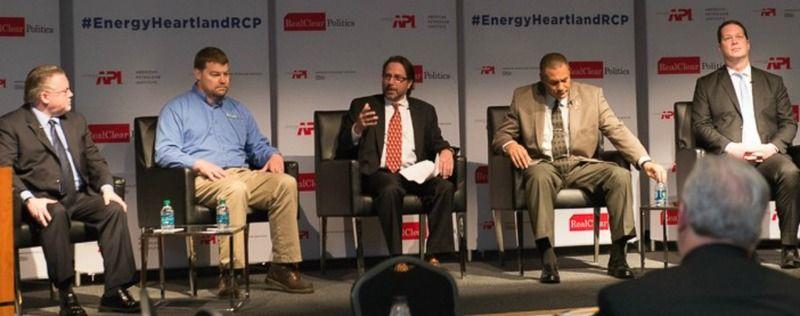
That was one of the underlying messages of a Cleveland event Thursday presented by RealClearPolitics and the American Petroleum Institute. Titled “From Heartland to Homeland: The Energy Renaissance,” it featured a diverse panel of speakers from across Ohio, each weighing in on the impact of the recent energy boom there. The Buckeye State, which favored Donald Trump by 8.1 percentage points in November, sits atop a portion of the world’s second-largest proven natural gas reserve and is ninth-most in coal power usage among the states.
“It’s hard to argue that it didn’t help him,” RCP Senior Elections Analyst Sean Trende, who lives in Columbus, said of the boost the energy boom gave the Republican nominee. RCP Executive Editor Carl Cannon, who moderated the panel discussion, noted that no Republican had ever won the White House without Ohio. He added that even though the same dynamic does not apply to Democrats, the state has long been a valuable metric to any candidate’s ability to connect with the working class.
Hillary Clinton’s losses in Wisconsin, Michigan and Iowa in part demonstrated the damage done by her “putting coal miners out of business” comment on the campaign trail, said ShaleNET Director Dan Schweitzer. Lordstown School District Superintendent Terry Armstrong, a self-described “jobs-based Republican,” emphasized the employment encouraged by Ohio’s embrace of fossil fuels.
Senate Heads Toward Approval of Keystone XL Pipeline Bill
GOP Senators Make Case for Keystone; Scott Walker Off To N.H.; FDR on Baseball
New GOP Senators Make Economic Case for Keystone
GOP Stays Stubborn About Climate Change
President Obama “always had a strong working-class message,” Trende said, noting the 2009 stimulus package and efforts to revive the auto industry. But “Hillary Clinton’s campaign was not well suited to where things are today.”
As API President and CEO Jack Gerard pointed out, shale-related industries are not only huge employers – accounting for 192,000 jobs and more than 14,000 shale-related businesses – they also pay well, too. The average salary in Ohio is $47,000, he said, while the average oil and refinery position pays more than $76,000 annually.
Fossil fuels’ environmental impact, which is among the public’s chief concerns about the energy sector, has a lesser priority in Middle America, said Armstrong. Noting that industry works with local schools in order to make immediate job prospects more realistic, he said Ohioans have “more of a manufacturing mindset.”
The problem that gave the panel members the most pause, though, proved to be one of the most unexpected: drug abuse. In both Ohio and Midwestern states at large, the opioid epidemic was a topic continually brought up by local leaders as one that Washington policymakers fail to adequately respond to.
“Seventy percent couldn’t pass a drug test,” said Schweitzer of Ohio’s potential energy industry workforce, discussing the state’s importing of labor for hydraulic fracturing operations from places such as Texas and Oklahoma. Cleveland Clinic CEO Toby Cosgrove, who has twice been considered for Veterans’ Affairs secretary, reiterated this concern with drug abuse. Careful not to venture into the realm of politics from medicine, he compared the number of names listed on the Vietnam Veterans Memorial – 58,000 – to the 53,000 overdose deaths in the U.S. every year.
“We’re fighting a Vietnam War every year,” he said.
The conversation ended with a reiteration of the benefits of domestic energy production, including its much cheaper cost relative to other options. As this trend relates to politics, it could send Democrats back to the messaging drawing board, and to a time when Bill Clinton and Obama were able to carry these key states in successful election bids.

Jon Finer’s Old and Dangerous ‘New Approach’ to Israel
Peter Berkowitz • RealClearPolitics
The President Deserves Better
John Ullyot • RealClearPolitics
Congress Doesn’t Need Another Blame Game. It Needs To Find What’s Broken
Jarrod Bernstein • RealClearPolitics
Democrats Won the Midterms. Common Sense Won, Too
Jordanne Kemper • RealClearPolitics
The 120th Congress Shapes Up
Carolina Lumetta • RealClearPolitics
Flooding GOP Primaries With Democrats
Robert Natelson • RealClearPolitics
RCP Today
Top stories on RealClearPolitics
The Takeaway
Polling intelligence and analysis delivered to your inbox
World News
Featuring the latest world news
Policy
Featuring the latest policy news
Support Our Mission
As part of RealClearPolitics, authors aim to provide balanced, non-partisan analysis by presenting top reporting and commentary from all sides of the political spectrum.
Trusted by policymakers and citizens alike since 2000