
Cybersecurity Stressed as Key to Robust Energy Sector
Published Sept. 26, 2018 • Read time: 4m
Cybersecurity has become a watchword for the 21st digital economy. But its importance isn’t reserved for the denizens of Silicon Valley. In fact, cybersecurity has become critical for the energy industry, particularly for the safe and effective operation of U.S. oil and gas facilities around the country.
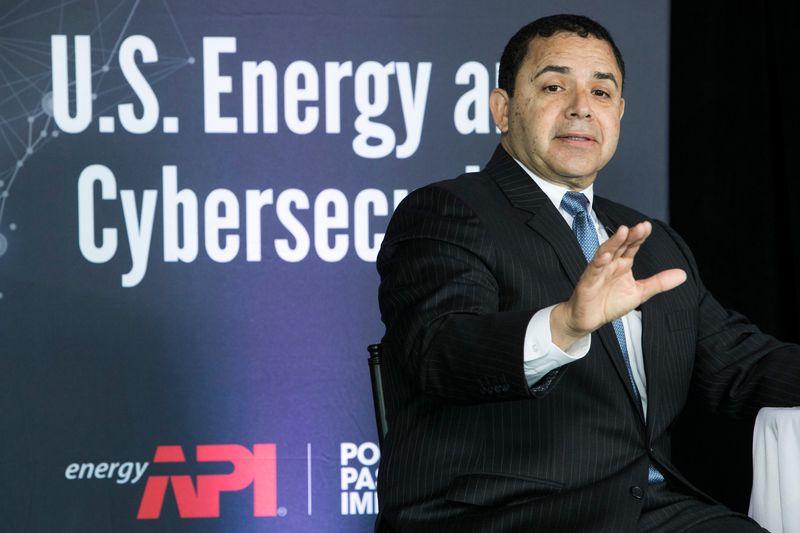
Speaking Wednesday at a Washington event hosted by RealClearPolitics and the American Petroleum Institute, Rep. Henry Cuellar warned that cybersecurity is becoming more important as more things in Americans’ daily lives become electrified. And the threat of cyberattack is very real: Nearly 70 percent of oil and gas firms have already been hacked. The Texas Democrat emphasized that the private sector and government must be 100 percent correct all of the time in defending against attacks; the “bad guys” just have to get it right once to wreak havoc.
This means that job opportunities for better cyber protection are immense. According to Cuellar, there are 300,000 jobs in cybersecurity, in both the private and public sector. Oil and gas will play a major role here, especially as STEM skills become more vital to that sector. Government has a role to play too, especially in helping to train the next generation of workers to counter job losses from baby boomer retirements and automation. The seven-term lawmaker also urged the Federal Energy Regulatory Commission to incentivize grid security.
The good news is that cybersecurity has bipartisan support.
Speaking to the future of the energy sector more broadly, Cuellar highlighted the lifting of the oil export ban as a policy achievement that has been transformative for the energy industry. NAFTA, which President Trump wants to rewrite, is also key to strong energy trade, he said. But Cuellar warned that the U.S. needs to continue working with Mexico. Otherwise, China and other competitors could take advantage of our southern neighbor’s recently deregulated energy sector while the U.S. misses out.
Senate Heads Toward Approval of Keystone XL Pipeline Bill
GOP Senators Make Case for Keystone; Scott Walker Off To N.H.; FDR on Baseball
New GOP Senators Make Economic Case for Keystone
GOP Stays Stubborn About Climate Change
He stressed the geopolitical role that energy exports can play, for instance, by offsetting Russian liquefied natural gas shipments to Europe. Ultimately, however, the U.S. must have a system that allows energy markets to work. And propping up coal and nuclear isn’t the answer, Cuellar cautioned.
During a panel discussion following the congressman’s remarks, Dave McCurdy, president and CEO of the American Gas Association, noted that the United States is producing oil and gas at all-time record levels. As a result, pipeline systems must be redirected because new areas, such as Pennsylvania and Ohio, have become key suppliers. According to McCurdy, securing this energy supply costs the U.S. $81 billion a year, making security crucial to the economy.
Bill Hederman, a senior fellow at the Kleinman Center for Energy Policy at the University of Pennsylvania, emphasized the importance of deterrence in cybersecurity, calling this the “foundation of everything that we are trying to do.” Cyberthreats are large, diverse and rapidly evolving, especially over the past five years, he said. Bad actors have the ability to shut down entire energy systems, such as the U.S. electric power grid. As a result, America must act quickly to catch up. To that end, Hederman recommended supporting start-ups that specialize in advanced encryption.
According to Don Santa, president and CEO of the Interstate Natural Gas Association of America, best security practices require better dialogue and enhanced coordination between the electric and gas sectors. In particular, Santa urged the electricity sector to help support more pipelines, which are vital to transporting fuels used to generate electricity. But the industry must also realize the importance of cybersecurity for these pipelines. Without such measures, he cautioned, the whole system is at risk, adding that information sharing must be a priority for all players.
Kyle Isakower, API’s vice president for regulatory and economic policy, said now is a pivotal time to tighten security as the nation shifts toward using more and more natural gas. He pointed to the power grid and manufacturing as two key sectors that will be using increasing amounts of gas.

The Danger Before the Attack
Leslie J. Sullivan • RealClearPolitics
Jon Finer’s Old and Dangerous ‘New Approach’ to Israel
Peter Berkowitz • RealClearPolitics
The President Deserves Better
John Ullyot • RealClearPolitics
Congress Doesn’t Need Another Blame Game. It Needs To Find What’s Broken
Jarrod Bernstein • RealClearPolitics
Democrats Won the Midterms. Common Sense Won, Too
Jordanne Kemper • RealClearPolitics
The 120th Congress Shapes Up
Carolina Lumetta • RealClearPolitics
RCP Today
Top stories on RealClearPolitics
The Takeaway
Polling intelligence and analysis delivered to your inbox
World News
Featuring the latest world news
Policy
Featuring the latest policy news
Support Our Mission
As part of RealClearPolitics, authors aim to provide balanced, non-partisan analysis by presenting top reporting and commentary from all sides of the political spectrum.
Trusted by policymakers and citizens alike since 2000