
Gas Prices
Analysis: Gas Prices Spell Trouble for Green Dems
Published May 20, 2022 • Read time: 9m
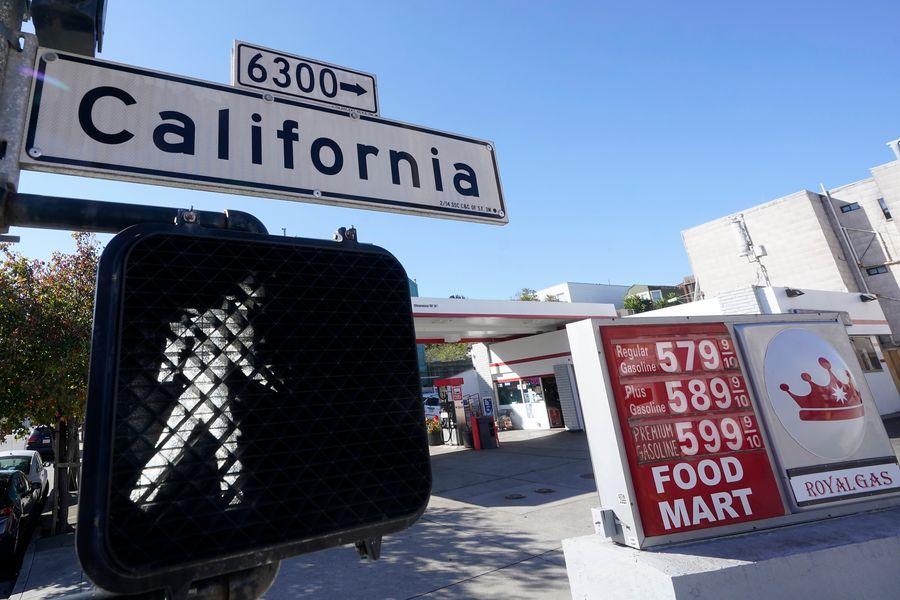
ENCINITAS, Calif. -- Gasoline prices statewide surged 19 cents in one week to top $6 a gallon here Wednesday, with analysts warning that California’s record prices could soar higher still and spread to the rest of the country.
It’s not much better nationwide, where all 50 states for the first time ever hit an average price above $4 a gallon. Democrats know they’re in trouble heading into the midterms and are promising to do everything they can to ease the pain at the pump. So far, it’s more talk than results-driven action.
President Biden weeks ago predicted gas prices would soon ease in response to steps he took, including a decision to release 180 million barrels of oil from the nation’s Strategic Petroleum Reserve over the next six months. But prices have continued to rise, and Democrats haven’t budged off their talking points – blaming the record gas prices on the three Ps: the pandemic, Putin, and price-gouging.
On Thursday, a closely divided House passed a measure targeting profiteering by oil companies – even though most economists, including prominent Democrats, have said there’s little evidence that such practices are behind the higher prices.
Jason Furman, President Obama’s top economic advisor, called the price-gouging measure’s call for fines on corporations for raising prices and price controls on gasoline “genuinely terrible ideas.” Democrats are under pressure to address the soaring prices, but the blame game isn’t doing anything to provide relief at the pump. Instead, it’s handing Republicans easy attack lines ahead of the pivotal congressional midterms.
Senate Heads Toward Approval of Keystone XL Pipeline Bill
GOP Senators Make Case for Keystone; Scott Walker Off To N.H.; FDR on Baseball
New GOP Senators Make Economic Case for Keystone
GOP Stays Stubborn About Climate Change
Republicans for months have assailed Democrats for sticking to their green agenda as oil and gas prices have shot through the roof, including continuing to back carbon fees and higher gas taxes and oppose more drilling. California Democrats, in particular, are now finding themselves in a climate-change box – being forced to defend their “green” records while their constituents complain about paying the highest gas prices of their lives. Skyrocketing gas prices are now costing the average American household an extra $2,000 a year, eating into buying power and eroding wages, Yardeni Research said in an early March analysis.
Typical is the dilemma faced by Mike Levin, an environmental lawyer who represents this sprawling Southern California coastal district. Upon being elected in 2018, Levin immediately joined the House Select Committee on the Climate Crisis and called climate change “among the most important, if not the most important issue of our time.” Levin quickly endorsed progressives’ Green New Deal, which calls for weaning the nation off fossil fuels within a decade and which even Joe Biden has deemed too radical. Levin also pledged to “advocate to explore a carbon tax, cap-and-trade policies,” and “support clean energy and a transition away from fossil fuels.”
The two-term Democrat representing a coastal district straddling southern Orange County and northern San Diego County was one of four vulnerable California Democrats to vote for the price-gouging bill this week. The bill includes language Levin authored directing the Federal Trade Commission to proactively monitor and prevent any fraud or manipulation that may be artificially inflating gas prices.
The other three yes votes are: Reps. Josh Harder, Julia Brownley, and Katie Porter, who was a lead co-sponsor. The bill has no chance of passing the Senate with some on the left arguing it could produce the opposite of the current goal by decreasing oil and gas production, potentially creating supply shortages and rationing.
Florida Democratic Rep. Stephanie Murphy, one of four House Democrats to vote against the bill, complained that her party was passing “irresponsible” messaging bills that have little to no chance of bringing down gas prices. But instead of considering even a temporary hiatus from some gas and carbon taxes, Levin is doubling down on them.
During a town hall meeting earlier this month, he pledged to continue fighting for carbon pricing when a constituent asked him about it. He took the position even though the nonpartisan California Legislative Analyst Office, which serves as a research arm of the California state Senate and Assembly, estimated that such carbon tax policies would raise gas prices by an estimated 63 cents in 2021, increasing to 73 cents per gallon by 2031.
Both Levin and Porter co-sponsored a federal carbon tax and dividend bill last Congress. When RealClearPolitics asked whether Levin still backs that measure with gas prices so high, Levin spokesman Eric Mee defended his boss’s support for the bill. He cited a 2019 Columbia University report that said “revenues generated by any fee would be returned to the taxpayers, particularly low and middle-income earners.”
But the same Columbia University report also said the carbon tax and dividend bill would raise gas prices by as much as 90 cents per gallon by 2030, exporting California’s policies and prices nationwide, and that was before gas prices skyrocketed this year. Of all the fossil fuels, the measure would have the most significant impact on the coal industry, leading to an 81% reduction in coal production by 2030 compared to current policy, according to the same study.
Rep. Ted Deutch, a Florida Democrat, authored the carbon tax and dividend bill and introduced it last year and previously in 2019. Even though it never left committee consideration, the bill attracted some 85 Democratic co-sponsors, including Pennsylvania Democratic Rep. Matt Cartwright, one of Republicans’ top targets in the Northeast.
Cartwright, who represents Wilkes-Barre, Pa., is a member of the Congressional Coal Caucus, a bipartisan group devoted to discussing issues related to the coal industry and strengthening the sector while considering innovative technologies that would decrease its environmental impact. On his official House website, Cartwright tries to strike a balanced position on energy and the environment.
“Congressman Cartwright is fighting for an ‘all-of-the-above’ approach to investing in American energy,” the website states. “He believes in utilizing domestic resources in an environmentally responsible manner, finding newer, better uses for older forms of energy production, and investing in sustainable clean energy technologies to reduce our greenhouse gas emissions.”
But trying to occupy the middle ground in coal-rich Pennsylvania is no easy task. In late April, coal-related interests sued the state of Pennsylvania to block the centerpiece of Gov. Tom Wolf’s plan to fight climate change, a carbon-pricing policy that would impose costs for carbon dioxide emissions from fossil fuel-fired power plants. Republicans have spent months hammering Cartwright over soaring gas prices and Pennsylvania’s gas taxes, the second-highest in the nation after California.
“Even though the price of gas is now over $3 a gallon, Matt Cartwright thinks we should pay more. He supported a bill to increase the gas tax by as much as 15 cents a gallon,” a radio commercial that ran last summer stated.
It’s unclear which measure the ad is referring to. Cartwright in 2014 said he would support “something like” a 10-cent increase over several years. However, he said any increase to prevent the highway trust fund from running out of money should come from several revenue sources. “I don’t think we should rely exclusively on a gas tax,” he said at the time.
More recently, Cartwright and several other vulnerable Democrats, including Harder (who has co-led the effort), have been pressing House Speaker Nancy Pelosi to pass a gas-tax holiday as they take a beating over gas prices with the summer driving season quickly approaching.
Pelosi has rejected measures to suspend the federal gas tax, currently at 18.4 cents a gallon, opting for pushing through the price-gouging bill instead. Her position is in line with the White House, which argues that even a temporary elimination of the federal gas tax would reduce revenues from the highway trust fund, which is devoted to infrastructure maintenance.
Pelosi also has argued that there is no way to force oil companies to pass along the savings to consumers. “So the question is, is it worth having to go get money, to return to cover the shortfall in the trust fund, in order to get a break to the Big Oil companies?” she said.
California Democrats, meanwhile, have been exploring ways to offset the soaring gas costs without compromising on climate change. Citing record budget surpluses, Gov. Gavin Newsom has proposed sending $400 checks to all registered California car owners, up to a maximum of $800 for owners of multiple vehicles, and pause the scheduled increase on the gas tax, which is set to rise another 3 cents a gallon in early July. Democrats in Sacramento rejected the Newsom plan on the grounds it would benefit only car owners and provide payments to well-off Californians. Predictably, a Republican proposal that would suspend the 50-cent state gas tax entirely went nowhere in the legislature.
Californians pay an estimated $1.18 per gallon in taxes and fees, according to an analysis by Irvine-based researchers Stillwater Associates. The latest 17.6-cent increase came in 2017 with then-Gov. Jerry Brown and Democrats citing the need to pay for repairs to state roads and bridges. In addition, state mandates require that gasoline sold in California use a specialized, reformulated blend that adds an estimated 10 to 15 cents more per gallon. And, a cap-and-trade program instituted in 2012 requires refiners and other industrial businesses to reduce their CO2 emissions or buy credits, adding another 24 cents to the cost of each gallon, according to the Western States Petroleum Association.
On Thursday a series of tweets from Newsom as well as top California Republicans captured the partisan slugfest taking place ahead of the November midterms over $6 a gallon gas and the two parties’ differing solutions.
“Inflation and rising gas prices are impacting Californians up and down the state,” Newsom said. “CA is providing relief:
-tax refunds
-$$ for utility bills
-$$ to help you pay rent
-free public transit.”
“Billions will go back into your pockets,” Newsom promised.
California Republican Party Chair Jessica Millan Patterson is unconvinced that Sacramento will be able to offset the nearly $2,000 in additional gas costs families are projected to pay this year. “Good morning to everyone except @GavinNewsom @CA_Dem who will let another day go by while Californians continue to suffer over $6/gallon for gas. Remember this November that Democrats had all the power to give #50CentsOffNow but refused to,” she tweeted.
Republican state Sen. Melissa Melendez was more succinct: “Be sure to thank a Democrat every time you have to empty your wallet to fill the tank,” she tweeted.

The Danger Before the Attack
Leslie J. Sullivan • RealClearPolitics
Jon Finer’s Old and Dangerous ‘New Approach’ to Israel
Peter Berkowitz • RealClearPolitics
The President Deserves Better
John Ullyot • RealClearPolitics
Congress Doesn’t Need Another Blame Game. It Needs To Find What’s Broken
Jarrod Bernstein • RealClearPolitics
Democrats Won the Midterms. Common Sense Won, Too
Jordanne Kemper • RealClearPolitics
The 120th Congress Shapes Up
Carolina Lumetta • RealClearPolitics
RCP Today
Top stories on RealClearPolitics
The Takeaway
Polling intelligence and analysis delivered to your inbox
World News
Featuring the latest world news
Policy
Featuring the latest policy news
Support Our Mission
As part of RealClearPolitics, authors aim to provide balanced, non-partisan analysis by presenting top reporting and commentary from all sides of the political spectrum.
Trusted by policymakers and citizens alike since 2000