
Benghazi Committee Releases Clinton Email Subpoena
Published July 8, 2015 • Read time: 4m
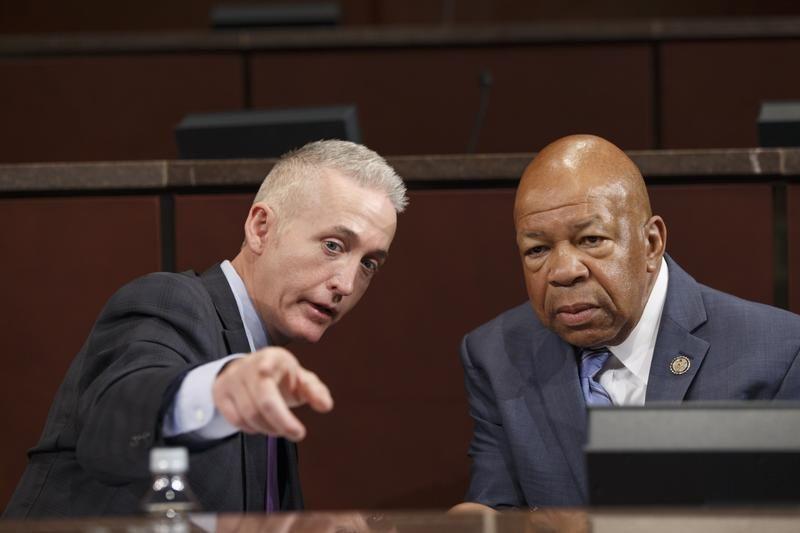
The House Select Committee on Benghazi on Wednesday released a subpoena it issued to Hillary Clinton four months ago, in response to the former secretary of state’s claim that she was never subpoenaed regarding her emails.
Speaking to CNN on Tuesday in her first nationally televised interview as a presidential candidate, a defiant Clinton maintained that she was on strong legal grounds in exclusively using a personal email account and server to communicate with her advisers and colleagues. When pressed further about whether she deleted the 30,000 private, non-work related emails from her server while under a subpoena, Clinton said, “I’ve never had a subpoena.”
According to the committee, it issued a subpoena to Clinton on March 4, 2015 “directly after” finding out from a New York Times report two days earlier about the email arrangements she employed while she served as the nation’s top diplomat from 2009 to 2013.
The panel’s chairman, Rep. Trey Gowdy, has refrained from disclosing the “several subpoenas” he said were issued by his committee, but said he was prompted to make the March 4 document public on Wednesday following Clinton’s “inaccurate” statement the day before.
“The committee immediately subpoenaed Clinton personally after learning the full extent of her unusual email arrangement with herself,” the South Carolina Republican said in a statement, adding that he would have sought those records sooner had the State Department or Clinton informed his committee of the situation regarding her email correspondence.
Clinton also said in the Tuesday interview that she “went above and beyond what anybody could have expected” in turning over 55,000 pages of emails to the State Department last December, adding that she had “no obligation” to even disclose those messages.
Gowdy claims she did that not by choice, but only after a committee request that she submit her records “which always should have been in State’s custody.” He also said it is “curious at best” that Clinton waited until the fall of 2014 to begin deleting personal emails, “well after” the committee began to seek her emails.
Clinton campaign spokesman Nick Merrill responded almost immediately to the release of the subpoena, seeking to clarify the exchange from the CNN interview.
“She was asked about her decision to not retain her personal emails after providing all those that were work-related, and the suggestion was made that a subpoena was pending at the time. That was not accurate,” Merrill said in a statement. “In fact, Gowdy did not issue a subpoena until March, months after she’d done that review.”
In addition, Merrill said, the subpoena pertained specifically to Benghazi-related documents that Clinton “had already given to the Department of State.”
In a statement, Rep. Elijah Cummings, the Benghazi committee’s ranking Democrat, called Gowdy’s decision to release the subpoena a “stunt,” saying it is public information that the chairman issued the request for documents in March because he “issued a press release about it at the time.”
“It appears clear that Secretary Clinton was answering a question about whether she deleted emails ‘while facing a subpoena,’” Cummings said of the Tuesday interview. “The committee’s press release today is nothing but a stunt in this taxpayer-funded attack against Secretary Clinton.”
The committee’s newest revelation follows an ongoing dispute between its GOP members and the State Department. Last month, Gowdy released 60 emails exchanged between Clinton and her former close confidant, Sidney Blumenthal. It was later revealed that Clinton did not hand over 15 of those messages to the State Department, prompting further suspicion among Republicans that Clinton may be withholding correspondence that is damaging to her presidential aspirations.
The controversy continues to be problematic for Clinton’s campaign, as polls show the former New York senator and first lady with low marks when it comes to whether voters view her as honest and trustworthy.
Clinton has repeatedly said on the campaign trail that she wants her 55,000 pages of emails to be made public upon review by the State Department. A federal judge ordered the department to post Clinton’s emails to its Freedom of Information Act website every 30 days, a process that will be completed by early 2016. The first batch was posted last week.


RCP Today
Top stories on RealClearPolitics
The Takeaway
Polling intelligence and analysis delivered to your inbox
World News
Featuring the latest world news
Policy
Featuring the latest policy news
Support Our Mission
As part of RealClearPolitics, authors aim to provide balanced, non-partisan analysis by presenting top reporting and commentary from all sides of the political spectrum.
Trusted by policymakers and citizens alike since 2000