
Benghazi Panel Releases Clinton-Blumenthal Emails
Published June 22, 2015 • Read time: 5m
The House Select Committee on Benghazi released 60 emails on Monday showing correspondence between former Secretary of State Hillary Clinton and her former adviser Sidney Blumenthal, but refused to release the transcript of Blumenthal’s nine-hour private deposition, which was conducted by investigators last week.
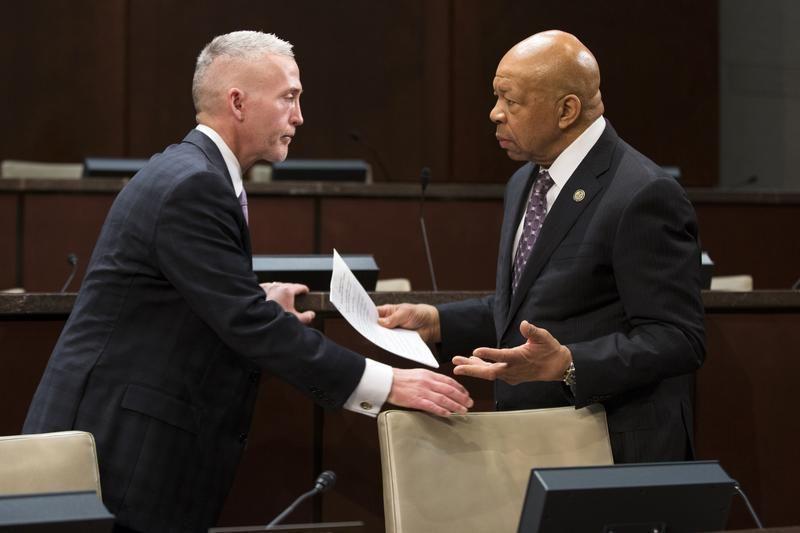
The committee’s chairman, Rep. Trey Gowdy (R-S.C.), rejected a request from the panel’s Democrats and Blumenthal’s lawyer that the transcript be released, arguing there is “clear precedent” to not reveal sensitive information.
“Releasing transcripts can impact the recollections of other witnesses, jeopardize the efficacy of the investigation, alert witnesses to lines of inquiry best not made public, and publicize personal information,” Gowdy wrote in a letter to Rep. Elijah Cummings, the committee’s top Democrat.
Blumenthal’s lawyer, James M. Cole, wrote to Gowdy last week asking that the transcript be immediately released in order to combat “inaccurate” media reports about what occurred during the testimony. Cole called the leaks, which were disclosed to certain media outlets by GOP members of the committee and their staffers, “inappropriate” and misleading.
“Leaks like these are distorting the truth by mischaracterizing facts and circumstances,” Cole wrote. “They are creating an incomplete and unfair narrative about the deposition, Mr. Blumenthal’s knowledge about Libya, and the tragedy that occurred in Benghazi.”
Clinton, the overwhelming frontrunner for the Democratic presidential nomination, has been under scrutiny from her Republican critics ever since a March New York Times report revealed she used a personal email address and server during her tenure as the nation’s top diplomat. She turned over 55,000 pages of work-related emails to the State Department in December, but destroyed another 30,000 that she and her legal team deemed personal correspondence.
Gowdy said Blumenthal’s email disclosures go far beyond those made by the State Department, adding that the 60 emails Blumenthal handed over to the committee on June 12 were “curiously” not part of the department’s public or private releases to the committee. He asked that State disclose whether it already had those emails in its possession.
“I look forward to working with you to determine why these relevant emails had to be produced by a lay witness rather than an administration pledged to transparency,” Gowdy wrote to Cummings, in reference to President Obama’s first-term promise of making his administration the “most transparent” in history.
Cummings responded to Gowdy in a statement, accusing him of improperly engaging in 2016 presidential politics.
“By the Chairman’s own admission, these emails have absolutely nothing to do with the attacks in Benghazi, and their selective release demonstrates the Select Committee’s singular focus on attacking Hillary Clinton and her bid for president,” Cummings said.
Democrats also disputed Gowdy’s claim that the State Department never provided the 60 emails to the committee, arguing “many” of them were included in a disclosure four months ago. Cummings reiterated Cole’s call for the transcript to become public, in order to put the emails “in proper context.”
Gowdy accused Cummings and his fellow Democrats of stonewalling Republicans’ inquiries regarding Clinton’s decision to accept and act on certain emails from Blumenthal. Those emails, Gowdy said, should have already been public.
“You and other Democrats on the Committee claim to want an expedited pace, yet you have done nothing to secure documents from any executive branch entities,” Gowdy wrote. “Worse than inaction, you have enabled this failure to produce and contributed to a culture of intentional non-compliance and correspondingly incomplete public record.”
Exactly one month ago, the State Department made public nearly 300 of Clinton’s Benghazi-related emails. She has said on the campaign trail, as a courtroom saga was brewing over a Freedom of Information Act request filed by a journalist, that she wants her emails to be released as soon as possible.
The department originally said in a court filing that it would release all of Clinton’s work-related emails in early 2016, but a federal judge promptly rejected that plan, ordering speedier “rolling” disclosures. After the State Department proposed releases every 60 days, the judge instead ordered that they be posted on the department’s Freedom of Information Act website every 30 days.
In the 179 pages of Blumenthal emails, he provides Clinton with intelligence from inside Libya during its brutal civil war, referencing Libyan government sources as well as foreign intelligence reports and op-eds. In addition, Blumenthal sent Clinton links to the liberal website Media Matters that delivered a “complete refutation on [the] Libya smear,” in which the website argued that Republicans were using the Benghazi attack as a political cudgel against President Obama in the weeks leading up to Election Day 2012.
The correspondence runs from February 2011 until December 2012, three months after the attack that killed U.S. Ambassador Christopher Stevens and three other Americans.
“It is significant that our top diplomat was directly receiving unvetted intelligence information, which may have come from sources with financial interests in Libya,” Gowdy said in a statement. “Questions about what influence, if any, Mr. Blumenthal had on our US policy toward Libya can only be answered by Secretary Clinton and her State Department senior staff.”
Gowdy, a former federal prosecutor, scheduled a meeting with all committee members to review the reasons why Blumenthal’s deposition “should be treated differently from all previously interviewed and all others to come.” Democrats on the committee do not have the power to release the full transcript without Gowdy’s approval.


RCP Today
Top stories on RealClearPolitics
The Takeaway
Polling intelligence and analysis delivered to your inbox
World News
Featuring the latest world news
Policy
Featuring the latest policy news
Support Our Mission
As part of RealClearPolitics, authors aim to provide balanced, non-partisan analysis by presenting top reporting and commentary from all sides of the political spectrum.
Trusted by policymakers and citizens alike since 2000