
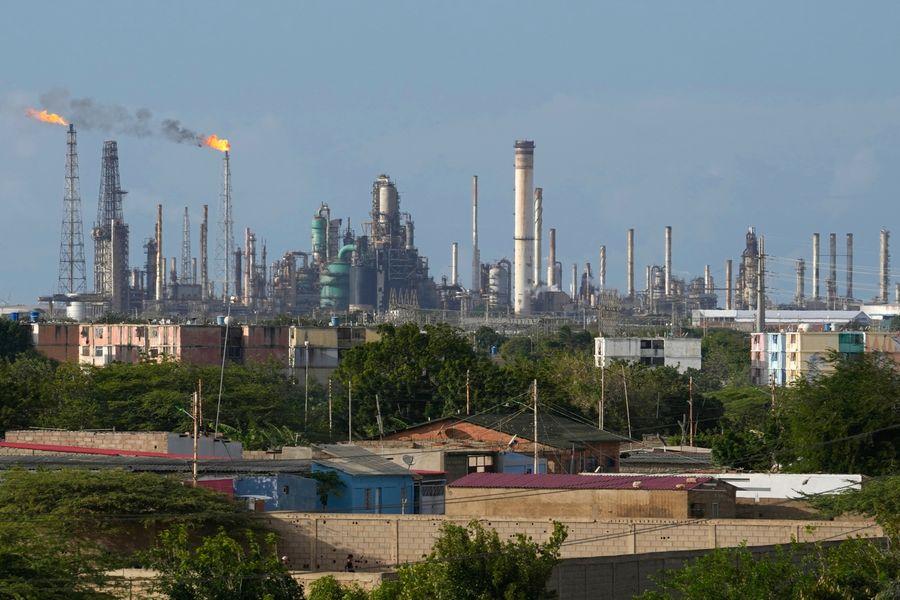
Trump Venezuela Oil What To Know
Venezuela Oil Deal Could Benefit All Sides
COMMENTARY
Published Aug. 30, 2026 • Read time: 4m
For too long, Venezuela has confused maintaining its sovereignty with keeping its oil in the ground even if its vast oil reserves produced neither investments nor collective well-being. But true sovereignty means establishing rules that turn those resources into prosperity for Venezuelans, including with international partners.
That’s how to judge the oil deal announced by the governments of the U.S. and Venezuela. The transaction has not been fully disclosed. Reports indicate that it is a long-term energy partnership between the two governments structured with private capital and operators to develop 17 oil fields with an estimated proven potential of 65 billion barrels. The Venezuelan government says the holding could attract more than $100 billion in investment and generate around $209 billion in taxes. The U.S., in effect, would obtain a majority stake in the oil produced in those fields.
The reserves would remain in Venezuelan subsoil and belong to the Republic. Still being negotiated is exactly who will develop and finance the fields and how to distribute a share of the production over an extended period.
All rights and obligations under the transaction will belong to the U.S. and Venezuelan governments. The agreement will outlast any occupant of the White House. The same will be true on the Venezuelan side. Obligations will not depend on Delcy Rodríguez's political will, but on institutions, valid contracts, and rules capable of surviving changes in government.
The deal satisfies many needs of both countries. The U.S. wants to diversify and secure nearby oil supplies amid instability in the Middle East and pressure on its strategic petroleum reserves. Venezuela needs tax revenue and tens of billions of dollars to rehabilitate an industry weakened by years of underinvestment, corruption, mismanagement, sanctions, and loss of technical capacity.
Over Here: Competence Amid Repulsive Politics
We're Not a Poor Country, Donald
What America Should Learn from the Attack in Brussels
Anti-Muslim Rhetoric Profits the Enemy
The agreement includes a much-needed reform of the Organic Hydrocarbons Law incorporated Production Sharing Agreements. Its new language will attract private capital, recover fields, and increase production while preserving state ownership of the deposits. Experience shows that private operators can contribute capital, restore infrastructure, and raise production. Still to be determined: Which companies will take part in developing the 17 fields, what share each will hold, and what the legal relationship will be among private operators, the U.S. government, and Petróleos de Venezuela, the state-owned Venezuelan oil company.
Published reports say that the U.S., through the Department of Defense, will acquire stakes in private operators holding oil licenses, becoming a partner in projects whose supply is destined for the U.S. Strategic Petroleum Reserve. If confirmed, this chain would form the legal and economic core of the arrangement.
The dual country, public-private partnership is novel, ambitious and, potentially, a huge benefit to all participants. The Venezuelan government will receive royalties and taxes and will retain control of the partnerships through its state-owned oil company. The U.S. gets equity stakes in the licensed operators along with economic rights and a stable, long-term supply. Both countries also get investment, jobs and expanded access to oil, which has lately been in reduced supply causing high prices.
Investment of this magnitude would improve infrastructure, banking, construction, domestic supply chains, and the daily lives of Venezuelans. The additional tax revenue could fund reconstruction of the electrical grid, hospitals, schools, and communications. A stable energy partnership also would anchor the country’s political transition and incentivize the establishment of predictable rules, legal certainty, and stability.
Oil revenue cannot guarantee democracy. Venezuela has experienced periods of extraordinary income that produced neither solid institutions nor a diversified economy. A new boom, managed without controls, could reprise rentierism, corruption, and concentration of power. Revenues from the deal should be subject to disclosed budgets, independent audits, and parliamentary oversight. A portion should be set aside in a macroeconomic savings and stabilization fund. All of the money should not be consumed in current spending, disorderly subsidies, or clientelist structures.
Oil can finance and stabilize the government’s hoped-for democratic transition. Officials must put firmly in place institutional normalization, guarantees for democratic forces, credible electoral authorities, and a clear path toward genuinely competitive elections.
The deal must be examined with rigor. For example, what are the sources of the $100 billion in investment and who will bear the risks, how will the cost of the oil will be calculated, and how long will the granted rights will remain in force? Legal experts also should verify that the agreement respects Venezuela’s Constitution and law, preserves national ownership of deposits, and guarantees a fair distribution of benefits.
If those answers reveal a legally sound, transparent structure favorable to both countries, Venezuela could be facing one of the most important economic opportunities of its contemporary history.
Leopoldo Martínez Nucete is CEO of the Center for Democracy and Development in the Americas and Chair of the Latino Victory Project National Committee.
Support Our Mission
The Internet provides an endless stream of content. Not all of it is worth your time. That's why, every day, RealClearPolitics curates the most essential news and information—from all sides and across mediums. The links, videos, and podcasts curated here are the product of human judgment, not algorithms or AI. Please help power our mission of presenting a thoughtful, balanced public discourse through a tax-deductible donation.
Would you consider supporting us today?

Congress Doesn’t Need Another Blame Game. It Needs To Find What’s Broken
Jarrod Bernstein • RealClearPolitics
Democrats Won the Midterms. Common Sense Won, Too
Jordanne Kemper • RealClearPolitics
The 120th Congress Shapes Up
Carolina Lumetta • RealClearPolitics
Flooding GOP Primaries With Democrats
Robert Natelson • RealClearPolitics
Washington Keeps Rewarding Oracle—Veterans Keep Paying the Price
Darin Gaub • RealClearPolitics
The Seeds of Unrestricted Warfare
John Teichert • RealClearPolitics
RCP Today
Top stories on RealClearPolitics
The Takeaway
Polling intelligence and analysis delivered to your inbox
World News
Featuring the latest world news
Policy
Featuring the latest policy news
Support Our Mission
As part of RealClearPolitics, authors aim to provide balanced, non-partisan analysis by presenting top reporting and commentary from all sides of the political spectrum.
Trusted by policymakers and citizens alike since 2000