
Racial Injustice Schools
How Will Loudoun County Vote on Super Tuesday?
COMMENTARY
Published March 5, 2024 • Read time: 7m
LEESBURG, Virginia — If this keeps up, it won’t be “Super Tuesday” much longer. Places like the Frances Hazel Reid Elementary School in this upscale Northern Virginia town look like Walking Dead sets: Once, in the before times, human beings must have voted here, but in 2024, only the “No Campaigning” signs in front of the entrance mark it as a polling place.
In the history of the “Southern States primaries” cluster whose “Super Tuesday” nickname dates to the Ford presidency, we’ve never seen such a complete absence of suspense about result. Donald Trump and Joe Biden are almost certainly going to dominate, but training a magnifying glass on regions like this wealthy northern Virginia enclave – a place “run by Range Rover moms,” as one resident chuckles – may offer hints about November.
Loudoun made no headlines in 2020, when to no one’s surprise it voted for Biden over Trump by a whopping 61-37 margin. This place checked every box as prototypical Trump-era deep blue territory, not only sitting atop the list of America’s richest counties at a time when Democrats dominated affluent voters, but serving as home to the very permanent bureaucrats and security contractors Trump ran against as an outsider in 2016, even as president in 2020.
“It’s a deep state county,” says longtime resident Kent Clizbe. “I think that’s a good way to describe it.”
A year later Loudoun became the center of the American political universe when private equity titan Glenn Youngkin blew past incumbent Democrat Terry McAuliffe in a gubernatorial election that sent shock waves through both parties. Youngkin won in large part because of the previously unobserved phenomenon of the GOP suddenly becoming competitive in a rich leafy suburb packed with college graduates and virtue-signaling “Hate Has No Home Here” lawn signs. What happened?
Kids' Lives Matter Too
In a Corner of Ohio, Lessons of 2016
2016 Presidential Election Could Decide State Legislative Races
McCaskill Says No to Run for Missouri Governor
Youngkin’s 15-point swing in Loudoun, national media told the country, was based on parental rejection of critical race teaching and “about white supremacy,” as CNN’s Jeffrey Toobin put it. The Washington Post described the place as a onetime “hotbed of Confederate resistance” whose racist urges were rising again, finding expression in secret get-togethers where evil Republicans served swastika cookies and plotted the 10th Reich.
When I visited Loudoun before and after the 2021 election, I found something very different. For starters, the switch was due in significant part to a (perhaps temporary) fluke. Loudoun since the 1990s has been home to a growing influx of South Asian and primarily Indian-American immigrants. These voters who make up over 20% of Loudoun’s overall population have consistently been some of the Democrats’ most faithful voters – polls showed a 72-22 split for Biden heading into the 2020 presidential race, while Gallup last May put national support for Democrats by Indian Americans at 68% – but in Loudoun in 2021, significant numbers of South Asian voters switched sides.
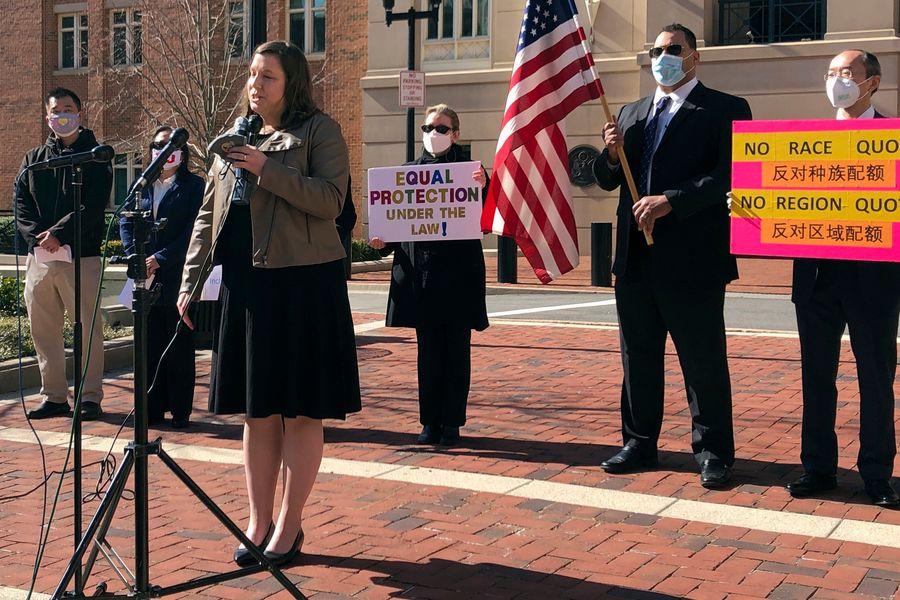
One big reason? A complex, idiosyncratic local issue involving a change in the school system’s process for identifying students for gifted programs, which had been dominated by Asian children. Among the issues was a proposal to cut back on a contract with nearby Fairfax County to bus hundreds of gifted students to Alexandria’s legendary Thomas Jefferson High School for Science and Technology, the top-rated public school in America and one of the main launching pads for sending kids to MIT, Harvard, and Princeton. Loudoun in 2018 spent $4.3 million to bus 269 children across county lines to “TJ,” which worked out to $17,435 per student. Because 70% of “TJ” students were Asian, proposals to cut the exchange plan or create a new “holistic” or “equity-based” admissions system roused normally devoted Democratic voters to fury.
Issues like this, as well as anger about lockdowns and closures, are what drove most of the initial movement among moderates and Democrats in Loudoun, not swastika cookies or freakouts about Critical Race Theory. Then and now, there was reason to think this esoteric problem would not be a dealbreaker for the area’s South Asian demographic going forward. “The Indian voters were mad because it was about TJ, and they dominated TJ,” says one Loudoun resident. “But it’s not like they had a long-term grievance. Those are still blue voters.”
Or are they? Two and a half years later, the gifted admissions issue remains hot. Just weeks ago, the same Supreme Court that just invoked the wrath of Democrats for voting 9-0 to keep Trump on the ballot despite Colorado’s “insurrectionist” disqualification infuriated conservatives over a Thomas Jefferson High case. The court refused to take up a challenge to the “TJ” gifted program after a lower court ruled that its new equity-based admissions process was legal so long as it did not “reduce the percentage of Asian-American admittees below the percentage of Asian-American students in the school.”
A furious Samuel Alito ripped as a ruling that “intentional racial discrimination is legal so long as it’s not too severe,” but will this and other clashes about Asian Americans and school admissions make a difference at the ballot?
Super Tuesday may not offer much of a clue, although Loudoun is one of the only parts of the country where any of the candidates is even pretending there will be competition. Northern Viriginia is effectively the exurb of Washington, D.C., which Sunday gave former South Carolina Governor Nikki Haley her first primary win, beating Trump 1,279-676 in the District of Columbia. The win earned less coverage than that day’s Knicks-Cavs game, for good reasons – the GOP primary in D.C. may be the most useless election in America, as the party has never won a single Electoral College vote there and had its best result in 2000, when a Democratic elector abstained.
It does, however, hint at where the Indian-American Haley might do well. She’s been spending a lot of time in the area, and an event in nearby Falls Church last Thursday attracted 1,000 people, a huge turnout for a candidate who’s been in the political equivalent of a persistent vegetative state since losing to “none of these candidates” in Nevada a few weeks ago.
Donors have been signaling they’ll pull the plug on Haley after the Super Tuesday vote, but Northern Virginia might be her lone bright spot. “Haley won't win Virginia, but I could see her doing very well in Fairfax and Loudoun Counties,” says resident David Caruso.
Meanwhile, 2024 continues to be the weirdest presidential race in recent history. Next to the Supreme Court’s decision to reverse Colorado’s removal of Trump from the ballot, the Super Tuesday results will mean little. Haley doing well here is very nearly the only interesting thing that could happen anywhere in the country, and even that has dubious value. Trump can easily spin losing in “Deep State County” as a positive, repeating what spokesperson Karoline Leavitt said after Haley won the capital: “The swamp has claimed its queen.”
We also won’t find out to what extent moderate Democrat and independent voters in places like Loudoun are still carrying grudges after being roundly denounced as racists in 2021. There have been only a few indications. Controversial local Democratic prosecutor Buta Biberaj, a major player in Loudoun’s school controversies who drew fire among other things for prosecuting a disorderly conduct case against the parent of a sex-assault victim, lost in a tight race to Republican Bob Anderson last November. That’s an interesting result in a place where Democrats traditionally dominate, but is it predictive in terms of Trump-Biden later this year?
“What I take from that is there’s some sort of struggle going on among the Loudoun voter,” says Caruso.
As for what else, who knows? Apart from every other weird thing about this primary season, even Super Tuesday isn’t giving us data.
Support Our Mission
The Internet provides an endless stream of content. Not all of it is worth your time. That's why, every day, RealClearPolitics curates the most essential news and information—from all sides and across mediums. The links, videos, and podcasts curated here are the product of human judgment, not algorithms or AI. Please help power our mission of presenting a thoughtful, balanced public discourse through a tax-deductible donation.
Would you consider supporting us today?

Democrats Won the Midterms. Common Sense Won, Too
Jordanne Kemper • RealClearPolitics
The 120th Congress Shapes Up
Carolina Lumetta • RealClearPolitics
Flooding GOP Primaries With Democrats
Robert Natelson • RealClearPolitics
Washington Keeps Rewarding Oracle—Veterans Keep Paying the Price
Darin Gaub • RealClearPolitics
The Seeds of Unrestricted Warfare
John Teichert • RealClearPolitics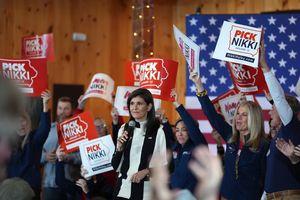
The Primary System Is Losing the Next Generation
Sean Trende • RealClearPolitics
RCP Today
Top stories on RealClearPolitics
The Takeaway
Polling intelligence and analysis delivered to your inbox
World News
Featuring the latest world news
Policy
Featuring the latest policy news
Support Our Mission
As part of RealClearPolitics, authors aim to provide balanced, non-partisan analysis by presenting top reporting and commentary from all sides of the political spectrum.
Trusted by policymakers and citizens alike since 2000