
China US Fentanyl
The Drug Peace
COMMENTARY
Published July 14, 2023 • Read time: 4m
My brother Sam was an uncle for more than half his life, and he was born on the Fourth of July. Like so many broken souls, he succumbed to death by fentanyl in 2020, during the first summer of COVID. Now, my “little” brother, Sam Spitz, is dancing backstage with the band in the sky.
Writing about sorrow in “Promise Me, Dad,” President Biden spoke to those of us who have experienced a grievous loss: “The time will come when [his] memory will bring a smile to your lips before it brings a tear to your eyes.” But make no mistake, Sam’s death was preventable. So too, are nearly all of the 100,000+ annual U.S. overdose deaths that NBC News’ Meet the Press dedicated a “Special Edition” to address over the July 4 holiday weekend.
We cannot pretend any longer. As a human species, we have failed to address the way modern drugs affect people and how our governments regulate their use. It’s as if we’ve left our collective brains on page one of the pharmacopeia.
The top health policy decision-makers in the United States are so far behind their global peers that one must infer reefer madness to be a required course at U.S. medical schools. State and federal legislators can’t resist the urge to “go Puritan,” and local municipalities are getting too much drug policy too badly wrong.
Let’s hope the potency and finality of fentanyl will jolt American policymakers into action.
Recent congressional activity suggests there’s a case for optimism. Believe it or not, drug policy could be one of the few issues our warring political parties can agree on. Ohio’s bipartisan team of Sens. Sherrod Brown and JD Vance seems genuinely determined to solve this issue, which is “above partisanship,” according to NBC’s Chuck Todd.
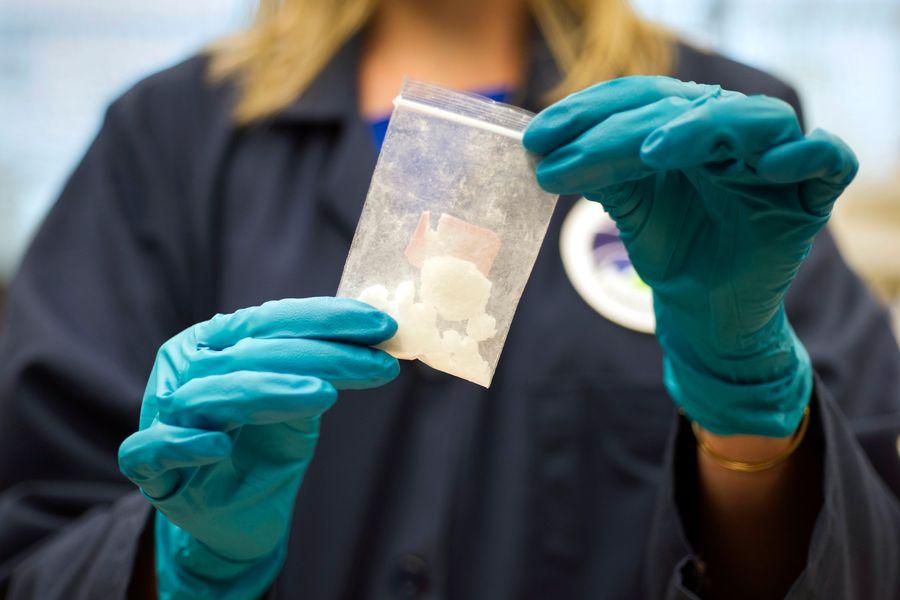
The U.S. supply of fentanyl begins in China and flows through the Mexican drug cartels to our border, usually through the biggest ports. This is a chain full of monsters whose evil can be felt from end to end. The biggest operators are organized and sophisticated, so getting rid of them won’t be easy.
Finally, it seems that American policymakers understand that this is a two-sided problem. On the demand side, drug addiction is a malady that afflicts a small percentage of our population, who then wreak havoc on the people and places around them on account of their chemical dependence.
President Calls Drug Addiction a Health Problem
Lawmakers Hail New Opioid Rules -- But Call for More
No Opiates for the Masses?
Obamacare's Tax-Time Torment
As a society, we are learning to deal with the disease that is addiction by recognizing it as curable and treating its victims with care. In their roundtable discussion on “Meet the Press,” Jan Rader, a former fire chief from an opioid-stricken town in West Virginia, summed up the problem when she described its centerpiece.
“These people are fragile. They are scared. They need help.”
Our family adopted Sam just after he was born in 1988 because my mother volunteered to nurture newborn babies who were stuck in hospitals until their adoptions got processed. Sam’s birth mother wasn’t ready to give him up, so he stayed with us for his first year of life. When we adopted him, infant Sam was likely already a drug addict.
He didn’t have a mean bone in his body, but his body caused him a lot of pain. His bad back crimped his chances of pursuing his love of cooking professionally. He would get good jobs in restaurants and then have to quit because of crippling pain.
His childhood ADHD diagnosis might have come from his mother, or it could have been caused by any number of circumstances, but there’s little doubt that prescribing drugs like Ritalin worsened Sam’s chances.
Sam was the life of the party. You could often find Sam in the middle of a party, chilling at a music festival, or hollering with a bunch of Eagles fans. His real pain was in his head, and he couldn’t shake it. Learning new stuff was hard for Sam, no matter how much he tried. Although he thought himself a misfit, we all thought he was beautiful. His pain came from thinking he didn’t measure up.
He had great days and great years and made great friends, and he loved his family. Sam loved more people than most people get to love. He was such a sweet kid. Lots of folks rooted for him.
If you knew Sam, you will likely see him a few more times in your lifetime. You will be having fun. He will have a smile on his face and tip his hat to you from afar. Until then, we are going to miss you, my fine brother. Your life was a miracle, and your presence was felt.

Democrats Won the Midterms. Common Sense Won, Too
Jordanne Kemper • RealClearPolitics
The 120th Congress Shapes Up
Carolina Lumetta • RealClearPolitics
Flooding GOP Primaries With Democrats
Robert Natelson • RealClearPolitics
Washington Keeps Rewarding Oracle—Veterans Keep Paying the Price
Darin Gaub • RealClearPolitics
The Seeds of Unrestricted Warfare
John Teichert • RealClearPolitics
The Primary System Is Losing the Next Generation
Sean Trende • RealClearPolitics
RCP Today
Top stories on RealClearPolitics
The Takeaway
Polling intelligence and analysis delivered to your inbox
World News
Featuring the latest world news
Policy
Featuring the latest policy news
Support Our Mission
As part of RealClearPolitics, authors aim to provide balanced, non-partisan analysis by presenting top reporting and commentary from all sides of the political spectrum.
Trusted by policymakers and citizens alike since 2000