
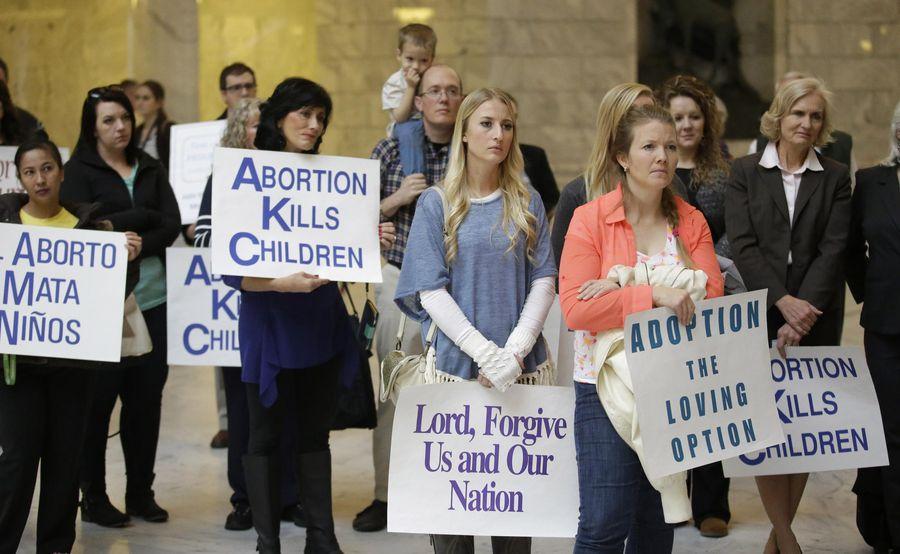
Protecting the Unborn From the Ultimate Pain
COMMENTARY
Published Feb. 25, 2020 • Read time: 4m
“Most men,” says “Game of Thrones” character Tyrion Lannister, “would rather deny a hard truth than face it.” This week the U.S. Senate will face some hard truths – and confront several persistent myths – as it considers the Pain Capable Unborn Child Protection Act (S.3275). The bill would ban abortion after 20 weeks of pregnancy on the basis that the fetus is capable of feeling pain.
The hard truths surrounding this bill are easily accessible to anyone with a scintilla of curiosity about the competing claims. A few simple Google searches reveal shocking evidence that distinguish fact from fiction.
Late abortions are very rare, and done only in cases of severe maternal or fetal health problems – true or false?
In the nation’s capital, just a stone’s throw from the Senate chambers, four clinics routinely perform late-term abortions. They operate in plain sight and openly advertise purely elective second- and third-trimester abortions. The abortion lobby’s own research shows late-term abortions are primarily performed on healthy women carrying healthy babies: “data suggest that most women seeking later terminations are not doing so for reasons of fetal anomaly or life endangerment.”
The DuPont Clinic website advertises its third-trimester abortions this way: “If you are farther than 26 weeks into your pregnancy, we can still see you, regardless of your medical history, background, or fetal indications. We do not require any particular ‘reason’ to be seen here – if you would like to terminate your pregnancy, we support you in that decision.”
GOP Abortion Bill Punt: Sell Out or Smart Politics?
Republicans Unanchored
What Is the GOP Thinking?
Republicans Surrender to Infanticide
The CARE clinic in the D.C. suburbs boasts that it provides “abortion care throughout pregnancy, meaning 1st, 2nd, and 3rd trimester abortions. Whether you are 5 weeks or 35 weeks, we are here to help you get your abortion.”
The Washington Surgi-Clinic, just four blocks from the White House, advertises second- and early third-trimester procedures – “surgical abortions from the very earliest pregnancies up to 27 plus weeks of pregnancy.” Question: Just what does the “plus” in “27 plus weeks of pregnancy” mean?
Clinic number four, Capitol Women’s Services on Georgia Avenue, advertises elective abortions through the sixth month of pregnancy. Indeed, the clinic’s website offers potential customers even later abortions “up to 36 weeks,” using the artful legal term “health of the woman” as justification. In abortion jurisprudence, “health” is defined to include all factors related to a woman’s well-being, including a woman’s age, family size, and emotional health.
Late-term abortion is not so very rare, it seems, that four clinics in one metropolitan area cannot stay in business. Hard truth? The actual number of abortions performed after 20 weeks in the U.S. is at least 12,000 annually. Compare that to the numbers of annual childhood deaths due to gun violence (about 3,000), or childhood cancers (about 2,000).
Many of these late-term babies could survive in a good neonatal intensive care unit, alongside the other premature infants in the NICU. The supposedly “unwanted” could be delivered alive instead of aborted, and adopted by the estimated millions who are waiting to adopt a baby. Babies can live outside the womb starting at about 21 weeks, and survival rates increase dramatically week-by-week.
As to the hard – and tragic – truth of why women seek late abortions, the research arm of the abortion lobby tells us: “Most women seeking later abortion fit at least one of five profiles: They were raising children alone, were depressed or using illicit substances, were in conflict with a male partner or experiencing domestic violence, had trouble deciding and then had access problems, or were young and nulliparous” — the latter term meaning someone who has never given birth.
Certainly there are cases of fetal anomaly, but severely disabled children deserve love and care, not the violence and abrupt end of abortion. Additionally, mothers who choose to carry such pregnancies to term have far better outcomes than those who suffer the complicated grief that comes with aborting.
As to maternal health, later in pregnancy the baby can be delivered alive and sent to the NICU if the mother encounters a grave health issue. There is never a medical need to kill the baby before delivery.
Pro-choice senators also hide behind the myth that the fetus cannot feel pain until later in pregnancy. This flies in the face of stunning new research by a pro-choice expert in pain published in the influential Journal of Medical Ethics. This study concluded the fetus is capable of feeling pain early in its existence, possibly as early as 13 weeks gestation. The author says society flirts “with moral recklessness” if we don’t change permissive abortion laws.
The U.S. Senate should deny these hard truths no more. The world’s greatest deliberative body should face them squarely and, at long last, pass the Pain Capable Unborn Child Protection Act.

Congress Doesn’t Need Another Blame Game. It Needs To Find What’s Broken
Jarrod Bernstein • RealClearPolitics
Democrats Won the Midterms. Common Sense Won, Too
Jordanne Kemper • RealClearPolitics
The 120th Congress Shapes Up
Carolina Lumetta • RealClearPolitics
Flooding GOP Primaries With Democrats
Robert Natelson • RealClearPolitics
Washington Keeps Rewarding Oracle—Veterans Keep Paying the Price
Darin Gaub • RealClearPolitics
The Seeds of Unrestricted Warfare
John Teichert • RealClearPolitics
RCP Today
Top stories on RealClearPolitics
The Takeaway
Polling intelligence and analysis delivered to your inbox
World News
Featuring the latest world news
Policy
Featuring the latest policy news
Support Our Mission
As part of RealClearPolitics, authors aim to provide balanced, non-partisan analysis by presenting top reporting and commentary from all sides of the political spectrum.
Trusted by policymakers and citizens alike since 2000