
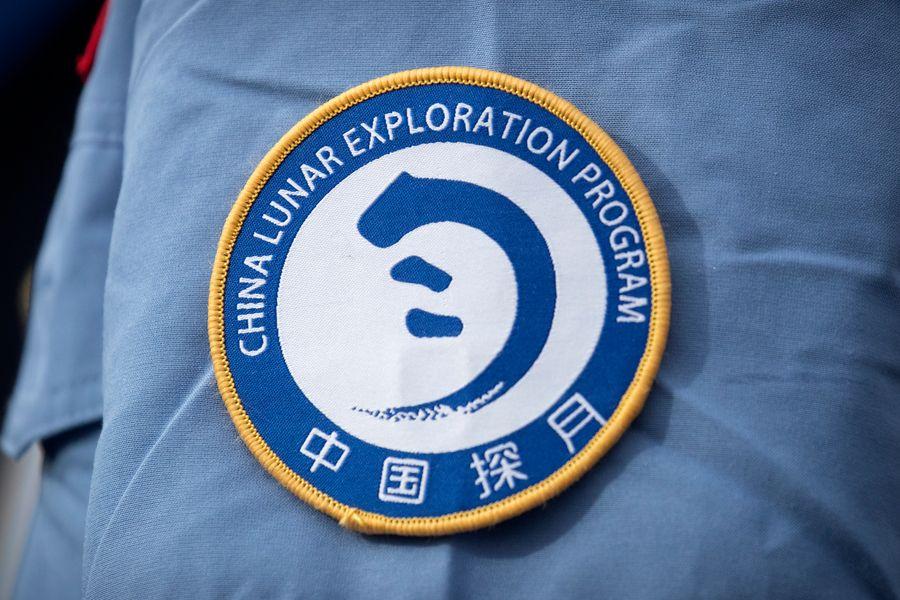
China Moon Mission
Why China Could Vanquish the U.S. in New Space Race
COMMENTARY
Published May 21, 2021 • Read time: 5m
There are now only two nations in the history of humanity that have successfully landed rovers on the surface of the Red Planet: The United States and the People’s Republic of China. You can expect this to be the dominant headline in all matters related to space for many years to come. After all, humanity is due for another round of great state competition and it seems that the two major contenders in this strategic competition will be the United States and China.
For too long Western observers have downplayed China’s rapidly growing space technology industry. The Chinese Martian rover, Zhurong, is nowhere near as advanced as NASA’s Perseverance, which recently made headlines. Yet, it took NASA almost 30 years to reach the level of complexity in its rover operations that the storied American space agency now enjoys. Certainly, China can expect to stay trailing the Yanks for many years to come — or so argue the naysayers who downplay the threat that China’s ambitious, though less advanced, space program poses to the United States.
Suppose it doesn’t take several decades for Beijing to catch up to the Americans in space. After all, there are no greater teachers than experience and competition. For the former, China learns by doing — and Beijing embraces a leap-without-looking mentality that once defined America’s storied program.
As for competition, China truly believes it is in a new space race with the Americans whereas most American leaders do not. The new space race between these nations will determine not only who gets human beings to Mars first, but also will decide which one dominates the strategic high ground of space (and whoever controls the high ground rules the territory below).
The FBI Gained Access; We'd Already Lost Our Privacy
Is Trump Right About NATO?
Arizona's Voting Rights Fire Bell
U.S. Officials Say 2 Americans Died in Brussels Attack
Right now, the Americans hold this position — but barely.
China’s competitive and nationalistic view of space means that, unless the Americans fundamentally change the way they operate, the United States will be knocked from its perch in space — in much the same way the British denied the French access to North America in the 19th century.
How do the Americans view space?
Some — the naysayers — have a pessimistic outlook. They (wrongly) believe it is a vast wasteland that will do nothing other than drain our country of vital resources. Others, the utopians, believe space can be maintained as a sanctuary and that the Americans can cooperate with China to share space.
Fat chance.
If Washington viewed space as China’s rulers do, they’d be authorizing the $1 trillion, decade-long investment into the program and other high-technology pursuits that I’ve been advocating. American leaders from both parties would be cutting through the bureaucratic red tape to ensure that the best elements of our budding private space sector were married to nationalistic goals for dominance. We’d have astronauts on Mars by now, too.
Look at it this way: China’s space program did not take serious flight until 2003. By that time, America had been dominating the stars for decades. In 2003, China first placed a taikonaut into orbit. During the intervening 18 years, Beijing has not only repeatedly placed its people into Earth orbit, but has successfully developed counterspace capabilities (weapons intended to deny others access to space in the event of a war). Beijing has landed the first rover on the dark side of the moon in history. Red China has also successfully placed the first of three components necessary to complete their modular space station which is meant to rival the American-built International Space Station. Now, China has its first (of many) rovers on the Martian surface.
Where will China’s space program be in another 18 years?
Beijing leaders have already outlined their plans for the next decade: by 2024, to have an automated base built on the south pole of the moon. In 2028, Chinese (and possibly Russian) personnel will be permanently stationed at that lunar base.
China seeks to have taikonauts on the Martian surface by 2030.
The same naysayers in the West who’ve laughed off China’s space ambitions for the last two decades now scoff at its achievements made in that time. These naysayers continue to belittle China’s chances of achieving its space dreams. Meanwhile, the utopians pine for joint missions -- which would only serve as tech transfers from America to China. So long as American policymakers listen to these voices, China will catch up and ultimately beat America in this new competition.
Unlike the American government, China’s regime has identified dominating space as a key tenet for their “China Dream 2049” program. By the 100-year anniversary of the rise of Communist Party in China, 2049, Beijing’s leaders envision their nation displacing the United States as the world’s hegemon. Raising the Chinese flag on Mars first is a major goal in that regard.
In the meantime, Washington is still holding up America’s manned space program until a female-friendly space suit can be made.
This is what losing looks like, America.

The Danger Before the Attack
Leslie J. Sullivan • RealClearPolitics
Jon Finer’s Old and Dangerous ‘New Approach’ to Israel
Peter Berkowitz • RealClearPolitics
The President Deserves Better
John Ullyot • RealClearPolitics
Congress Doesn’t Need Another Blame Game. It Needs To Find What’s Broken
Jarrod Bernstein • RealClearPolitics
Democrats Won the Midterms. Common Sense Won, Too
Jordanne Kemper • RealClearPolitics
The 120th Congress Shapes Up
Carolina Lumetta • RealClearPolitics
RCP Today
Top stories on RealClearPolitics
The Takeaway
Polling intelligence and analysis delivered to your inbox
World News
Featuring the latest world news
Policy
Featuring the latest policy news
Support Our Mission
As part of RealClearPolitics, authors aim to provide balanced, non-partisan analysis by presenting top reporting and commentary from all sides of the political spectrum.
Trusted by policymakers and citizens alike since 2000