
Alaska Governor Miller
The Return of the Smoke-Filled Room
COMMENTARY
Published Oct. 16, 2026 • Read time: 5m
Every two years, the primary season is treated like a national referendum. Turnout maps are parsed, winners and losers declared, and sweeping conclusions drawn about “where the country is headed.” But this ritual is built on a myth. The people who show up to vote in primaries are a small, unrepresentative fraction of America, and the elaborate theater we build around their choices obscures a much larger and more troubling story. For most of the country, the primary isn’t a preview of the real election. It is the election, and most were not invited to participate.
Despite the hundreds of millions of dollars poured into these contests and the relentless horse race coverage, we learned close to nothing about how the broader American electorate feels, well, about anything. In the least competitive elections of our lifetimes, we learned only how a small, unrepresentative sliver of it feels. Until we fully grapple with this crisis and solve it, we’ll be damned to repeat it every two years.
The most engaged Democratic primary voters are more than willing to buck their party’s establishment and back candidates aligned with the Democratic Socialists of America. Meanwhile, President Donald Trump has largely kept his grip on the conservative base – successfully primarying Republicans not sufficiently loyal to his agenda. The iron grip held on primary elections by the two political parties has produced a system so calcified that in most congressional districts this November, there will be little impact on voting in the general election. Millions of independent voters are cut out of the process altogether.
The FBI Gained Access; We'd Already Lost Our Privacy
Is Trump Right About NATO?
Arizona's Voting Rights Fire Bell
U.S. Officials Say 2 Americans Died in Brussels Attack
My organization, the Unite America Institute, determined that nearly 90% of U.S. House races are uncompetitive in November, which means the primary was the only contest that mattered in determining the outcome. Less than 10% of eligible Americans participated in those primaries that elected the vast majority of Congress. A candidate can win a seat in Congress with the enthusiastic support of a margin of error’s worth of the public.
Even worse, a candidate can win a seat in Congress without securing a single vote. Unite America Institute found that 147 House candidates not only won’t face competition in November, but also ran unopposed in their primary. That’s about one-third of the U.S. House that will be filled by members who faced no meaningful competition of any kind, and millions of Americans whose representative was a foregone conclusion before a single vote was cast.
In Pennsylvania, 12 of 17 House seats – 70% – were decided this way. Virginia isn’t far behind, with seven of its 11 seats drawing no meaningful competition. The pattern repeats across the map: five of eight seats in Colorado, eight of 15 in Ohio, eight of 17 in Illinois, 12 of 28 in Florida, 12 of 26 in New York. Added together, these are a substantial fraction of the people’s House, chosen by whoever controls a low-turnout, low-visibility primary or, increasingly, by no contest at all.
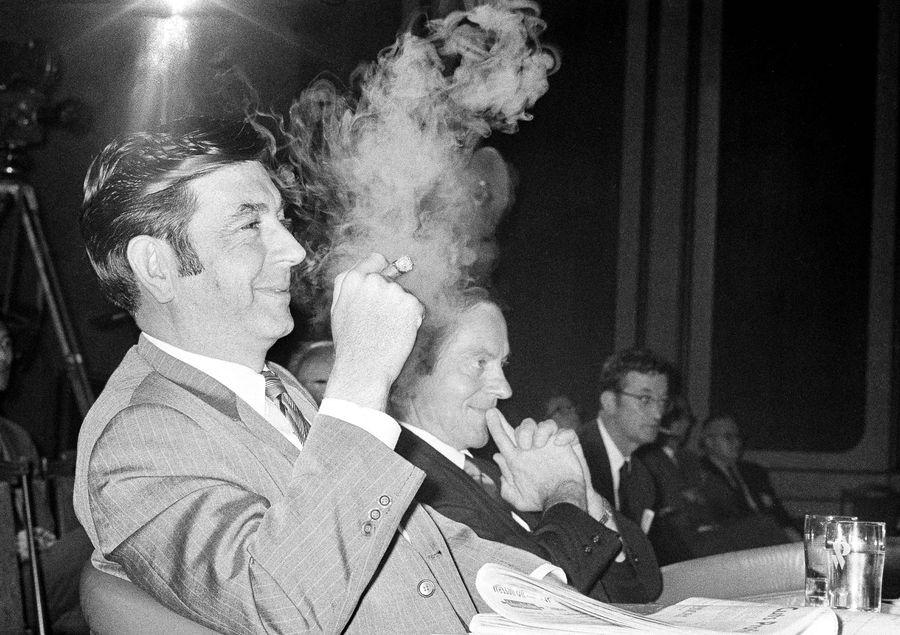
We like to tell ourselves that America outgrew the era of smoke-filled rooms, where party bosses picked winners before voters ever had a say. But today, we have swapped the cigar smoke for uncontested elections and safe seats. Instead of the party bosses deciding, the party bases do. And the outcome is similarly bad for democracy: a small, self-selected group of insiders and activists determining representation for everyone else.
If primary voters looked more or less like the general public, this wouldn’t be such an urgent problem. But research shows that people who participate in primaries are older, whiter, wealthier, and significantly more partisan than the electorate as a whole. Therefore, we can’t draw sweeping conclusions about the direction each party is going, let alone the country as a whole, based on the outcome of primary races.
Many states are experimenting with solutions to make the primary process more competitive and representative of all voters, including open, all-candidate primaries. In Alaska, California, and Washington, all voters participate regardless of party registration in one single primary with every candidate on the ballot. Other cities and states are implementing instant runoff or ranked-choice voting systems that reward broader appeal over base mobilization. And finally, other states have independent redistricting commissions that help insulate map drawing from the incumbent-protection racket that manufactures “safe” seats in the first place.
None of these are silver bullets, and all of them are politically difficult, precisely because the people with the power to change the rules are the ones benefiting from the status quo. That’s why Republicans in red states and Democrats in blue states decry these efforts – but independent voters support them.
Every primary season produces the same ritual: breathless coverage of a contest that tells us everything about the loudest 9% of voters and nothing about the other 91%. We will keep mistaking this for the mood of the country, and will continue to be surprised when the country doesn’t like the results this sclerotic system produced.
Support Our Mission
The Internet provides an endless stream of content. Not all of it is worth your time. That's why, every day, RealClearPolitics curates the most essential news and information—from all sides and across mediums. The links, videos, and podcasts curated here are the product of human judgment, not algorithms or AI. Please help power our mission of presenting a thoughtful, balanced public discourse through a tax-deductible donation.
Would you consider supporting us today?

Jon Finer’s Old and Dangerous ‘New Approach’ to Israel
Peter Berkowitz • RealClearPolitics
The President Deserves Better
John Ullyot • RealClearPolitics
Congress Doesn’t Need Another Blame Game. It Needs To Find What’s Broken
Jarrod Bernstein • RealClearPolitics
Democrats Won the Midterms. Common Sense Won, Too
Jordanne Kemper • RealClearPolitics
The 120th Congress Shapes Up
Carolina Lumetta • RealClearPolitics
Flooding GOP Primaries With Democrats
Robert Natelson • RealClearPolitics
RCP Today
Top stories on RealClearPolitics
The Takeaway
Polling intelligence and analysis delivered to your inbox
World News
Featuring the latest world news
Policy
Featuring the latest policy news
Support Our Mission
As part of RealClearPolitics, authors aim to provide balanced, non-partisan analysis by presenting top reporting and commentary from all sides of the political spectrum.
Trusted by policymakers and citizens alike since 2000