
Senators Warn of Fiscal Fallout After Erdogan Visit Violence
Published May 22, 2017 • Read time: 1m
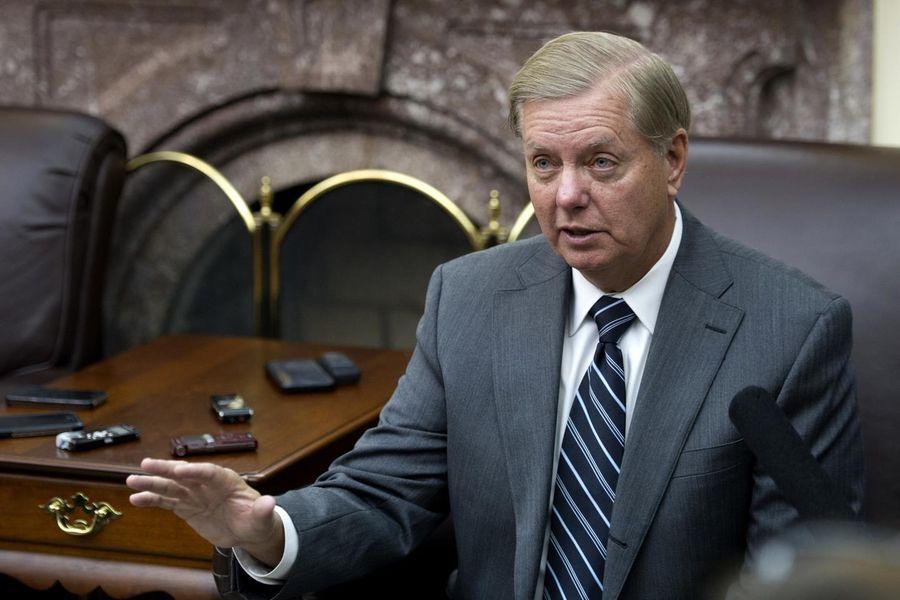
WASHINGTON (AP) -- The senators who oversee the U.S. foreign aid budget have warned the Turkish government there could be fiscal repercussions if Ankara fails to punish the bodyguards responsible for a violent incident in Washington.
In a letter to the Turkish ambassador to the United States, Sens. Lindsey Graham and Patrick Leahy say there could be "potential implications for assistance to Turkey" if the unseemly incident isn't taken seriously by Ankara. Their letter to Ambassador Serdar Kilic is dated May 18 but wasn't released until Monday.
Video shows Turkish President Recep Tayyip Erdogan's security detail violently breaking up a peaceful protest last week outside the Turkish ambassador's residence in Washington.
Graham, a South Carolina Republican, and Leahy, a Vermont Democrat, are the chairman and ranking member of the Senate's foreign operations subcommittee.
© 2017 The Associated Press. All rights reserved. This material may not be published, broadcast, rewritten or redistributed. Learn more about our Privacy Policyand Terms of Use.

Jon Finer’s Old and Dangerous ‘New Approach’ to Israel
Peter Berkowitz • RealClearPolitics
The President Deserves Better
John Ullyot • RealClearPolitics
Congress Doesn’t Need Another Blame Game. It Needs To Find What’s Broken
Jarrod Bernstein • RealClearPolitics
Democrats Won the Midterms. Common Sense Won, Too
Jordanne Kemper • RealClearPolitics
The 120th Congress Shapes Up
Carolina Lumetta • RealClearPolitics
Flooding GOP Primaries With Democrats
Robert Natelson • RealClearPolitics
RCP Today
Top stories on RealClearPolitics
The Takeaway
Polling intelligence and analysis delivered to your inbox
World News
Featuring the latest world news
Policy
Featuring the latest policy news
Support Our Mission
As part of RealClearPolitics, authors aim to provide balanced, non-partisan analysis by presenting top reporting and commentary from all sides of the political spectrum.
Trusted by policymakers and citizens alike since 2000