
Election 2021 Voting
Restrict Mail-In Voting to Restore Trust
COMMENTARY
Published April 15, 2022 • Read time: 4m
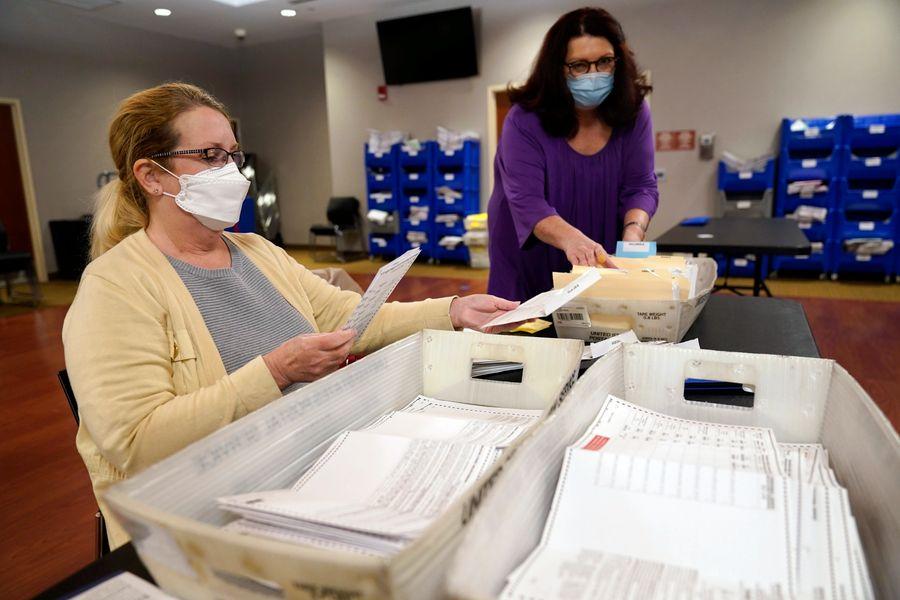
The 2020 U.S. election was unique in many respects, but its chief distinguishing feature is that it occurred during a full-scale pandemic. One consequence was that the election operated under regulations that changed how Americans vote. Some states bent voting rules to expand access. Some resorted to mail-in voting to ensure that everyone who wanted to vote could do so. These actions were, to some extent, understandable, but the resulting conditions were extraordinary, and the dramatic increase in mail-in voting created a major political phenomenon: the blue shift, in which late-counted ballots turn voting outcomes toward the Democrats.
On election night, vote totals initially looked good for President Donald Trump. But as mail-in votes rolled in, central swing states moved into Joe Biden’s column, and Biden won the election. The phenomenon disrupted expectations – and sowed distrust. Many of my Republican family members said, “It didn’t seem right. I knew something was wrong.” Trump, attuned to the emotions of his base, made use of this sentiment. He stoked suspicion that Democrats stole the election. The nightmarish result was the Jan. 6 insurrection.
The 2020 election involved more voter fraud than usual, even if the amount of fraud was tiny as a proportion of the whole. But even if mail-in voting had been fraud-free, it had occurred in a polarized country, one with low trust in government. Americans support democracy in general. But when it comes to particular elections, confidence in outcomes falls. To some degree, this is inevitable when one group loses an election they had hoped to win. We often wonder why our side lost and whether some conspiracy might explain the result. But in a functional democracy, people let those feelings pass. They get on with social and political life. That is the great good of democracy: the peaceful transition of power.
The FBI Gained Access; We'd Already Lost Our Privacy
Is Trump Right About NATO?
Arizona's Voting Rights Fire Bell
U.S. Officials Say 2 Americans Died in Brussels Attack
Had states put more restrictions on mail-in voting, many people would have been unable to cast ballots. They would feel that they had lost their basic political rights. There is little public support for restricting voting rights – but the way we handled mail-in voting in the 2020 election left a lot to be desired. It undermined trust in the transition of power. Millions felt that they knew the outcome when they went to bed. When they woke up, they began to feel that victory had slipped from their hands.
We cannot let this same dynamic unfold in 2024. There are various ways to prevent it.
One option would be for public officials to explain the changes to the public. They could ask voters to expect to wait longer for election results. Americans may not receive this instruction well, however, given their low levels of trust in their leaders (though local officials might fare better in some areas). There is probably a better solution.
The blue shift evaporates if officials can tabulate mail-in ballots by election night. That requires restricting mail-in voting. It is not ideal. Some may lose their ability to exercise their right to vote. Many who work full-time jobs will have fewer options. We could solve these problems, however, by declaring Election Day a national holiday.
The benefits of making Election Day a holiday seem to outweigh the costs if we are concerned with sustaining trust in the democratic system. States must stop blue (or red) shifts if they want to sustain trust. That does not mean restricting mail-in voting – far from it. It means, rather, that deadlines might need national enforcement.
It will not do to argue that mail-in voting is not itself a cause of distrust. In a democracy, perception is often reality. If we want confidence in the democratic system, the public must be able to perceive that the system is fair. We cannot insist that a procedure is fair when it creates the reverse perception in the public mind.
Another problem is that mail-in voting creates suspicion of voter fraud. With strict mail-in voting deadlines – which Election Day as a national holiday would help enable – this problem might prove manageable.
Public officials must convey the trustworthiness of the system. Most Americans trust their local leaders and officials more than federal politicians and authorities. So local officials will have to communicate better with their communities. They might even invite citizens to observe vote tabulations under some conditions.
One can argue that the American public should simply choose to hold more rational beliefs about the voting process. But that isn’t how political psychology works. People must trust the voting process if we want a functional democratic system. That means reckoning with how the public political mind functions – whether rational or not. While bearing in mind the risk of limiting voters’ rights, we must consider restrictions on mail-in voting to restore trust. And the best, most viable way to do that is to declare Election Day a national holiday.

The Danger Before the Attack
Leslie J. Sullivan • RealClearPolitics
Jon Finer’s Old and Dangerous ‘New Approach’ to Israel
Peter Berkowitz • RealClearPolitics
The President Deserves Better
John Ullyot • RealClearPolitics
Congress Doesn’t Need Another Blame Game. It Needs To Find What’s Broken
Jarrod Bernstein • RealClearPolitics
Democrats Won the Midterms. Common Sense Won, Too
Jordanne Kemper • RealClearPolitics
The 120th Congress Shapes Up
Carolina Lumetta • RealClearPolitics
RCP Today
Top stories on RealClearPolitics
The Takeaway
Polling intelligence and analysis delivered to your inbox
World News
Featuring the latest world news
Policy
Featuring the latest policy news
Support Our Mission
As part of RealClearPolitics, authors aim to provide balanced, non-partisan analysis by presenting top reporting and commentary from all sides of the political spectrum.
Trusted by policymakers and citizens alike since 2000