
Poll: Americans Skeptical of U.S. Military Interventions
Published Nov. 11, 2017 • Read time: 3m
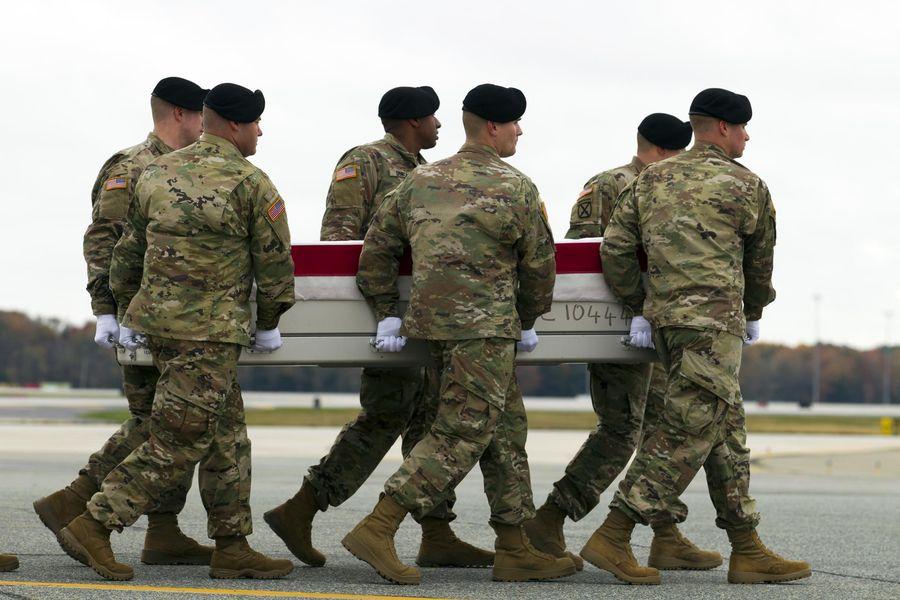
Americans are uncertain that recent U.S. military interventions and overseas commitments have achieved positive results for the country, one of a range of findings in a new survey sponsored by the Charles Koch Institute and RealClearPolitics. The poll, conducted late last month, sampled two groups: the general population and current and former military service members.
While 71 percent of all those polled agree that the threat of terrorism has increased over the last two decades, pluralities of both groups -- 41 percent of military/veterans and 43 percent of the general population -- believe that U.S. intervention has rendered the country less secure. Forty percent of each group also say that it has had the same negative effect on the international community.
A greater share of military/veterans (61 percent) are weary of American intervention abroad than the general population (50 percent). However, respondents are more evenly split when prompted with the possibility of further intervention in the future, with civilians and service members differing slightly in their responses. Forty percent of the latter group think that further intervention would make America more safe, while 34 percent say less safe (and 18 percent report neither). Only 27 percent of the general population surveyed think interventions make us more safe, while a larger proportion, 41 percent, say less (with 18 percent again saying neither).
Whatever the specific intervention, the two sampled groups strongly agree that the president must acquire congressional authorization for preemptive military action abroad.
The FBI Gained Access; We'd Already Lost Our Privacy
Is Trump Right About NATO?
Arizona's Voting Rights Fire Bell
U.S. Officials Say 2 Americans Died in Brussels Attack
With these skeptical attitudes in mind, it is perhaps unsurprising that large numbers from both groups -- 78 percent of military/veterans and 74 percent of the general population -- also believe that the U.S. should have a designated exit strategy when staging military action abroad.
Turning to specific, existing international engagements, solid majorities of both groups say they were unaware of an American military presence in Niger before last month’s ambush of U.S. service members. Regarding North Korea, survey respondents from both groups hold slightly different opinions: 57 percent from the general population feel that an intervention would compromise U.S. security, while just under half (47 percent) of those with military ties believe the same.
The two groups share common ground on other questions. Majorities of both military/veterans and the general population agree that it is not unpatriotic to question American interventionism. Both groups -- 62 and 55 percent, respectively -- would feel greater trust for political leaders with military experience. Majorities also agree that the average civilian is unaware of the impact of deployment on military members and families.
While 70 percent of military/veterans surveyed are confident in health care quality at the U.S. Department of Veterans Affairs, just 56 percent of the general population express such faith in the VA. Both groups remain split over whether the Department of Defense manages resources well, while strong majorities of each believe general waste in military spending poses a problem.
The nationwide survey of 1,000 people, conducted Oct. 26-31 and split evenly between the two groups, has a margin of error for the general population sample (which was weighted to be representative of the general population) of plus or minus four percentage points; the military/veterans sampling, drawn from a web-based opt-in panel and unweighted by the pollster, has an estimated margin of error of plus or minus four points. Full results are available here.

Jon Finer’s Old and Dangerous ‘New Approach’ to Israel
Peter Berkowitz • RealClearPolitics
The President Deserves Better
John Ullyot • RealClearPolitics
Congress Doesn’t Need Another Blame Game. It Needs To Find What’s Broken
Jarrod Bernstein • RealClearPolitics
Democrats Won the Midterms. Common Sense Won, Too
Jordanne Kemper • RealClearPolitics
The 120th Congress Shapes Up
Carolina Lumetta • RealClearPolitics
Flooding GOP Primaries With Democrats
Robert Natelson • RealClearPolitics
RCP Today
Top stories on RealClearPolitics
The Takeaway
Polling intelligence and analysis delivered to your inbox
World News
Featuring the latest world news
Policy
Featuring the latest policy news
Support Our Mission
As part of RealClearPolitics, authors aim to provide balanced, non-partisan analysis by presenting top reporting and commentary from all sides of the political spectrum.
Trusted by policymakers and citizens alike since 2000