
EEUU-GOBIERNO-CIERRE-EMPLEADOS FEDERALES
In Shutdown Blame Game, Independents Are the Real Winners
COMMENTARY
Published Nov. 19, 2025 • Read time: 4m
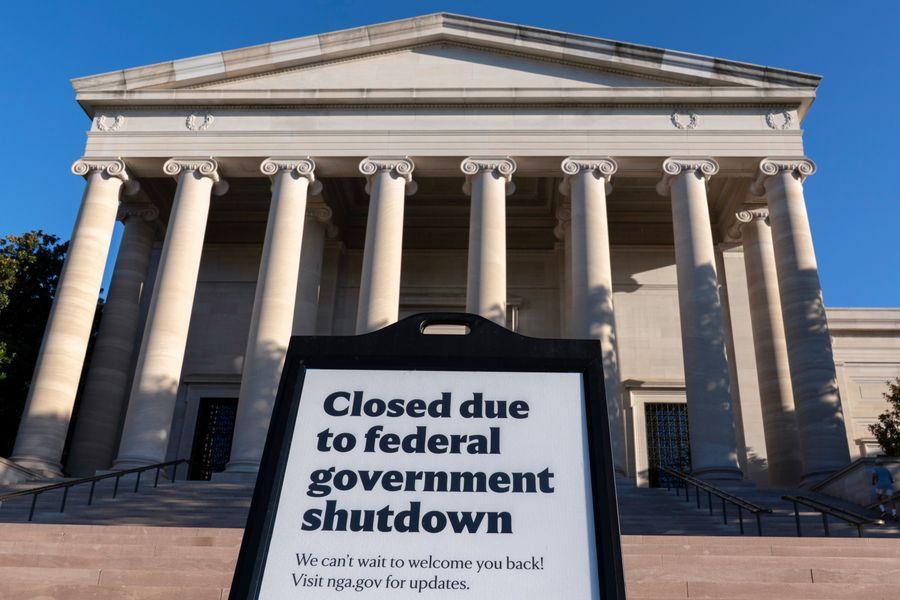
President Trump signed a bill to fund the government, marking the close of the longest government shutdown in history. The end of the shutdown sparks the familiar questions: Who won? Who lost? Which party will pay the political price? It shows how both parties have turned governing into a competition for blame instead of a commitment to solutions. The well-known ritual says more about Washington’s dysfunction than it does about the Americans caught in the middle.
For millions of Americans, the shutdown wasn’t a political debate, it was disruption. More than 600,000 federal employees were sent home without pay. More than 3 million airline passengers experienced delays or cancellations due to air traffic controller shortages. Small businesses dependent on federal loans faced weeks of uncertainty, while veterans’ critical mental health services were left hanging. Meanwhile, members of Congress received their paychecks on time and without delay.
Now, both parties are treating the deal to reopen the government as a victory lap. Democrats point to protecting health subsidies, although they could still expire. Republicans claim they reined in spending, yet this year was the fastest accumulation of $1 trillion in debt outside of the pandemic. And the short-term funding agreement only lasts through January, leaving Americans to brace for another potential shutdown in mere months. Washington calls this a compromise and a step forward, while most voters view it as a short-term truce that fails to address the real issues.
The FBI Gained Access; We'd Already Lost Our Privacy
Is Trump Right About NATO?
Arizona's Voting Rights Fire Bell
U.S. Officials Say 2 Americans Died in Brussels Attack
Gallup reports that congressional approval has dropped to roughly 15% amid the shutdown. After weeks of being stuck in a turbulent, political stalemate, it’s no wonder Americans’ trust in Congress has reached an all-time low. For voters, repeated gridlock reinforces the simple message that the parties are more focused on winning points than solving problems.
Voters’ frustration is fundamentally changing the electorate ahead of the 2026 midterms. Independents, long dismissed as political bystanders, are quietly becoming the most consequential force in American politics. They’re not interested in party loyalty or ideological purity. They’re tired of the dysfunction. They want their elected officials to deliver on their campaign promises. And every shutdown, every failed negotiation, every display of Washington dysfunction pushes more voters to look beyond the two parties for leadership that actually works.
This is more than just political fatigue; it’s a movement of realignment. Recent polling by the Independent Center found that 46% of Americans view independent or third-party candidates as a “fresh start,” highlighting that a rapidly growing number of Americans are rejecting the binary choice between red and blue. These numbers are especially high among Millennials and Gen Z, with the share of unaffiliated voters rising from 23% in 2000 to 32% in 2025. This bloc of voters is demanding accountability, pragmatism, and leadership that puts country over party.
If the two major parties continue treating governance as a zero-sum game, they risk pushing party-affiliated voters away and contributing to the rise of voters who are breaking with the traditional two-party system.
Unlike in years past, independents aren’t sitting on the sidelines, they’re organizing. Groups like the recently announced Independent Center Voice have launched to support independent candidates, fund grassroots efforts, and promote issue-based campaigns free from party control nationwide. It’s a sign that independents are moving from frustration to action, no longer waiting for the system to fix itself.
Independents aren’t just organizing, they’re winning. Senators like Angus King of Maine and Kyrsten Sinema, who left the Democratic Party to register as an independent in December 2022, are concrete examples of independents holding national office. They show that voters are willing to elect candidates who prioritize pragmatism over party loyalty, and that the independent path is not only viable but increasingly relevant.
As the midterms approach, voters are watching closely to see whether leaders can rise above gridlock and deliver real solutions. If the response is more posturing, grandstanding, and empty victory laps, independents will keep growing stronger – not as spoilers, but as a serious political alternative.
The shutdown’s real legacy may not be who “won” in Washington, but which leaders and ideas Americans decide to follow next, and whether they continue to reward partisan games or turn to independents for accountability, pragmatism, and results.
Support Our Mission
The Internet provides an endless stream of content. Not all of it is worth your time. That's why, every day, RealClearPolitics curates the most essential news and information—from all sides and across mediums. The links, videos, and podcasts curated here are the product of human judgment, not algorithms or AI. Please help power our mission of presenting a thoughtful, balanced public discourse through a tax-deductible donation.
Would you consider supporting us today?

Jon Finer’s Old and Dangerous ‘New Approach’ to Israel
Peter Berkowitz • RealClearPolitics
The President Deserves Better
John Ullyot • RealClearPolitics
Congress Doesn’t Need Another Blame Game. It Needs To Find What’s Broken
Jarrod Bernstein • RealClearPolitics
Democrats Won the Midterms. Common Sense Won, Too
Jordanne Kemper • RealClearPolitics
The 120th Congress Shapes Up
Carolina Lumetta • RealClearPolitics
Flooding GOP Primaries With Democrats
Robert Natelson • RealClearPolitics
RCP Today
Top stories on RealClearPolitics
The Takeaway
Polling intelligence and analysis delivered to your inbox
World News
Featuring the latest world news
Policy
Featuring the latest policy news
Support Our Mission
As part of RealClearPolitics, authors aim to provide balanced, non-partisan analysis by presenting top reporting and commentary from all sides of the political spectrum.
Trusted by policymakers and citizens alike since 2000