
Trump Tariffs
The Great Rewiring: Why 'America First' Trade Could Benefit Us All
COMMENTARY
Published Dec. 4, 2025 • Read time: 7m
A generational shift is taking place in the global trade and financial system. New U.S.-driven trade policies and deals are early milestones in this process, which will likely continue for decades, because the previous system enabled unsustainable debts and untenable supply chain vulnerabilities. The new system could alleviate these problems, significantly improving economic and national security for the United States and its trading partners. As is often true when quitting a bad habit, the current transition phase is turbulent – and comes with recession and inflation risks – but the long-term goal is worth it.
In the spirit of forming healthier habits, we could call the emerging system “The Great Rewiring.”
How We Got Here: The Old System
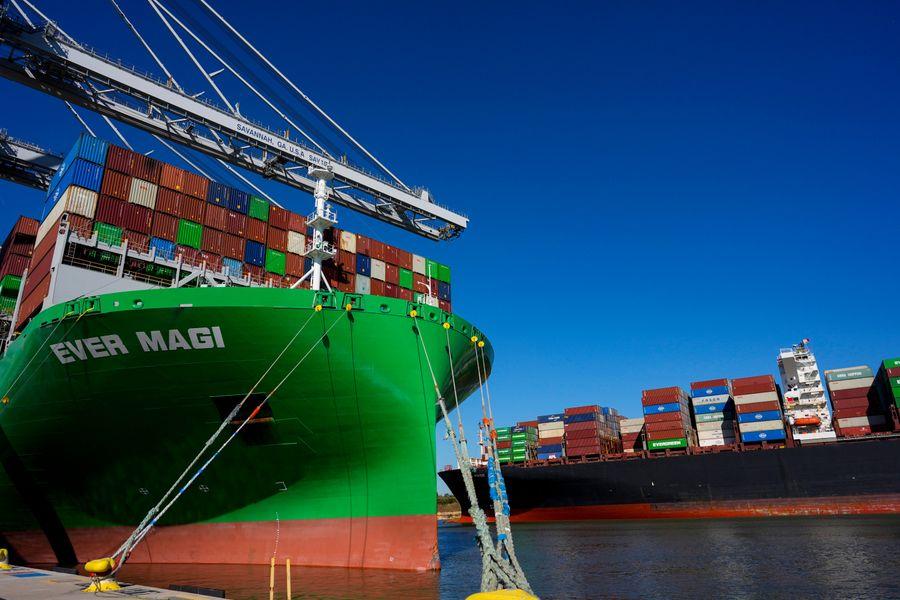
Understanding how we got here starts with the U.S.-China trade relationship. In 1999, the U.S. entered a Free Trade Agreement with China and agreed to its joining the World Trade Organization in 2001, which allowed America and the world easy access to Chinese markets. And since 1994, China has maintained an ongoing currency devaluation, making their exports much cheaper in U.S. dollar terms. The combined effect of these events was a colossal relocation of formerly Western manufacturing to China, as cheap yet capable Chinese labor became available to everyone.
As a result, China has had a large trade surplus for the last 30 years, exporting more than it imports, while the U.S. has run an almost equal trade deficit (about $900 billion in 2024), in large part to buy what China is selling. Most of this trade has been conducted in U.S. dollars, and for the most part China has recycled those dollars into U.S. Treasurys – in other words, lending those dollars back to America with interest. Many other countries have had a similar relationship with the U.S., notably Japan, Saudi Arabia, and Germany.
The U.S. has used this line of credit in support of government spending for decades. It facilitated deficit spending used to expand the American military, health care programs, infrastructure, and much more. This system also kept inflation under control, given the lower cost of Chinese-made products. And it was the result of deliberate policy choices in Washington and Beijing to maintain the post-1994 status quo, with multinational corporations lobbying extensively to keep it in place.
This arrangement offshored millions of jobs to China, including critical parts of the supply chains for pharmaceuticals, energy production, transportation, smartphones, and other vital technologies. Several of these industries now have singular chokepoints in China – for example, almost 50% of all antibiotics produced depend on Chinese inputs, and that number rises to about 75% for lithium-ion batteries and 90% for rare-earth magnets, which are used in myriad medical devices, cars, and electronics.
This offshoring also boosted corporate profits at the expense of many U.S. workers, whose former manufacturing jobs were replaced with lower-paying jobs or were not replaced at all. Impacted workers and their families relied more heavily on welfare programs, while their former employers’ tax rates decreased, in effect transferring wealth from average American taxpayers to already-profitable conglomerates and their foreign suppliers. The poster child for this phenomenon is Apple, whose computers were mainly made in America until the late 1990s, after which Apple outsourced most of its manufacturing to China. Over time, this tectonic shift in economic policy contributed to the tidal wave of protectionist, populist, and anti-establishment politics that we are experiencing now.
In addition, this relocation of labor was so heavily weighted in China’s favor that it left other countries behind as well – countries that could have easily participated in more inclusive trade agreements instead of seeing their economies stagnate. In particular, many Latin American countries lost out on opportunities to produce more goods for the world, contributing to poverty that (along with other factors) incentivized crisis-level migration into the U.S. in recent years.
With voters and policymakers having rejected unfettered globalization for all of these reasons, a more sustainable arrangement is now emerging.
Where We’re Going: The New System
The Great Rewiring is meant to repatriate and “friend-shore” critical industries and supply chains, mainly through updated trade deals, expanding domestic production, and U.S. tariffs that are now generally on par with those imposed by other countries (and which have been in place since long before the Trump administration). Understandably, the U.S. aims to bring back jobs, reduce dependence on adversarial countries, reduce debt-fueled consumption, and increase revenue from both imports and exports. This is a long-term proposition, of course, and its success should be judged over multiple years.
As this new system takes shape, America’s gain does not have to be everyone else’s loss. World leaders are already identifying new opportunities for mutually beneficial cooperation, as evidenced by French President Emmanuel Macron’s 2024 speech “Building a New Paradigm” and Dominican President Luis Abinader’s 2025 address at the Council of the Americas. In particular, the EU has started building toward greater defense and energy independence with support from the U.S., which should be a growth driver on both sides of the Atlantic.
Relatedly, this process should not involve a total decoupling from China and Russia, but rather a de-risking of those relationships. Legitimate civilian trade should remain open across the globe. Export controls or bans should be applied in a targeted way, mainly for national security purposes. Ideally, we should also have open communication on matters of health, climate, diplomacy, and financial stability, to name a few areas where coordination is in everyone’s continued interest. These various linkages are essential for lowering the chances of conflict and preserving global growth.
Making This Work
A central challenge (and opportunity) will be efficiently allocating and sequencing the massive investments needed to rebuild various industries, re-skill workers, and reroute trade. There’s little room for unproductive spending given the amount of debt we’ve accumulated, so government initiatives should be transparent about how they are expected to pay off, and essential private companies need public accountability mechanisms, as is now the case with Intel in the U.S. Otherwise, we risk an unmanageable debt burden and excessive inflation.
In doing this, policymakers should also consider a more permissive approach to AI and robotics, such as allowing the overdue automation of U.S. shipping ports. This would help combat inflation, likely accelerate progress in many areas, and could make domestic manufacturing cost-competitive again in comparison to low-wage offshore models. However, we need to prepare for the resulting unemployment by creating productive new jobs wherever possible, using social safety nets when necessary, and clearly articulating plans for all of this to voters.
To improve our chances of a good outcome, government investment in the Rewiring should work toward benefitting as many people as possible and creating positive network effects. An example worth emulating is the American Interstate Highway System buildout (1956-1992), which involved huge upfront costs and coordination between states but yielded enormous productivity gains – around $2 trillion net over its first 40 years – as well as intangible benefits like greater social cohesion. Friend-shoring and energy infrastructure updates have the potential to unfold similarly.
The rearrangement of global trade is clearly more contentious and involves more trade-offs than building highways, and may take a similar amount of time and effort to fully materialize. But it is well worth it to address the current system’s fragilities and build toward a more resilient future.
Support Our Mission
The Internet provides an endless stream of content. Not all of it is worth your time. That's why, every day, RealClearPolitics curates the most essential news and information—from all sides and across mediums. The links, videos, and podcasts curated here are the product of human judgment, not algorithms or AI. Please help power our mission of presenting a thoughtful, balanced public discourse through a tax-deductible donation.
Would you consider supporting us today?




RCP Today
Top stories on RealClearPolitics
The Takeaway
Polling intelligence and analysis delivered to your inbox
World News
Featuring the latest world news
Policy
Featuring the latest policy news
Support Our Mission
As part of RealClearPolitics, authors aim to provide balanced, non-partisan analysis by presenting top reporting and commentary from all sides of the political spectrum.
Trusted by policymakers and citizens alike since 2000