
US China Trade
Make Review of the U.S.-China Economic Relationship Meaningful
COMMENTARY
Published Jan. 12, 2023 • Read time: 4m
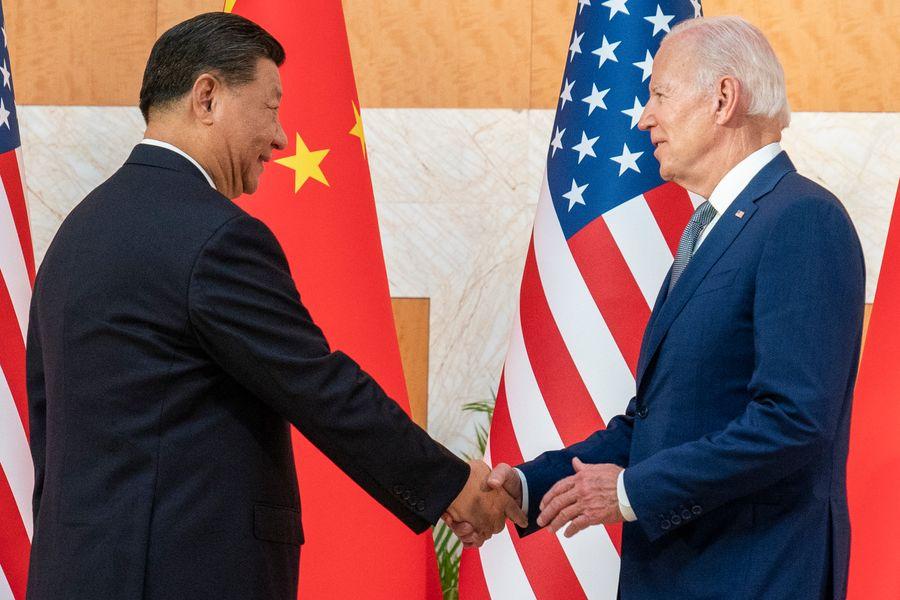
The United States government’s economic policy towards China made a long overdue and dramatic shift six years ago. This change was largely, but not exclusively, driven by presidential action – first Trump’s and now Bidens’, with Congress playing a secondary role. That could be changing now that the new House majority has established a select committee to examine U.S.-China competition.
The Select Committee on the Strategic Competition Between the United States and the Chinese Communist Party is a welcome development. If managed correctly it will seriously advance the priorities that many critics of the Chinese Communist Party’s policies have been raising for years. I recommend starting with those that would enhance our economic competitiveness and national security.
The stage is set to do so, because skepticism of our trade relations is deep, bipartisan, and growing. A lot has changed in the 20 years since Democratic President Bill Clinton united with the vast majority of congressional Republicans, as well as with many from his own party, to write a blank check to China for its imports, in the misguided hope it would become friendlier and more open in return.
U.S. trade policy toward the Chinese government has in fact transformed significantly since the Obama years, and Joe Biden has maintained and even strengthened most of the reorientation started by Donald Trump. The Democrat in the White House has kept most of the China-facing tariffs his Republican predecessor raised, and he’s gone farther by enacting cogent industrial policy – the CHIPS Act and the Inflation Reduction Act – that will establish a domestic manufacturing footprint so we can better compete with heavily subsidized (if not fully state-owned) Chinese competition in the crucial semiconductor and clean energy industries.
Trade Myths and Realities
The Mistaken Bipartisan Attack on Free Trade
A Breakthrough on Trade
Derail Fast Track!
These policies are only possible because of the political climate, and years of mismanaged trade is how we arrived here. We’re now well past the onset of the China shock, during which many Americans witnessed deindustrialization, resultant job loss, and economic stagnation. And more of us were reminded of the pitfalls of an overreliance on Chinese imports when trade seized up and the U.S. couldn’t find medical supplies during a deadly pandemic.
That’s the context in which these policies have been enacted – open trade with the United States hasn’t made China freer. Rather, it has left American industry less resilient and blue-collar workers with dwindling incomes, while the consumer products on American shelves become only marginally cheaper. And the polling reflects it: Most Americans see China as a legitimate economic threat.
But even as some work has already been done to reimagine the U.S.-China trade relationship, there’s plenty more to do. Tariffs against some Chinese imports have been raised, but they must be maintained or augmented appropriately. Some products made with Uyghur forced labor have been seized, but enforcement must intensify. Supply chain vulnerabilities have been identified, but now they must be corrected beyond the reshoring of high-tech semiconductor fabrication. This Congress – and this committee – must make sure federal spending doesn’t funnel into Chinese state-owned enterprises, as happened a few years ago under the Paycheck Protection Program. And it will need to make sure guardrails are in place so that overcapacity in whichever industry the Chinese government targets doesn’t manifest as layoffs for American workers when that largesse is dumped below cost into the international market.
To be judged a success, the Select Committee on China must advance actionable outcomes that improve conditions for American workers and businesses that face Chinese import competition. But it has a blueprint to work from: The bipartisan U.S.-China Economic and Security Review Commission in November outlined dozens of recommendations to address unfair and anticompetitive Chinese trade policies, the chief of which is putting China’s normalized trade relations with the United States up for examination in the U.S. Congress.
The committee should start there because the timing is right to do so. This group will do serious work and will be led by serious legislators. I hope they seize the opportunity to further the reorientation of the U.S.-China trade relationship.

Jon Finer’s Old and Dangerous ‘New Approach’ to Israel
Peter Berkowitz • RealClearPolitics
The President Deserves Better
John Ullyot • RealClearPolitics
Congress Doesn’t Need Another Blame Game. It Needs To Find What’s Broken
Jarrod Bernstein • RealClearPolitics
Democrats Won the Midterms. Common Sense Won, Too
Jordanne Kemper • RealClearPolitics
The 120th Congress Shapes Up
Carolina Lumetta • RealClearPolitics
Flooding GOP Primaries With Democrats
Robert Natelson • RealClearPolitics
RCP Today
Top stories on RealClearPolitics
The Takeaway
Polling intelligence and analysis delivered to your inbox
World News
Featuring the latest world news
Policy
Featuring the latest policy news
Support Our Mission
As part of RealClearPolitics, authors aim to provide balanced, non-partisan analysis by presenting top reporting and commentary from all sides of the political spectrum.
Trusted by policymakers and citizens alike since 2000