Virus Outbreak Vaccines
Fixing Central American Trade Pact Could Ease Migrant Crisis
COMMENTARY
Published May 19, 2021 • Read time: 3m
The crisis on our southern border has rightly received renewed attention and remains a top priority for the Biden administration to address, so much so that it has tasked Vice President Kamala Harris with tackling this complex issue. As our elected officials work to manage the current influx of migrants and unaccompanied minors in a safe and humane way, it would be unwise to ignore the many contributing factors that got us here in the first place. And one of them is clearly our trade policies.
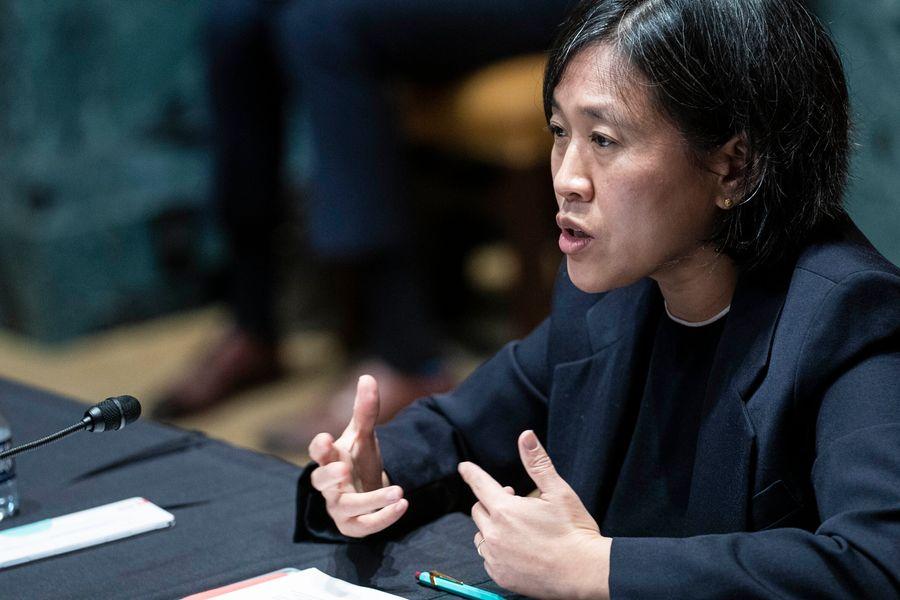
While this problem may seem overwhelming, given the variety of different trade policies and agreements that need to be updated to reflect our current globally integrated economy, our elected officials cannot let the enormity of the challenge prevent any positive action on this issue. If leaders like Vice President Harris, Trade Representative Katherine Tai (pictured), and National Security Adviser Jake Sullivan are looking for a place to start, the Dominican Republic-Central America Free Trade Agreement may be the answer.
The CAFTA-DR is the first free trade agreement between the United States and the Central American countries of Costa Rica, El Salvador, Guatemala, Honduras, Nicaragua, as well as the Dominican Republic. CAFTA-DR was designed to increase the economic prosperity of Central America and combat gang activity and civil unrest. But since it has become law, passing Congress by only a single vote, gang violence has increased in the region, economic growth has been uneven, and the migration of Central Americans searching for opportunities and safety in the United States has only increased.
Trade Myths and Realities
The Mistaken Bipartisan Attack on Free Trade
Bernie Sanders' Free Trade Mythology
A Breakthrough on Trade
The bottom line is that CAFTA-DR is not driving the economic growth and job creation the drafters and legislators who supported it had hoped. In particular, the economic prosperity in the region has been tenuous at best, and for some sectors the agreement has had the opposite effect. For example, CAFTA-DR includes rules and regulations that prevent additional jobs from being created in the region, which further limits economic opportunities for many of these Central American families.
An obvious example of a job-killing rule in this agreement states that apparel products must be made using U.S. and/or Central America-DR yarns, and that fabrics must be duty free. If these types of rules were updated to allow global yarns to be used, it would increase the different types of apparel that could be produced in CAFTA-DR countries, which would drive increased businesses and capital investment to the region and create tens of thousands of jobs in the apparel sector alone. It would also help supply chains to diversify away from China.
And the great thing is that these technical apparel rules in CAFTA-DR could be updated without completely renegotiating the agreement; indeed these technical rules are updated for all other products on a regular basis.
While it is understandable that the Biden administration is focusing on the issues of immediate concern, such as addressing the pandemic and housing the unaccompanied minors crossing our border, we cannot forget systemic issues that need to be addressed as well. And unless there are fundamental and structural changes to our trade policies, we can expect the influx of migrants from Central America to continue.

A RealClear Thanksgiving: Investing in a Better Future
David DesRosiers • RealClearPolitics
Trump’s Newsom Problem: Antagonist-in-Chief
Carolina Lumetta • RealClearPolitics
America’s Free Spirit
John Maxwell Hamilton • RealClearPolitics
The GOP Majority Should Go Out in Glory
Daniel McCarthy • RealClearPolitics
Republican Majorities Could Return Sooner Than Expected
J.T. Young • RealClearPolitics
The Danger Before the Attack
Leslie J. Sullivan • RealClearPolitics
RCP Today
Top stories on RealClearPolitics
The Takeaway
Polling intelligence and analysis delivered to your inbox
World News
Featuring the latest world news
Policy
Featuring the latest policy news
Support Our Mission
As part of RealClearPolitics, authors aim to provide balanced, non-partisan analysis by presenting top reporting and commentary from all sides of the political spectrum.
Trusted by policymakers and citizens alike since 2000