
Group Pushes "Nonpartisan" Third Party Ticket in '12
Published Nov. 3, 2011 • Read time: 5m
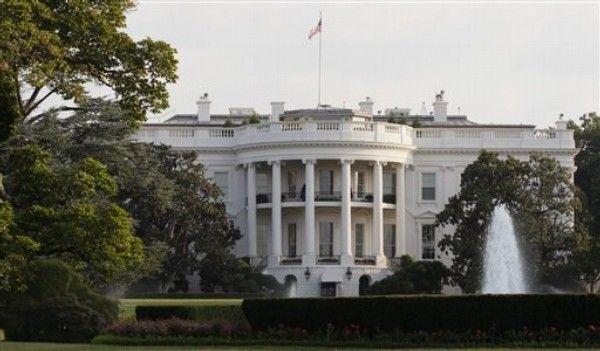
There's no telling who the Republican presidential nominee will be, even though the White House thinks it has a pretty good idea. But even if Mitt Romney squares off against Barack Obama in the 2012 presidential election, one factor might throw off any voter-modeling that either campaign could do ahead of time -- and wildly.
The real unknown in next year's presidential race is whether a viable third-party candidate will enter the race. It's not just the potential that Ron Paul would launch a general election bid -- even though he’s said he has no plans to do so. It’s not just the Tea Party expressing disinterest in Romney-as-nominee and waging war from the right. It’s not even the threat of a fabulously well-funded independent candidacy by Michael Bloomberg. Beyond any of those possibilities, a group called Americans Elect is working to get another line on the ballot to be shared by running mates who have different party affiliations, and there’s more money behind the effort than there is in Romney’s campaign coffers.
Led by Elliot Ackerman, the non-profit organization already boasts $22 million in funds to reach its goal of getting a viable third ticket on next year’s ballot in all 50 states. Already, the group has gathered enough signatures to qualify for the ballot in Ohio, along with seven other states. Operations are currently under way to get on the ballot in 13 more states, and at a meticulously organized rollout at the National Press Club on Wednesday, Americans Elect distributed carefully crafted plans detailing how it aims to get on the ballot in the other 30.
A Better Choice
A Third Party Emerges
Idea of Third-Party Option to Trump Loses Steam
Libertarian Lite
The problem? They need a candidate.
They also need a running mate who doesn’t share an affiliation with the other person selected, but who would be willing to serve with him or her anyway.
A handful of the group’s leading organizers took to the stage to outline their proposals and decry the ineffectiveness of the two-party system. So instead, they said, they would offer a “nonpartisan ticket” -- even if it is actually bipartisan. In fact, the motto is: “Pick a president -- not a party.”
Thousands of volunteers are charged now with recruiting more than 1 million delegates, who will start drafting candidates for the special ticket this winter. Next spring, according to the Americans Elect plan, they will vote in three rounds online, and the field will be narrowed to six names. Those names then must be willing to run and declare their intention to do so, which will include setting up a campaign and filing with the Federal Elections Commission. And then in June, the delegates will vote again, in up to three rounds online, until a majority is reached for the actual candidate.
In other words, American voters who become delegates will come up with the candidates of their choosing. And that may mean that Fred Thompson crops up again, or Hillary Clinton or Condoleezza Rice. Or Donald Trump. Or George Clooney. Or even Julia Roberts. You get the idea. (The pictures that flashed on the three overhead screens at Wednesday’s event included Jon Huntsman, former New Mexico Gov. Bill Richardson and Sens. Joe Manchin, Democrat of West Virginia, and John Hoeven, Republican of North Dakota.)
If it sounds complicated, that’s because it is. A skeptical audience fired off questions to the organizers, who grew a little testy during some of the exchanges.
They pointed out, though, that John Kerry wanted to pick John McCain as his running mate in 2004, but party politics simply wouldn’t allow it. And in turn, the same thing happened to McCain four years later when he considered choosing Joe Lieberman. This system, they said, would enable those tickets.
Of course, a third-party candidate must achieve 15 percent support in a series of national polls in order to qualify for the three official debates in the general election. Asked how likely an Americans Elect ticket would be to cross that threshold, Democratic strategist Doug Schoen pointed out that Ross Perot did it twice -- in 1992 and 1996 -- and that polls indicate that about three in five voters are open to a third-party candidate.
Another questioner pointed out, however, that such candidacies can influence an election’s outcome by throwing it to the party that might have lost without the extra help. Schoen complained that one thing both Democratic and Republican strategists agree on now is that a third-party effort of this kind is “best saved for another day.”
It remains to be seen whether any credible politicians actually will join the effort, but it is a reminder that the contest might not be so cut-and-dried as to offer a clear-cut choice between the two parties. A third-party ticket that leans to the right has the potential to seal a second term for President Obama if it siphons off votes from the GOP ticket. And an Americans Elect ticket with a pair of moderates could drain Obama’s vote share and throw the election to the Republican. Either way, the close of the Republican primary season next year might not make predicting the outcome any easier.

Democrats Won the Midterms. Common Sense Won, Too
Jordanne Kemper • RealClearPolitics
The 120th Congress Shapes Up
Carolina Lumetta • RealClearPolitics
Flooding GOP Primaries With Democrats
Robert Natelson • RealClearPolitics
Washington Keeps Rewarding Oracle—Veterans Keep Paying the Price
Darin Gaub • RealClearPolitics
The Seeds of Unrestricted Warfare
John Teichert • RealClearPolitics
The Primary System Is Losing the Next Generation
Sean Trende • RealClearPolitics
RCP Today
Top stories on RealClearPolitics
The Takeaway
Polling intelligence and analysis delivered to your inbox
World News
Featuring the latest world news
Policy
Featuring the latest policy news
Support Our Mission
As part of RealClearPolitics, authors aim to provide balanced, non-partisan analysis by presenting top reporting and commentary from all sides of the political spectrum.
Trusted by policymakers and citizens alike since 2000