How Facebook Became the Sullied Outlier Among Big Tech
Published July 24, 2019 • Read time: 7m
Facebook connects friends and families around the world, but a recent RealClear Opinion Research poll showed that significantly more Americans would like Facebook to be broken up compared to the other Big Tech giants Amazon, Google, and Apple.
From Gen Zers to the baby boomers, there is concern that Facebook has become too influential in their daily lives.
Baby boomers and “silent generation” members held the highest numbers, with 39% saying it’s necessary that Facebook be broken up. Gen Zers and millennials weren’t far behind with 38% agreeing the break-up is necessary; 35% of Gen Xers concurred. Less than a third of all respondents said it was necessary to break up Amazon and Google, while just over a quarter said it was necessary for Apple to be broken up.
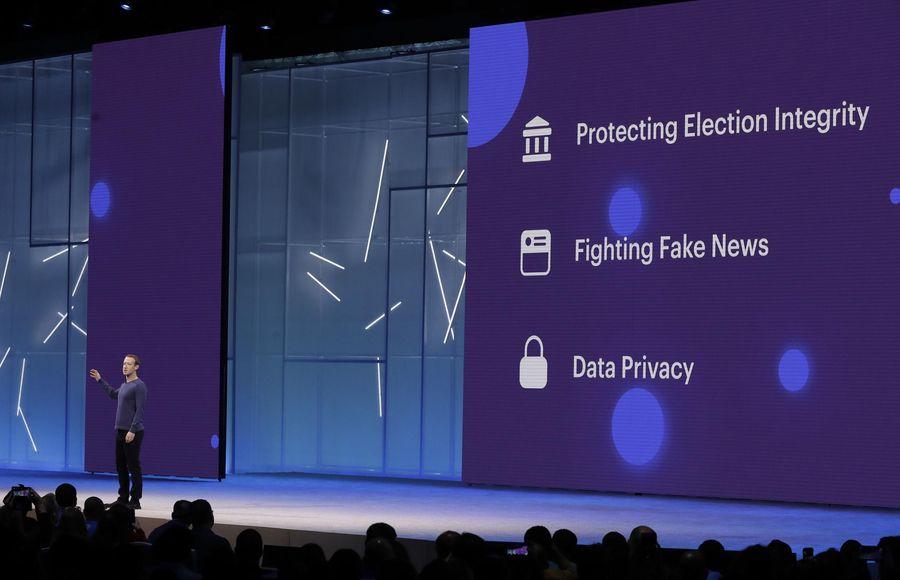
What explains this difference? At least partly, the gap can be attributed to a widespread perception that Facebook allowed itself to be used in ways that played a role in the 2016 presidential election. From 2015 to mid-2017, 3,500 Russian ads related to the election appeared on the social media platform, reaching at least 146 million people. The ads ranged from a Bernie Sanders superhero supporting gay rights to Donald Trump giving a thumbs-up to rallies in Florida. The Trump campaign paid Facebook $261,685 directly for ads. It’s possible the number could be higher, as the campaign made payments to Facebook’s then-consultant, Cambridge Analytica, throughout the election.
The distrust from 2016 lingers. Michigan Attorney General Dana Nessel told RealClearPolitics she still sees the presence of trolls on her own social media.
The FBI Gained Access; We'd Already Lost Our Privacy
Terrorists and Their Privacy
The Internet of Every Damn Thing
Owning Ideas
“I’ll perpetually see someone who is stirring up trouble on my Twitter feed or on my Facebook feed,” Nessel said. “And when you click on it to find out who it is, more times than not, you see that it’s almost certainly a Russian troll. It’s not a real person. And I think we had so much of that in 2016.”
Despite Facebook claiming that it has improved safeguards, Nessel believes voters will experience similar interference leading up to the 2020 election. “[These trolls] are obviously there for the purpose of stewing dissension to make people unenthusiastic about either participating in the system at all, or voting for a particular candidate,” she added.
Rachel Premack, a transportation reporter for Business Insider, told RCP that the average voter is much more aware of Facebook’s global presence and its impact on elections. After learning of the Russian election-influence activities, Premack said, many people she knew deleted their Facebook apps and accounts.
“People are a little wary of the idea of their phones spying on them,” she also said. After ditching Facebook, however, Premack said most people maintained their Instagram accounts. But Instagram, many forget, is owned by Facebook.
Looking at the differences between Facebook and Instagram through the lens of Gen Zers and millennials offers some insight into why many kept one but deleted the other. Platforms that offer consumers a “story” feature –– as do Snapchat and Instagram –– are more appealing to the younger generations. Premack added that young people don’t want to post pictures of themselves and their friends on places where their parents and grandparents are also active.
Jacob Chang, director of insights at Generation Z-driven marketing firm JUV Consulting, explained to RCP some of the recent trends he’s noticed about Facebook’s branding. Facebook, Chang said, has done a very good job of keeping its brands separate –– something that attracts the performative-driven Gen Zers and millennials.
“[This has] allowed Instagram to really flourish,” he said. “I think a lot of the generation doesn’t know that Facebook owns [Instagram]. It’s so essential to who we are and how we operate that we are also willing to overlook its flaws.”
Chang’s claim appears to be true –– nearly 57% of Americans don’t know that Instagram is owned by Facebook, CBS News reports.
The RCP poll also showed that Gen Zers and millennials are more in favor of breaking up the other three companies –– Amazon, Google, and Apple –– than the Gen X and boomer generations. Chang said that Gen Z encourages the breakup of big tech companies because the generation is fueled by distrust.
“Our whole lives have really been bookmarked by volatility and periods of unexpected disaster,” he said. “We were born when 9/11 happened and we were growing up when the Great Recession happened. We’re teenagers throughout the Trump administration.”
Early on, according to Wake Forest University provost and professor of political science Rogan Kersh, older millennials found these large companies highly appealing as countercultural forces for good.
“As concerns have spread about these companies' violation of privacy and antitrust laws, many teens and 20-somethings who missed the earlier 'halo effect' have strongly negative views of these companies. … On Facebook specifically, Mark Zuckerberg's reputation among teens and 20-somethings has shifted from aspirational model to avatar of corporate greed,” he said.
Kersh echoed Chang, saying that this group also exhibits a general left-leaning outlook, particularly on economic issues, in part based on its experience as children during the Great Recession. This younger generation quickly became more aware of the rising inequality in America through movements like Occupy, #BlackLivesMatter, and #metoo.
The socially conscious messaging of Big Tech, however, is a double-edged sword, Alyssa Bereznak, a tech reporter at The Ringer, told RCP. “There’s a sense of privilege that the rest of the world sees Silicon Valley as having,” which often leads to a large gap between the political preferences of Silicon Valley and the rest of the country, Bereznak said.
Big Tech is also losing the support of younger generations because they recognize that online platforms have access to their information and often share it with other companies. Rep. Doug Collins, the ranking Republican on the House Judiciary Committee, told RCP in an email that online platforms have seemingly unlimited access to consumers’ personal data.
“Consumers do not have enough say in who can access [their data], how it’s used or how much is used,” he wrote.
In response to this invasion of privacy, Collins said he plans to draft legislation that would give consumers ownership and control over their data. Additionally, his legislation would provide an alternative to breaking these companies apart based on the new incentive.
“It would create additional competition in the online marketplace once consumers, not the companies, control their data,” he added.
Rep. Jim Jordan, the ranking GOP member on the House Oversight and Reform Committee, shared a similar observation and told RCP that the more Americans learn about these companies, the more they become concerned about their constitutional liberties.
One issue that the oversight committee has spent a lot of time on this year, Jordan said, was the way Big Tech companies are using facial recognition systems. “This is maybe one area where we could potentially get bipartisan support to do something and protect people’s privacy rights, their First and Fourth Amendment rights,” he said.
In terms of breaking up Big Tech, Jordan warned that Congress has to move carefully because these are all private companies. “Frankly, my biggest concern is how government tries to infringe on people’s speech,” he said. “You can’t have the government functioning and operating in that fashion.”
Jordan said the best thing for Congress to do right now is to draw attention to these companies, hold hearings, engage in a national debate, and figure out how to properly address all of these issues.
“I’m still trying to figure out what’s the best approach,” he said.
Critics from outside the government see the policy gridlock on data issues as a result of their massive donating power –– Big Tech has spent over a half-billion dollars since 2005 in lobbying, Fox Business reports. This, in turn, makes politicians less likely to take on the industry even when it seems politically popular, Bereznak told RCP.
“There’s a lot of interest in protecting these major tech companies because they’re huge donors,” she said.

A RealClear Thanksgiving: Investing in a Better Future
David DesRosiers • RealClearPolitics
Trump’s Newsom Problem: Antagonist-in-Chief
Carolina Lumetta • RealClearPolitics
America’s Free Spirit
John Maxwell Hamilton • RealClearPolitics
The GOP Majority Should Go Out in Glory
Daniel McCarthy • RealClearPolitics
Republican Majorities Could Return Sooner Than Expected
J.T. Young • RealClearPolitics
The Danger Before the Attack
Leslie J. Sullivan • RealClearPolitics
RCP Today
Top stories on RealClearPolitics
The Takeaway
Polling intelligence and analysis delivered to your inbox
World News
Featuring the latest world news
Policy
Featuring the latest policy news
Support Our Mission
As part of RealClearPolitics, authors aim to provide balanced, non-partisan analysis by presenting top reporting and commentary from all sides of the political spectrum.
Trusted by policymakers and citizens alike since 2000