
Trump Tariffs Alcohol
A Secure Border and Aggressive Tariffs Go Together
COMMENTARY
Published March 19, 2025 • Read time: 6m
My first job in high school was washing dishes at a local restaurant. It wasn’t glamorous, but it paid well. Some of my other friends spent that summer picking tobacco in the Connecticut River Valley. Both jobs were hard work, but at $8 an hour – real money for a teenager in 1985 – we were happy to do either.
Fast-forward to today, and you’ll find American teenagers and adults working at places like In-N-Out Burger, flipping burgers for $25 an hour. Why? Because when wages make sense, Americans show up for the job.
Yet coastal elites, from their high-rise offices and gated communities, scoff, “If we don’t allow illegal immigrants into the country, who will do those jobs?” The question itself is both revealing and condescending. First, it assumes that Americans won’t work hard. It also displays a patronizing attitude toward those who yearn to come to our great nation while simultaneously offering a lame excuse for having a porous border. The truth is that if you pay Americans fairly, they will work any job.
Likewise, establishment economists are lambasting President Trump over his aggressive tariff policies. But the truth is that both policies work in concert: protecting working Americans and rebuilding our ailing middle class. If Trump and top administration officials more clearly articulate this vision, a majority of our citizens will stand behind his tariff policy just as they voted for his border policy.
If we protect our labor market, American workers benefit. If we protect our industries, American manufacturing thrives. Yet, due to insufficient messaging from the White House, many who champion a strong border hesitate when it comes to tariffs. But the two policies are inextricably linked.
Political Promises
Perils of a Bright Idea
The U.S.-Canada Trade War Nobody Asked For
Trump Was Right About Tariffs
Voters instinctively understand that a strong border policy protects U.S. jobs. When companies can’t hire low-wage illegal immigrants at scale, they must pay competitive wages to American workers. Wages rise, and American families benefit. Add in the national security advantages of a strong border, and it’s obvious why this issue drove many voters to support Donald Trump.
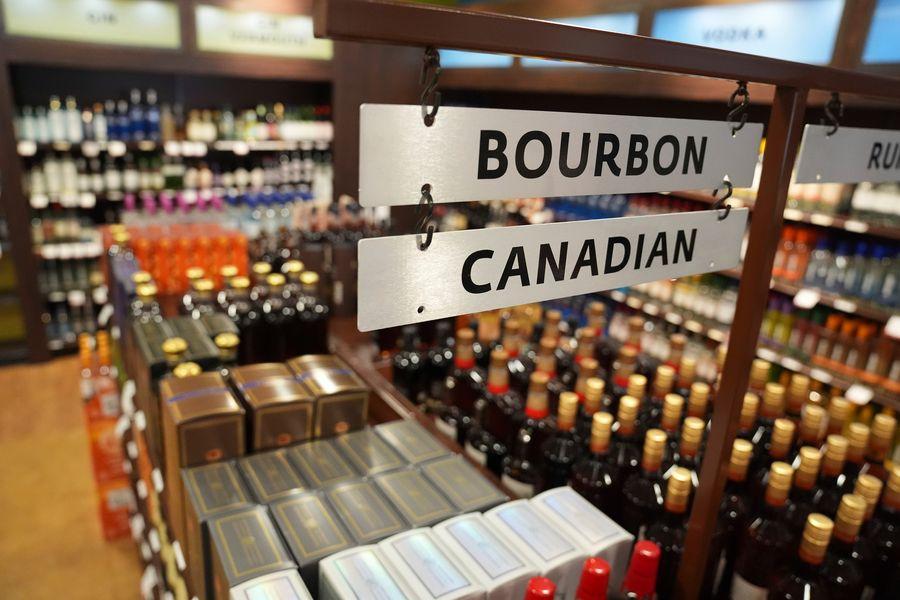
But tariffs? That message hasn’t been as clearly communicated. Yet, the logic is the same. When international competitors undercut American industries with low-wage labor, domestic companies face a brutal choice: Either move production overseas or go out of business. Tariffs level the playing field. They make it economically viable to manufacture in the United States, keeping jobs at home.
Henry Ford knew this over a century ago. Encouraged by the nation’s strong border and tariff policies, he doubled his workers’ wages so they could afford the very cars they built. It wasn’t just good for his employees, it was good for business. That’s precisely what border security and tariffs can accomplish today: ensuring American workers earn wages high enough to sustain the economy from within rather than relying on foreign labor and cheap imports.
Critics argue that border policies and tariffs contribute to inflation. There’s some truth to that. Restricting cheap labor and foreign goods can push prices up. But here’s the crucial point: Wages rise, too. When companies must pay fair wages to domestic workers, those workers have more money to spend. That offsets price increases and sustains consumer demand.
Another factor is supply chains. When we build products in America, we don’t just support workers, we also reduce our dependence on fragile international supply chains that leave us vulnerable in crises – as we learned during the COVID pandemic. And for those concerned about the environment, reducing global shipping – one of the worst polluters on the planet – aligns tariffs with sustainability goals.
Staying the course of the past few decades is far worse in the long run, too. Relying on cheap labor and imports may keep prices down temporarily, but it suppresses wages. That’s a slow road to economic stagnation and unsurmountable national security vulnerabilities, one that leaves American workers unable to sustain their families or the broader economy and our nation obsolete on a global stage, or worse, prone to invasion.
The China Lesson: Protectionism Pays Off
For the past four decades, China has imposed tariffs ranging from 5% to an astronomical 3,000% on American goods. They’ve used export taxes to limit U.S. profits in industries like film, where Hollywood studios receive only 25% of Chinese box office revenue compared to the 50% they earn elsewhere. On top of that, China caps foreign film imports to just 32 movies per year, ensuring domestic productions dominate the market.
The result? A staggering 700 million Chinese people moved into the middle class. This success story isn’t only due to tariffs, but Beijing policymakers certainly believe it was a key factor, as they’ve resisted all attempts to force them to open their markets and trade fairly. Meanwhile, American companies – Nike against Li-Ning, Tesla against BYD, Apple against Huawei – are finding themselves outcompeted in the very market they once dominated. And that’s only the tragic story for those lucky enough to have gotten into China’s market. Facebook, Google, Netflix, and others never even had the chance.
The message is clear: Protectionism works. China knows it. The U.S. used to know it, too. It’s time to remember again.
Yes, tariffs and border protections may rattle the stock market. But the economy that most directly impacts ordinary Americans – and which creates the most new jobs – is not Wall Street. It’s Main Street. It’s the wages that determine whether families can afford a mortgage, whether local businesses thrive, and whether young people see a future in their communities.
Since 1978, Washington’s economic approach has prioritized investors over workers. The tax code reflects this imbalance: Capital gains are taxed at nearly half the rate of earned income. That means labor is penalized while passive investment is rewarded. A strong economy should correct this disparity by treating labor and capital equally, just as President Trump has advocated. A rebalancing of the labor-versus-capital dynamic, done in concert with aggressive tariff and border policies, would create a potent formula for American success.
History proves that border security and tariffs are two of the most powerful tools for strengthening the middle class. The 19th-century Industrial Revolution was built on tariffs that protected American manufacturing while also alleviating the burden of income taxes on the working class. In the 20th century, Henry Ford and other industry innovators proved that paying workers well was the key to long-term economic success. And over the past 40 years, China has demonstrated that strong borders and trade protectionist policies can lift an entire nation into prosperity.
Anyone who claims to support the middle class must recognize that tariffs and border security go hand in hand. If President Trump effectively communicates this fact, his trade and tax policies will gain the broad support they deserve. The American worker – just like workers throughout history – wins when the economy is structured to put their interests first. It’s time for the U.S. to embrace policies that prioritize its workforce, just as China and other American competitors have done for decades.

Jon Finer’s Old and Dangerous ‘New Approach’ to Israel
Peter Berkowitz • RealClearPolitics
The President Deserves Better
John Ullyot • RealClearPolitics
Congress Doesn’t Need Another Blame Game. It Needs To Find What’s Broken
Jarrod Bernstein • RealClearPolitics
Democrats Won the Midterms. Common Sense Won, Too
Jordanne Kemper • RealClearPolitics
The 120th Congress Shapes Up
Carolina Lumetta • RealClearPolitics
Flooding GOP Primaries With Democrats
Robert Natelson • RealClearPolitics
RCP Today
Top stories on RealClearPolitics
The Takeaway
Polling intelligence and analysis delivered to your inbox
World News
Featuring the latest world news
Policy
Featuring the latest policy news
Support Our Mission
As part of RealClearPolitics, authors aim to provide balanced, non-partisan analysis by presenting top reporting and commentary from all sides of the political spectrum.
Trusted by policymakers and citizens alike since 2000