
Congress China
Mikie Sherrill's Narrative Fatigue
COMMENTARY
Published June 3, 2025 • Read time: 5m
As New Jersey begins early voting for their gubernatorial primaries, voters are looking for candidates’ stories to take to the ballot box. This is where frontrunner Mikie Sherrill could find herself in trouble.
Democratic contender Rep. Josh Gottheimer weaves a tale of his upbringing in Essex County, Newark Mayor Ras Baraka touts his recent arrest at an ICE protest, and Mayor Steven Fulop builds an account of Jersey City’s transformation.
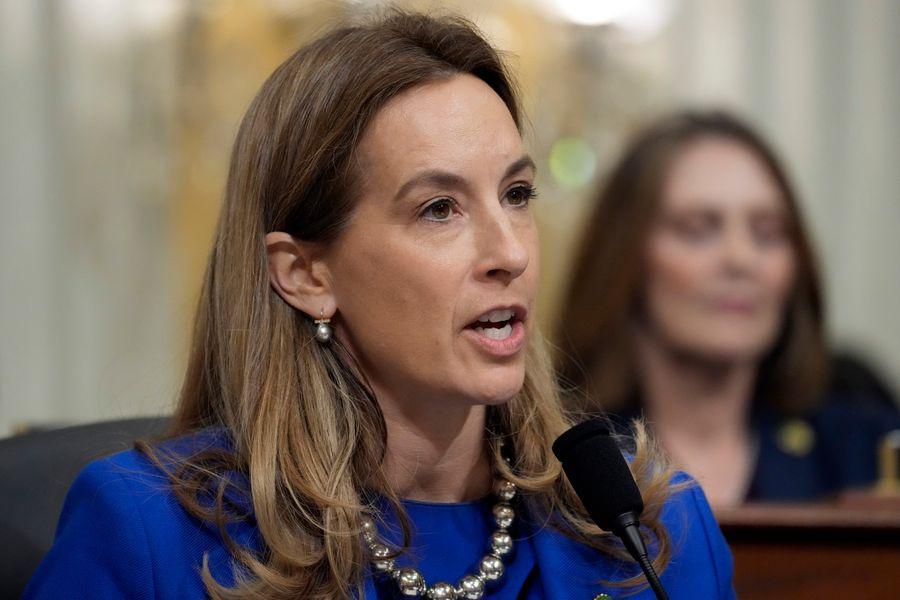
Mikie Sherrill has credentials – a current U.S. representative, former Navy pilot, and federal prosecutor – but unlike the others, she lacks a story. This could ultimately spoil her bid.
Julie Roginsky, a longtime Democratic strategist, notes that she can’t tell “what [Sherrill’s] running on right now other than [her resume].” Many of Sherrill’s policy proposals on healthcare, cooperative federalism, and housing are extensions of the incumbent Murphy administration, not transformative new initiatives. In turn, voters are supporting alternatives to dissent from her unoriginality and “platitudes.”
The Sherrill campaign refuses to address the tension between her presentation and its relation to voter concerns.
Twenty-two percent of New Jerseyans rank the economy as their top issue, followed by immigration (13%) and candidate character (11%). Voters aged 50+ and older, the most powerful electoral bloc in the Garden State, prioritize property tax relief, retirement security, and long-term care reform.
Military service doesn’t automatically make someone better at managing a state’s economy and services. Sherrill doesn’t demonstrate that it can in her marketing, interviews, or speeches, either. Her campaign is betting that this doesn’t matter.
A 2022 Pew Research poll found that 49% of Americans – and 53% of registered voters – said they like political leaders who are also veterans.
Sherrill’s campaign website is laden with military imagery, with her “about” page mentioning her armed services experience a whopping 13 times. County Democratic committees that endorsed Sherrill, such as Essex, focus on similar messaging. Even recent advertisements and her debate performance spell this background out for viewers. This is the campaign’s core, and they’ll mention it whenever possible.
Her campaign runs on the assumption that voters will intrinsically admire her credentials without explaining what it means for her home state’s future. It could be a ploy for cross-party appeal, as Republicans are more likely than Democrats to value military experience in candidates. Nevertheless, it’s an approach that lacks substance, and this could limit voters’ faith in Sherrill.
Even on the rare occasions when she does talk policy, her ideas aren’t new. She pledges to uphold Gov. Murphy’s goal of achieving 100% clean energy by 2035. She echoes Murphy’s stance on immigration policy by keeping New Jersey’s “sanctuary” status and lauds his stance on New Jersey Transit funding. She, like Murphy, seeks to be tough on President Donald Trump and challenge federal law. Garden State powerbrokers love Sherrill’s continuation of the Murphy regime and have made her the establishment pick.
Yet, today’s political climate increasingly rewards candidates who deviate from the status quo, and New Jersey is no exception. Murphy’s approval rating has steadily declined over his governorship, in part due to his lackluster transit funding plan. Only 25% of voters say his policies align with theirs, and 60% of state independents want the next governor to work with President Trump, with state voters evenly split over mass deportations.
Sherrill is imitating an already-told story, and its reception is suboptimal. By not staking out positions beyond Murphy’s agenda, Sherrill lets his achievements and shortcomings speak for her. That might not cut it in an open election.
While name recognition, fundraising, and endorsements can render a campaign competitive at the surface level, narratives require ownership. German philosopher Martin Heidegger once discussed the concept of eigentlichkeit, or authenticity, in which individuals must choose and commit to a meaningful path rather than living passively or according to external scripts. A campaign shouldn't manufacture a persona or copy another’s playbook one-to-one; it must be a genuine and full expression of the candidates’ beliefs and history. Ownership guarantees coherence because the story arises from the candidate as a lived reality and demands consistency between message and action.
Without ownership, campaign narratives become empty spectacle – stories told about someone, not by them. In democratic politics, only those who craft their stories organically with conviction can hope to lead others into a shared and believable future.
In the last stretch, other primary candidates can capitalize on Sherrill’s weakness by anchoring their emotionally resonant narratives in concrete policy perceptions.
Former State Senate President Steve Sweeney often invokes his background as a union ironworker and raising his daughter with disabilities. But he can go further, framing his political journey as a commitment to family and community, and turn it into a bold economic equity agenda that includes expanded labor protections and a state disability benefits overhaul. Baraka can integrate his father’s legacy as a poet to reinforce his image as a social justice champion, and Gottheimer can apply his time at the Federal Communications Commission to push for affordable broadband and infrastructure.
Storytelling isn’t fluff, but a powerful tool for political persuasion. In New Jersey, the growing desire for outsider energy and policy innovation demands that the next governor inject emotional authenticity into their policy goals and localize their story to build beyond their home base. If they want to beat Sherrill, challengers need to build a narrative that is wholly theirs, inspiring, and implementable.






RCP Today
Top stories on RealClearPolitics
The Takeaway
Polling intelligence and analysis delivered to your inbox
World News
Featuring the latest world news
Policy
Featuring the latest policy news
Support Our Mission
As part of RealClearPolitics, authors aim to provide balanced, non-partisan analysis by presenting top reporting and commentary from all sides of the political spectrum.
Trusted by policymakers and citizens alike since 2000