
Election 2022 Georgia Governor
How To Know If an Incumbent Governor Is in Trouble
COMMENTARY
Published Sept. 12, 2022 • Read time: 5m
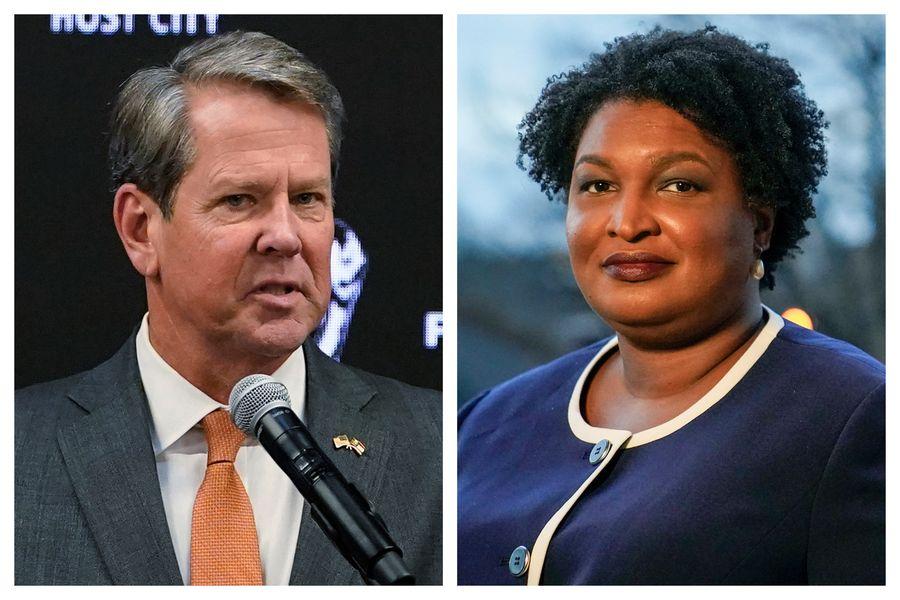
Last week, a well-regarded Democratic Party strategist posted on Twitter that Georgia’s Republican governor Brian Kemp, “as an incumbent, isn't polling where an incumbent needs to be. Of the 6 public polls since July, Kemp is below 50 in 4.”
This is not unusual this year. In a phenomenon felt in both political parties, of the 26 incumbent governors up for reelection this year, 11 are below 50% in the Real Clear Politics averages: Michigan’s Gretchen Whitmer (49.5), Ohio’s Mike DeWine (49.3), Florida’s Ron DeSantis (49), Texas’ Greg Abbott (48.2), Iowa’s Kim Reynolds (48) Wisconsin’s Tony Evers (47.3), Colorado’s Jared Polis (47), New Mexico’s Michelle Lujan Grisham (46), Nevada’s Steve Sisolak (44.3), and Maine’s Janet Mills (44). Laura Kelly of Kansas, the only Democratic incumbent from a state carried by Donald Trump, may end up on this list, but that race has not yet been surveyed by a nonpartisan pollster.
Are these governors all in serious danger of being defeated? Not really. The seemingly soft support may be a reflection of our ongoing political polarization and frustration with governmental institutions. But plenty of past incumbents have been reelected with such numbers.
Conventional wisdom had long been that an incumbent needed to hit 50% in polls because if undecided voters weren’t already sold on the person holding office, they would ultimately vote for the challenger. Back in October 2010, after polling and outcomes from elections since 1998, FiveThirtyEight’s Nate Silver punctured that thinking. He found that incumbent governors and members of Congress polling below 50% but still holding a lead went on to win 80% of the time. (For governors alone, it was 83%). Furthermore, when comparing the polls to the final results, undecideds generally did not break significantly for the challenger. So, Silver concluded, when looking at polls, the margin is more important than the level of incumbent support.
Looking at the gubernatorial elections from 2010 to 2020, in the 20 instances where an elected incumbent was below 50% in the RealClearPolitics average yet held a lead, the incumbent lost only twice: Illinois’ Pat Quinn in 2014, who was ahead by 0.8 percentage points, and Kentucky’s Matt Bevin in 2019, who was ahead by 2.5 percentage points. (While polls often get a bad rap, the fact that the poll leader almost always wins should restore some of your faith in the practice.)
Having said that, we have three instances where the incumbent governor was slightly behind in the polls and still won: Florida’s Rick Scott in 2014, Kansas’ Sam Brownback in 2014, and Iowa’s Kim Reynolds in 2018. That’s clear evidence that undecideds do not always break towards the challenger.
Besides Quinn and Bevin, since 2010 seven other incumbent governors lost reelection. In four of those cases, their average polling deficits were less than three points, narrow enough to be considered within the margin of error: Ohio’s Ted Strickland in 2010, Alaska’s Sean Parnell in 2014, North Carolina’s Pat McCrory in 2016, and Wisconsin’s Scott Walker in 2018. In the other cases, polling projected landslide defeats.
Now that we are less than two months away from Election Day, both parties must start making hard decisions regarding where to invest their resources. With control of Congress uncertain, House and Senate campaigns will command enormous sums of money. (According to data compiled by OpenSecrets.org, nearly $2 billion has already been spent in House and Senate races.) To warrant a big investment in a gubernatorial race where an incumbent is on the ballot, polls need to show an unmistakably competitive race with an incumbent clearly behind or clinging to a very small lead.
The 2022 polls show that no incumbent governor, even those hovering under 50% support, is headed toward a decisive defeat. Only one, Sisolak, trails his opponent, and only by a hair: 0.4 percentage points. One other, Evers, holds a small lead, under 2.5 percentage points (let’s call that the “Bevin Line”). Both are Democrats in states Joe Biden won narrowly. In a typical midterm year, Republicans might feel confident that Wisconsin and Nevada would swing away from the president’s party. But both states have Senate races with Democrats holding modest leads. Democrats hungry to keep Senate control are going to be spending heavily, potentially bolstering turnout for their incumbent governors in the process. Still, the two gubernatorial races (and Senate races) are close enough to give Republicans reason to spend big.
The Republican incumbent governors who appear most vulnerable are DeSantis and Kemp, who hold average leads of 4.0 and 5.5 percentage points, respectively. Both are provocative conservatives in closely divided purple states, and DeSantis is believed to be eyeing the presidency. Democrats also have a dream of upsetting Abbott in Texas. This is more of a longshot: Although Abbott hasn’t quite reached 50% in most polls, the energetic challenger Beto O’Rourke, while drawing fervent progressive support, is barely above the 40% mark.
Few Republicans would be as satisfying for Democrats to defeat as these three. But all of them are currently above the Bevin Line, so we can’t yet consider any of them to be in serious jeopardy. There is still time for their numbers to drift into the danger zone. Of note: All three have enacted abortion bans of varying degrees of severity, which state polls indicate are unpopular among their own constituents, giving their Democratic challengers an opening. But time is ticking. Needles will have to move soon before Democrats can justify expending precious resources.



RCP Today
Top stories on RealClearPolitics
The Takeaway
Polling intelligence and analysis delivered to your inbox
World News
Featuring the latest world news
Policy
Featuring the latest policy news
Support Our Mission
As part of RealClearPolitics, authors aim to provide balanced, non-partisan analysis by presenting top reporting and commentary from all sides of the political spectrum.
Trusted by policymakers and citizens alike since 2000