
Mock Draft Top 5 Football
The Transfer Portal
COMMENTARY
Published March 7, 2024 • Read time: 9m
In 1908 the University of Chicago installed chimes in a tower on its campus. The idea was football coach Amos Alonzo Stagg’s, as was his wish that they ring out nightly at 10:05 to signal it was time for players to go to bed.
“Why not have a good night chime for our own athletes,” he said, “to let its sweet cadence have a last word with them before they sleep, to speak of love and loyalty and sacrifice for their university, and of hope and inspiration and endeavor for the morrow?”
The celebration of athletics as a bootcamp for good citizenship echoed across American campuses as football caught on. Six years before Stagg called for tucking players in their beds with ringing bells, a Yale faculty committee linked selflessness with the playing field, not the classroom: “The athlete is working for Yale, the student for himself.” University presidents praised football for inculcating fair play, courage, and democratic teamwork.
The university, wrote Abraham Flexner, a historian of higher education, is an “expression of an age, as well as an influence operating upon both present and future.” With that in mind, it is worth asking how college athletics are nurturing civic-mindedness today and how the lessons are spreading throughout our society.
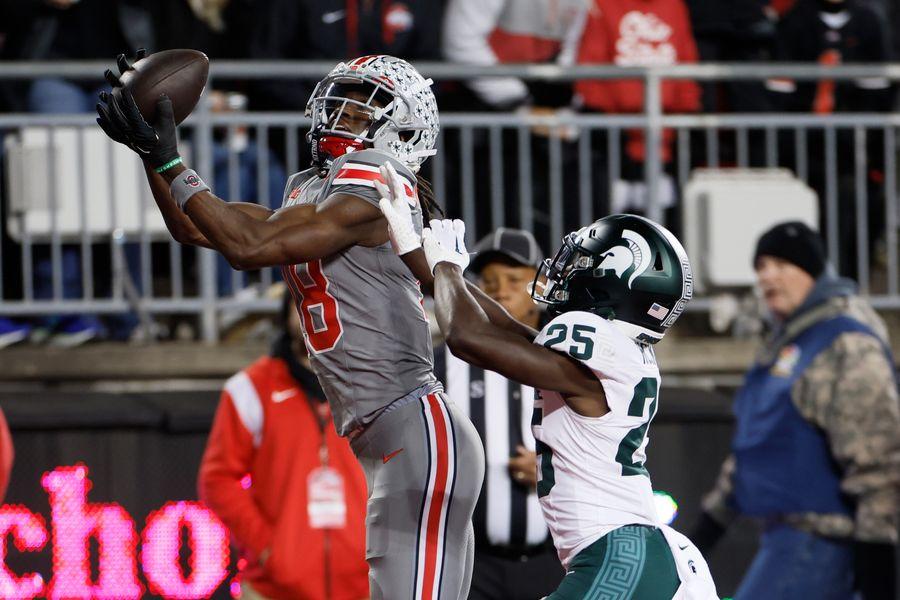
A dismaying answer can be found in a new development in college sports, the online transfer portal. The portal, which in 2018 replaced a more restrictive and cumbersome process, facilitates players leaving their teams for one at a different university. Players announce on the portal they want to leave, and coaches make offers to the ones they want.
Aaron Rodgers Drops a Bomb on Tony Fauci, the 'Absolute Coward'
Knocking Smokeless Tobacco Out of the Park
GOP Crossroads; Party Fractures Help Trump; Rise of the Groupies; Candlestick Memories
For the Patriots, Without Apology
This exercise in loyalty-shifting takes place on a grand scale. In the 2023 portal year, 2,303 players from Football Bowl Schools (FBS) transferred. This was an 18% year-over-year increase. To put this another way, 20% of all FBS players swapped jerseys.
Although the 2024 year is not over, 538 FBS players entered the portal on the opening day of the current cycle. That was a 17% increase over the first day of the previous year.
According to the most recent NCAA data, the number of players who entered the portal in 2022 – all sports, all divisions, and both sexes – totaled almost 21,000. This number is larger than the average university student body. About two-fifths of these students do not find a new home. Some stay put; some leave school without a degree.
For coaches, the transfer portal is a way to upgrade the team. For the players, it is about getting more playing time and, they hope, a better financial deal. The latter is facilitated by another new development dating from 2021. NIL, as it is called in shorthand, allows athletes to receive money for selling their name, image, and likeness.
Previously, teams recruited players by offering them scholarships. The rules have loosened on the premise that if colleges can make heaps of money by putting players on the field, players should pocket some of the loot by endorsing products the way professionals do.
Here, too, the statistics are eyepopping. In 1956 the NCAA allowed teams to give players $15 a week in laundry money. Now collegiate football support groups confect seven-figure NIL deals (let’s call them salaries) to attract and retain the most coveted loyal players, plus the supporters throw in other emoluments. Last year the University of Utah’s Crimson Collective advertised that every scholarship player would be given the keys to a new $61,000 Dodge truck, according to the New York Times. The average salary for a starter in a major football school exceeds $100,000.
Collectives such as these operate outside the control of the university. They try to pass themselves off as tax-exempt charitable foundations.
De facto transfer portals also exist for coaches, who portal themselves to grab lavish financial packages, such as the use of two cars to drive to work (who doesn’t need that?) and interest free loans to buy a home, even though their annual paychecks are in the millions. Many loyal coaches are not above jumping ship before the season is over, even if their old team is heading for a bowl.
This is a long way from the days when teams were run by a student manager and practices were called by the team captain, two responsibilities that help develop leadership.
Love, loyalty, and sacrifice have given way to free agency, pay for play, and cheating. This latter virtue comes about when a coach violates a rule that prohibits contacting players before they independently decide to enter the portal. This “tampering,” as it is euphemistically called, involves enticing players into the portal by telling them what deal they would get by transferring their loyalty.
College is meant to be a pathway to life and, indeed, the life lessons learned in big-money collegiate sports appear broadly in our society. We are becoming a transfer portal society writ large. The portal mentality expresses itself in corporate greed, which has led to income inequity. It is expressed in the propensity for victimhood in place of perseverance.
It is expressed, too, in the attitude that loyalty to institutions or democratic values is outmoded. Here the portal metaphor becomes almost literally true, although the portaling is involuntary. Unwanted individuals are shoved out.
Rather than finding ways to work together, progressives and anti-woke militants cancel people who don’t buy into their orthodoxy. School administrators are fired for not taking sides in ideological wars, rather than being celebrated for promoting teamwork and tolerance, which are some of the very best ways to produce good citizens.
Politics, where many Big Men and Big Women on Campus often end up, is the scene of egregious portaling.
Instead of rowing together to pass meaningful legislation, members of the House of Representatives focus on impeachments, something that was once rare, and removing members of the opposition party from committees, which was also rare. Rep. Marjorie Taylor Greene, one of those removed from a committee assignment in previous Democrat-controlled Congress, learned no useful lessons from it.
Greene has threatened to out-portal House Speaker Mike Johnson if he supports aid for Ukraine. She vowed to do this by calling for a motion to vacate the chair. The motion requires a vote on whether the speaker stays in office. It would require the beleaguered Johnson to struggle to obtain another slim majority vote to stay in office. Little wonder he usually has the bewildered look of a freshman fraternity pledge after a night of hazing.
Then there is Donald Trump. He boasts that if he is reelected, he will indict President Biden as well as investigate (apparently with the same goal in mind) his erstwhile Republican opponent Nikki Haley, his former Attorney General William Barr, and his former chief of staff John Kelly. Trump says he will criminally charge Manhattan District Attorney Alvin Bragg for indicting him. Trump will also portal large numbers of civil servants, whose labors to keep the system running smoothly are inconvenient for his agenda.
The transfer portal is a me-first transaction that unhinges us from our values. It is about expediency, not principles. The circumstances differ depending on the arena in which they occur.
Politics offers myriad opportunities for self-aggrandizement that subverts the democratic principles politics is supposed to serve. Gerrymandering puts representatives in lopsided districts that they can easily win without any effort to compromise with the other party. The primary system favors hyper-partisan candidates not representative of the aspirations of the broad middle of the country. The introduction of television on the floor of the House of Representatives encourages members to treat legislative proceedings as an opportunity for political theater in which they have a starring role.
For collegiate athletics, the contradiction is inherent in the very term itself. Sports programs have as much to do with education as home economics does with economics. Intercollegiate sport is an entertainment mega-business with large television contracts, winsome cheerleaders, and piped-in music to keep the fans pumped up. Education is a quiet endeavor. It is not designed to be watched sitting on a couch with a bottle of beer in one hand and a corndog in the other.
This commercial element appeared in the first ever intercollegiate contest, a rowing meet between Yale and Harvard in 1852 at Lake Winnipesaukee in New Hampshire. A railroad company paid all the bills. It wanted to promote tourism to the area.
This was the original sin of college athletics. Seeing the opportunities to invigorate alumni and show up in the rah-rah sports sections of newspapers, university presidents pressed forward. Stagg was given professorial rank at the University of Chicago, one of the most rigorous institutions of higher education in the country.
In the mid-1950s the NCAA marketed the term “student-athlete,” which, historians tell us, had the ancillary benefit of fending off a worker compensation claim over the death of a college football player. Over time the conflation of education and sports became complete. In a poll of Louisiana citizens in the early 2000s, more than half of respondents agreed that a recent national football championship by Louisiana State University “made for a better academic university.”
You cannot blame young athletes for wanting to be paid for butting heads on the field to entertain wealthy alumni sitting in air-conditioned suites. Nor can you blame Dartmouth University basketball players for voting this week to form a union, which the university has resisted. “Dartmouth seems to be stuck in the past,” one of the players said. “It’s time for the age of amateurism to end.”
But you can also question how good the transfer portal is for students generally. As Clemson coach Dabo Swinney has noted, many “will end up with no degrees and make decisions based on the wrong things.”
You can wonder, too, about the values being passed along in locker rooms when some players drive Porsches after practice while others walk back to their dorm. You can ask if the $35 million in student fees and university subsidies given annually to the University of Connecticut athletic department is in the best interest of an institution that was created to do something entirely different.
You can ponder where all of this is heading.
At the very least we should call things what they are. In the case of collegiate sports, it is a business. Then we should ask what institutions of higher learning are doing elsewhere on campus to instill “hope and inspiration and endeavor for the morrow.”
Support Our Mission
The Internet provides an endless stream of content. Not all of it is worth your time. That's why, every day, RealClearPolitics curates the most essential news and information—from all sides and across mediums. The links, videos, and podcasts curated here are the product of human judgment, not algorithms or AI. Please help power our mission of presenting a thoughtful, balanced public discourse through a tax-deductible donation.
Would you consider supporting us today?

Democrats Won the Midterms. Common Sense Won, Too
Jordanne Kemper • RealClearPolitics
The 120th Congress Shapes Up
Carolina Lumetta • RealClearPolitics
Flooding GOP Primaries With Democrats
Robert Natelson • RealClearPolitics
Washington Keeps Rewarding Oracle—Veterans Keep Paying the Price
Darin Gaub • RealClearPolitics
The Seeds of Unrestricted Warfare
John Teichert • RealClearPolitics
The Primary System Is Losing the Next Generation
Sean Trende • RealClearPolitics
RCP Today
Top stories on RealClearPolitics
The Takeaway
Polling intelligence and analysis delivered to your inbox
World News
Featuring the latest world news
Policy
Featuring the latest policy news
Support Our Mission
As part of RealClearPolitics, authors aim to provide balanced, non-partisan analysis by presenting top reporting and commentary from all sides of the political spectrum.
Trusted by policymakers and citizens alike since 2000