
Election 2022-Senate Pennsylvania
How Will the Midterms Play in Pittsburgh?
Published Oct. 30, 2021 • Read time: 6m
A stock phrase in American politics since the Nixon administration – Will it play in Peoria? – has outlived its literal meaning that the central Illinois town is a bellwether for national opinion. As Pennsylvania votes to select a new U.S. senator in 2022, “Will it play in Pittsburgh?” might be more appropriate, as it encapsulates the importance of western Pennsylvania’s political climate.
In heavily Democratic metro Pittsburgh, some candidates just can’t survive the region’s ever-leftward politics. For instance, Democrat Mike Doyle, whose congressional district centers around the densest part of Allegheny County, announced his retirement this month in the face of a primary challenge from rising Democratic socialist Summer Lee, who currently serves in the state House of Representatives.
“After starting out right-of-center, Doyle quietly voted as he was directed by [Nancy] Pelosi and other leftist leaders,” Luke Negron, the 28-year-old Republican who challenged Doyle last year, told me. “Sadly for him,” he added, “the new wave of progressives wasn’t impressed by his political survival-based masquerading. People see through a yes-man.”
The moderate 27-year congressman exits the stage along with Pittsburgh Mayor Bill Peduto, another “old guard” Democrat who lost this year’s primary over insufficient progressivism. His opponent, state Rep. Ed Gainey, is easily favored to win next week’s general election in Pittsburgh, which hasn’t had a Republican mayor since 1933.
This year, other local races have a progressive lean, too. Allegheny County’s primaries for district and common pleas judgeships, which determine control over sentencing, bail, and evictions, overwhelmingly veered left in May thanks to campaigning by five national progressive organizations. Two far-left newcomers won primaries for Pittsburgh’s school district board. And in the South Hills area’s Mount Oliver, progressive schoolteacher JoAnna Taylor ousted Mayor Frank Bernardini, a moderate Democrat who made the mistake of being photographed with a city council member who was wearing a MAGA hat.
However, recent electoral outcomes don’t necessarily indicate that all of western Pennsylvania has become a hotbed of progressivism. Moderate candidates are under siege from the left, but even more from the right, which has built a stronghold in the region’s suburbs and small Rust Belt towns between the northern Alleghenies and Ohio border.
Consider recent examples. Republicans’ growing southwest caucus in the GOP-majority state legislature, for instance, has prevented Democrats from solidifying power through redistricting reform. In 2020, conservative newcomers flipped three state House seats. The winners – Jason Silvis, Carrie DelRosso, and Devlin Robinson – unseated Democrats who had served for more than 50 years combined. Another veteran Democrat, Jim Brewster of McKeesport, narrowly lost his race against newcomer Nicole Ziccarelli, but retained his seat when a federal court emergency-approved an additional tranche of mail-in ballots that lacked signatures. Ziccarelli is now running for Westmoreland County district attorney.
Despite recent census results showing population declines in western Pennsylvania locales, Republican leaders still predict growth thanks to the resilience of tight-knit communities and thriving local industries, such as natural gas and custom machining. As Scott Avolio, a member of the GOP state committee from Westmoreland County, told the Pittsburgh Tribune-Review: “The party looked at things and knew they were going to continue to lose seats in the East, so it just made sense to focus resources in the West.”
Both political parties are watching Pittsburgh in next year’s U.S. Senate election, which will feature three prominent candidates from the region. On the Democratic side, rivals include Lt. Gov. John Fetterman (the former mayor of Braddock) and moderate Democrat Rep. Conor Lamb, who hails from a prominent local political family. Fetterman and Lamb are leading candidates for the Democratic nomination, with Vanity Fair even calling Lamb the “last, best hope for Democrats to keep control of Congress.”
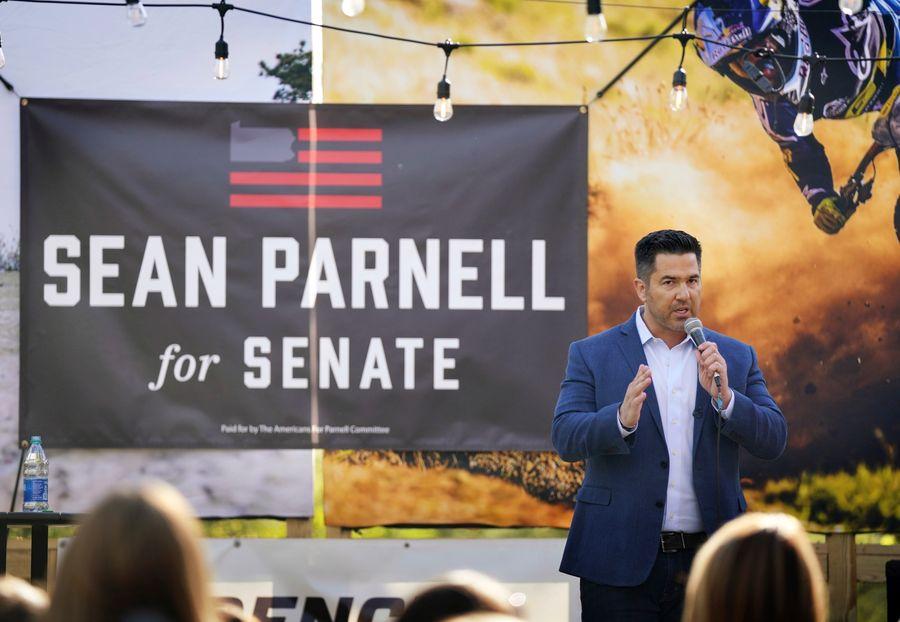
The leading contender on the Republican side is decorated Army Ranger veteran Sean Parnell, who failed to unseat Lamb from Congress in 2020. Parnell is the favorite among Republicans, particularly after his top challenger, Jeff Bartos, abandoned his campaign’s safe, affable image to launch personal attacks against Parnell’s family.
With the retirement of 10-year Republican Pat Toomey, the Senate election – regardless of its outcome – will represent a major turning point. As senator, Toomey maintained relatively moderate positions on issues like immigration and foreign policy. Over time, his public disagreements with Donald Trump distanced him from the former president’s statewide base; he voted in February to convict Trump on impeachment charges of inciting insurrection.
Due to these divisions in the GOP base, CNN has rated Toomey’s seat the most likely to flip in 2022. But while Democratic voters hope to add another seat to their nominal Senate majority, many Republicans are equally mobilized to vote for a populist reformer like Parnell to wield a crucial swing vote in the currently 50-50 chamber.
As it stands, Parnell’s populist-style platform has increased his popularity among conservatives in Allegheny County. He hopes to expand his appeal to statewide voters of all stripes. “Sean’s base is made up of Republicans, independents, and Democrats who want to protect jobs, keep our communities safe, secure our elections, and have the best education system in the world,” his campaign manager, Andrew Brey, told me. In a less polarized era, it’s a platform most Pennsylvanians would likely endorse – especially western Pennsylvanians experiencing the aftermath of last year’s lockdowns, rising retail prices, the $1.5 billion U.S. Steel pullout in the Mon Valley, and other pandemic-era calamities. But in 2022, Parnell’s platform could turn out to be as controversial as his highest-profile endorsement: Trump.
For Republicans, the Senate race will revolve around rising populism, while Democrats will face a similar divide over radicalism. October polling from Franklin & Marshall indicates that over two-thirds of Pennsylvania voters think the state is heading in the wrong direction – and they list “government and politicians” as the biggest problem by far. And according to the pollster’s August survey, resentment against public officials was matched by concerns over inequality, as only 26% of respondents thought the nation’s wealth is fairly distributed.
Like Republicans, Democratic candidates will need to bridge intra-party divides. Initially, Fetterman boasted campaign fundraising and name recognition that most pundits said would propel him to the nomination. But now the far-left candidate must face Lamb, a relatively moderate congressman who has walked the western Pennsylvania tightrope on policies where his constituents are more conservative, such as guns, energy, law enforcement, and abortion.
A microcosm for Democratic factionalism, the showdown will inevitably spotlight Lamb’s and Fetterman’s western Pennsylvania roots. I corresponded with both Lamb’s brother, Coleman, and Fetterman’s deputy campaign manager, Eric Stern, but despite cordial replies neither would agree to speak on the record about their campaigns’ chances of winning western Pennsylvania votes.
Voters will not necessarily be starstruck by Steel City bona fides. Caught in the middle of both Republican and Democratic intramural conflicts, western Pennsylvanians are looking for something new – whether populist or progressive – to allay their intensifying concerns, both national and local.


RCP Today
Top stories on RealClearPolitics
The Takeaway
Polling intelligence and analysis delivered to your inbox
World News
Featuring the latest world news
Policy
Featuring the latest policy news
Support Our Mission
As part of RealClearPolitics, authors aim to provide balanced, non-partisan analysis by presenting top reporting and commentary from all sides of the political spectrum.
Trusted by policymakers and citizens alike since 2000