
Election 2022 Primary Texas
Down With Primaries!
COMMENTARY
Published March 9, 2022 • Read time: 4m
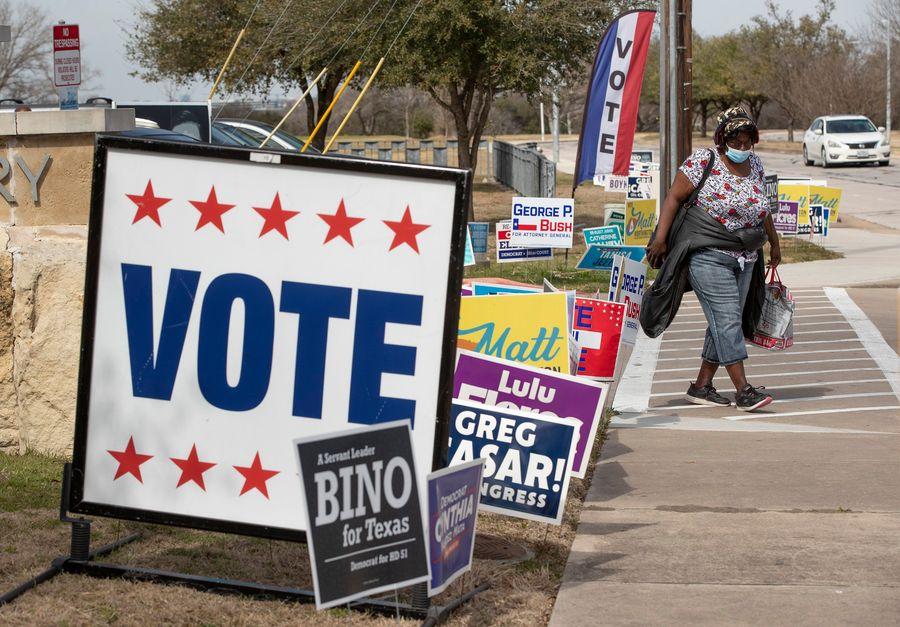
Most democracies don’t have democratic primaries. By and large, party elites choose candidates, and the people then vote for the parties or the candidates. American democracy, by contrast, relies on popular primaries: Ordinary party members select the candidates, or we have open primaries, in which voters can select candidates from either party.
Why do we do this? American anti-elitism. We see party elites selecting candidates as corrupt backroom dealing. We don’t trust parties to evaluate candidates themselves, to help us make a better democratic choice.
Americans are wrong about this. We should abolish democratic primaries.
Consider two problems. The first is a matter of definition. Some argue, mistakenly, that primaries make our system more democratic. But most democracies rely on their political parties to aid their political choices, and they are as democratic as we are. The people still choose their leaders.
The second problem becomes clear by considering the alternative. We live in a society riven by political polarization; our median primary voter is ultra-partisan. That median primary voter is more ideological than the median party voter – not to mention the median general election voter.
The case for primaries is that the median primary voter will make a better choice than party elders. This argument might prove out if all party members voted. But that’s not what happens. In some states, senators come from parties that are dominant statewide, and representatives come from gerrymandered districts, which effectively means that the primary is the general election. And again, only the most partisan voters vote in primaries.
Yes, primary voters tend to be more informed, often because they are better educated. But that can make them more biased – and the better educated are good at producing flimsy rationales for their preferences. In our polarized age, the most informed voters can have awful beliefs. Anti-vaxxers do their “research.” They know more than pro-vaxxers. And they’re still wrong.
Culture Wars, Old and New
The Better Option
Trust -- Society Depends On It
Family Fragmentation: Can Anything Be Done?
Many senators, and even more representatives, come from voting blocs that are polarized, hateful, nutty, and tiny. A mere one hundred thousand outlier primary voters can elect officials who help govern the country.
Party elders are far from perfect. They’re often corrupt, and they make bad choices. Nonetheless, they remain the better alternative. They are less polarized than primary voters. And they care more about winning elections than ideology. They produce more level-headed candidates with broader appeal. Party elders have a certain expertise – winning – that primary voters often lack.
Again, this is standard practice around the democratic world. Most democracies see parties as essential for democratic functioning. And they acknowledge that parties have expertise.
Consider some recent illustrations. In 2016, GOP party elders would have blocked Donald Trump from the outset. I’m sure that many people reading this are still happy that Trump broke through as he did. But for most Republicans, and most of the country, this proved to be a bad outcome.
Think about it from the other side. Imagine the Democrats had much less control over who they nominated. Charismatic and extreme candidates would come to power more often. Would you rather have President Biden or President AOC? I’m grateful that party elders intervened in the 2020 primary to ensure that Biden won. Biden is a bumbler in some ways. But he is not a socialist, nor especially woke.
If Republican Party elders had had their way in 2016, Marco Rubio or Jeb Bush would have been the nominee. I have no love for Rubio or Bush: They are too hawkish for my tastes. But Trump damaged the country’s democratic system in ways that Bush or Rubio would not have done. Conversely, had Democratic Party elders not gotten their way four years later, Bernie Sanders or Elizabeth Warren might have been the nominee in 2020. If a strong left-wing candidate had become president, instead of Biden, most Americans would have regretted it.
We also can’t forget the role of centrists, who often get stuck with candidates whom they dislike. A democratic system that gives them choices closer to their views is better. I know centrist leaders are boring, and sometimes, they’re worse than partisan candidates. But the United States is simply too polarized right now. We far exceed the acceptable level of political polarization. Abolishing primaries would help alleviate this.
Consider one last advantage. The 24-hour news cycle loves democratic primaries. It gets to cover exciting events for a year longer than it would otherwise. Candidates that control news cycles with scandal and gimmicks get more attention – and often more votes. Imagine that the 2016 primary never happened. We would have been less entertained, to be sure. But the Republican Party and the country would be stronger today.
Backroom deals? They’re the stuff of democracies around the world – and of American democracy before the advent of the primary system. We should bring them back.

The Danger Before the Attack
Leslie J. Sullivan • RealClearPolitics
Jon Finer’s Old and Dangerous ‘New Approach’ to Israel
Peter Berkowitz • RealClearPolitics
The President Deserves Better
John Ullyot • RealClearPolitics
Congress Doesn’t Need Another Blame Game. It Needs To Find What’s Broken
Jarrod Bernstein • RealClearPolitics
Democrats Won the Midterms. Common Sense Won, Too
Jordanne Kemper • RealClearPolitics
The 120th Congress Shapes Up
Carolina Lumetta • RealClearPolitics
RCP Today
Top stories on RealClearPolitics
The Takeaway
Polling intelligence and analysis delivered to your inbox
World News
Featuring the latest world news
Policy
Featuring the latest policy news
Support Our Mission
As part of RealClearPolitics, authors aim to provide balanced, non-partisan analysis by presenting top reporting and commentary from all sides of the political spectrum.
Trusted by policymakers and citizens alike since 2000