
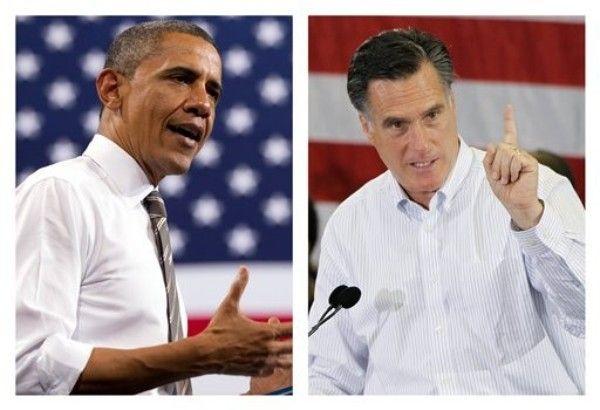
Game On: The 2012 Battle Lines Are Drawn
Published June 4, 2012 • Read time: 17m
(Note: The following is an excerpt from "Election 2012: A Time for Choosing" by Tom Bevan and Carl M. Cannon. Click here to purchase the second eBook in the series.)
Leading the Republicans in Massachusetts is a challenge, but state party leader Kerry Healey had an inspiration. A Harvard graduate who had earned a doctorate in political science at Trinity College in Dublin, in 2002 she was handed the unglamorous assignment of chairing the Republican Party of Massachusetts. Just a few weeks into the job, Healey had her epiphany.
She watched with interest as Mitt Romney earned rave reviews for getting the troubled and deeply indebted Salt Lake City Winter Olympics back on track. Romney was a successful and photogenic Boston-based businessman who possessed a famous name in a state that embraces political dynasties. He was politically ambitious, too. Romney had been the Republicans' sacrificial lamb against Sen. Edward M. Kennedy in 1994.
But Ted Kennedy wasn’t on the ballot in 2002; in any event, the U.S. Senate wasn’t what Healey had in mind for Romney. She’d heard whispers that prominent Republicans out west were discussing ways to induce Romney to remain in Utah and run for governor. Knowing he had family ties in New England, and believing he’d be a formidable gubernatorial candidate in Massachusetts, Healey called Romney, who agreed to a meeting. She flew to Salt Lake City.
“Tell me why you think I should come back,” Romney told her. “Do you see me as governor of Massachusetts?”
“I see you as president of the United States,” Healey replied.
A decade later, and sixty-four months after Mitt Romney filed the papers pursuant to his first presidential exploratory committee, the presidential nomination Healey foresaw in his future became Romney’s at last.
He had run in a crowded 2008 field, finishing behind John McCain and, depending on how one configures it, Mike Huckabee. Romney had gotten out early that year, however, before doing any damage to McCain’s general-election chances, and he campaigned hard for the Republican ticket despite his disappointment at being passed over as McCain’s running mate.
Romney never really stopped running for president after that, laboring tirelessly for GOP candidates in 2010, gathering chits, building alliances, amassing money. Although the 2012 field was even larger, it was not as formidable as in 2008. Romney’s 2012 rivals were underfunded or overrated—or simply unready for a national campaign.
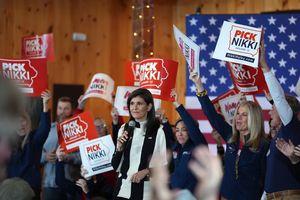
From the opening bell in Iowa, however, one Republican candidate consistently exceeded expectations, over-performing his bankroll, his polling numbers, and his reputation. Rick Santorum had been out of office since being soundly thumped seeking reelection in 2006 as a Republican senator from Pennsylvania. Santorum began his presidential quest with little national name identification, nearly nonexistent support in the polls, and a campaign organization so meager its paid staffers could be counted on a single hand.
Yet Santorum was the last man standing between Mitt Romney and the presidential nomination, and he managed to run a creditable and competitive campaign until early April when he finally buckled under the weight of Romney’s superior organization.
That afternoon, Santorum announced his withdrawal at the Gettysburg Hotel, the same venue where three weeks earlier he’d invoked the famous battle fought on the hallowed ground nearby. Addressing 1,000 raucous supporters in a big ballroom, Santorum had proclaimed that the blood shed for the cause of freedom was the reason “why we must go out and win this fight!”
Now relegated to a small anteroom and understandably more subdued, Santorum reprised his “fight” lingo to the two dozen journalists and a handful of supporters who’d come to his withdrawal speech. He was several minutes into it before declaring, with the slightest hint of reluctance, “We made a decision over the weekend that while this presidential race for us is over, for me, and we will suspend our campaign effective today, we are not done fighting.”
Santorum envisioned aloud—almost resentfully, it seemed—an obvious possible headline in the next day’s paper: “Game Over!” This was an allusion to his enthusiastic and much-repeated battle cry on the night of January 3 when he sent seismic waves through the Republican Party by finishing in a dead heat for first with Romney in the Iowa caucuses.
“Game on!” the plucky former Pennsylvania senator shouted as he took the podium that night. And it had been—for three wild months. In turn, the presidential hopes and reputations of Michele Bachmann, Rick Perry, Herman Cain, Jon Huntsman, Newt Gingrich, and, arguably, the Republican Party itself had been diminished by the exercise—with the jury still out on Romney.
Romney, who’d been positioned in 2008 as the more conservative alternative to John McCain, was now the establishment candidate—and one considered “squishy” by movement conservatives. Santorum became the conservative alternative, but for all its insurgent instincts, even in the age of the Tea Party, the modern GOP tends to hand power to the next person standing in line, which is exactly what happened two weeks to the day that Santorum withdrew.
That day, April 24, 2012, Romney swept to victory in five primaries: New York, Connecticut, Rhode Island, Delaware, and Santorum’s home state of Pennsylvania. Newt Gingrich’s retreat wasn’t as strategic: In four of the five April 24 states, the former House speaker finished behind libertarian-leaning Texas congressman Ron Paul, setting in motion Gingrich’s own withdrawal and his tepid endorsement of Romney in the first week of May.
The former speaker had several candid discussions with Republican National Committee Chairman Reince Priebus about the RNC’s plan to throw the weight of its machinery behind the GOP nominee the moment it was clear who had won. Priebus knew the Gingriches socially as well as professionally, thanks to a Wisconsin connection between Priebus and Callista Gingrich, and in a phone call between the two men after Santorum had dropped out, Priebus apprised Gingrich of his plans for the RNC.
“I want to support you,” Gingrich told the chairman. “I want to be helpful to the Republican Party in any capacity that makes sense.” Priebus had a similar conversation with Santorum after he bowed out, with similar results. Santorum did not endorse Romney right away, but he was privately reassuring to the Republican Party chief.
“Let me sleep for a couple of days first,” Santorum told Priebus. “I need to catch my breath. But I want to do whatever I can to help the team.”
By then Romney wasn’t thinking much about his Republican opponents one way or the other. Even before his April 24 sweep, the Romney campaign was taking the measure of President Obama and the handful of swing states that would determine the winner in November. That night, Romney chose one of those competitive states, New Hampshire, as the backdrop for the unofficial launch of his general-election campaign.
“The last few years have been the best that Barack Obama can do, but it’s not the best America can do,” Romney said. “Tonight is the beginning of the end of the disappointment of the Obama years and the start of a new and better chapter that we will write together.”
Romney outlined the themes and imagery he planned on using for the ensuing seven months in an attempt to unseat an incumbent president more charismatic than himself, who was better funded, and who came to American politics with a more compelling personal narrative. He began that day using some of the Democrats’ best lines against them, including Obama’s soaring 2008 rhetoric, which Romney contrasted directly with the incumbent’s decidedly pessimistic tone of 2012.
“That kind of campaign may have worked at another place and in a different time,” Romney said. “But not here and not now. It’s still about the economy—and we’re not stupid.
This last phrase, which evoked Bill Clinton’s 1992 campaign mantra “It’s the Economy, Stupid,” was neither accidental nor incidental. Its use foreshadowed the mutual maneuvering that lay ahead.
For their part, Obama and his advisers had expected to run against Romney all along, although they had not developed a consensus on how best to tarnish him. Eventually, two distinct schools of thought emerged, along with a third, which was a combination of the two. The initial strategy was to deride Romney as, to use his Republican colleague Jon Huntsman’s memorable phrase, a “perfectly lubricated weathervane” who lacks “core” values and who would do or say anything to win the election.
“There is a sense there is no core to him,” Obama political adviser David Axelrod said on CBS News’s "Face the Nation" in October 2011. “He has no core,” David Plouffe echoed on "Meet the Press."
The second line of attack, somewhat at odds with the first, was that Romney did indeed have a core, but it was rotten. The first organized effort to make this accusation stick was launched two months before the Iowa caucuses by Priorities USA Action, a super PAC run by former Obama campaign press operative Bill Burton, who left his position as deputy White House press secretary to work on the reelection effort.
In early November 2011, Priorities USA Action produced a one-minute and thirty-seven-second ad called “Mitt Romney’s America,” which made him out to be a tool of Wall Street who, if elected, would carry out a perverse economic agenda that would favor his rich buddies and shaft the middle class.
In the absence of unanimity on how to go after Romney, a de facto third way emerged: Do both at the same time, with all manners of attacks thrown in for good measure. This kitchen sink approach had something to recommend it, including allowing all the interest groups under the Democratic Party umbrella to push their pet issue—and pet grievance—against Republicans.
In an environment epitomized by short voter attention spans and a compartmentalized media audience, perhaps there is no real need for a consistent political narrative. Instead, the thinking goes, hurl everything you can at the guy, no matter how trivial or dubious, irrespective of whether it hangs together as a cogent political critique: Romney has no core. He’s got no heart. He’s a rich jerk who thinks corporations are people. He’s mean to dogs. As a teenager, he bullied a kid presumed to be homosexual. He wants to turn the clock back on women’s health. He attends a weird church. Finally, he’s the standard-bearer for a political party that has gone so far over to the right, it’s fallen off the deep end.
This last point, a fine-tuning of the Bill Burton-produced ad campaign launched the previous November, struck many Democrats as the most salient of the lot—and the one most likely to soften Romney up.
Here, the GOP had mostly itself to blame. As the Republican primaries progressed, issues such as whether it was constitutional for states to outlaw contraceptives kept arising in the presidential debates. Conservatives, including the candidates themselves (most notably Gingrich) blamed the “elite” media for stoking such discourse. But it was manifestly true that on issues ranging from immigration to taxation, the Republican base was restive, uncompromising, and rightward-moving.
Among those Democrats arguing that the best way to attack the Republican nominee was to attack his party itself was William Jefferson Clinton. As if on cue, Obama pollster Joel Benenson began detecting a trend in his data: The “empty core” argument didn’t have nearly the impact on swing voters as did assailing Romney for the GOP’s rightward tilt.
On April 23, Politico correspondents Glenn Thrush and Jonathan Martin revealed this evolution within the Obama camp, highlighting Clinton’s advice. The Romney people noticed. The next day Romney made the “it’s the economy, stupid” reference. Two days after that, in an interview with RealClearPolitics, Reince Priebus borrowed language directly from Bill Clinton’s playbook. The RNC chief predicted the 2012 presidential election would come down to voters, of no particular demographic group, asking themselves, “If I work hard and play by the rules, can I live the American Dream?”
“This president,” Priebus added, “has made that much more difficult.”
The irony was striking: even as Bill Clinton was offering backroom political advice to Obama’s advisers (while personally appearing in hard-hitting pointed anti-Romney ads), Romney and his surrogates were counterpunching by using Clinton’s own rhetoric against Obama. During the 1992 campaign, “Work hard and play by the rules” was a Clinton staple when he ran against a Republican president, George H. W. Bush. Now Republicans were using identical language against a Democratic incumbent.
That was not all. They were also borrowing from Barack Obama’s thematic approach of four years earlier. In 2004, Obama burst onto the national political scene with his thoughtful and well received “purple America” keynote address at the Democratic National Convention in Boston. “There’s not a liberal America and a conservative America—there’s the United States of America,” Obama had said, emphasizing the value of national unity at a time of war and crisis.
By 2012, Barack Obama’s circumstances had changed, as had the national political picture. Obama was a state legislator when he gave the “purple America” speech. Eight years later, he was an Oval Office incumbent presiding over an economy beset with high unemployment, astronomical gasoline prices, a stalled housing market, and ballooning federal budget deficits.
Obama signaled early that he planned to retain office by playing off of divisions within the electorate: targeting the wealthy to stoke class envy, tailoring specific policies and programs to labor, Latinos, gays, college students and stressing wedge issues designed to alarm these communities and amplify a gender gap, generally slicing and dicing the electorate along demographic lines, all while demonizing the Republican Party as an instrument of the “radical right.”
Republicans were quick to complain that Obama’s 2008 mantra of “hope and change” had morphed into “hype and blame.” And while it was obvious that Obama’s new approach was dictated by political expediency, it was also self-evident that the Republican Party—and its 2012 presidential field—had made it easier for Democrats to employ these tactics. The drift of the Republican Party into ultraconservatism wasn’t a figment of the Democrats’ imagination.
When Rick Perry defended a Texas law allowing the children of (taxpaying) illegal immigrants to pay in-state tuition at Texas colleges, he was attacked in a debate by Romney and Bachmann. It was Rick Santorum, not George Stephanopoulos (as some conservatives claimed later), who first raised the issue of contraception in the 2012 campaign. He did it in October 2011, in Iowa, when he was barely a blip on the screen.
And in a debate two days before the August 13, 2011, Ames Straw Poll that chased Tim Pawlenty from the race, Santorum led the field in arguing against any tax increases to balance the federal budget—regardless of how many government spending cuts were enacted.
To loud applause from the conservative crowd, all eight candidates on the stage raised their hands, including Romney, who had combined revenue increases with spending cuts to get the bloated budget in Massachusetts under control. Also putting his arm in the air was Jon Huntsman, a longtime Romney rival, and the man who had successfully run for governor of Utah two years after Romney had left Salt Lake City and returned to Boston.
Huntsman knew better, and he subsequently expressed regret over raising his hand that night. But he may have been missing the point. Although he would flame out after competing in a single primary, in New Hampshire, Huntsman didn’t fail as a 2012 Republican presidential candidate because he was too conservative. Quite the contrary: for the dual sins of supporting civil unions—not gay marriage—and for opining that man-made factors may have something to do with global warming, Huntsman was branded a moderate.
Just four years earlier, he had been the overwhelmingly popular governor of one of the most conservative states in the union. But Utah was changing too, along with the rest of the GOP, becoming more conservative still. In 2010, thirty-nine-year-old Tea Party-backed lawyer Mike Lee ousted longtime Republican Senator Robert Bennett at the GOP state convention.
A similar fate befell Indiana Senator Dick Lugar, whose distinguished thirty-six-year career in the United States came to an end on May 8, when he was ousted in the Republican primary by the Tea Party-backed state treasurer, Richard Mourdock.
Neither of these lessons were lost on Utah’s senior Republican senator, Orrin Hatch, who was forced into a primary against yet another young Tea Party-backed candidate. But whatever happens to Hatch in 2012, Utah is not the same place it was a decade earlier. It’s not clear, actually, that Mitt Romney and Jon Huntsman are the types of candidates Republicans in Utah are looking for any longer. And during the presidential primary season, a similar schism within the GOP became evident across the country.
True, Mitt Romney ended up winning the nomination. But he did so with a split Republican base. Millions of conservatives ended up going against their party’s leadership in favor of an unlikely hero of the grassroots, a former Pennsylvania senator with uncompromising views, particularly on social issues, and a motor that never seemed to stop.
Nonetheless, Rick Santorum’s campaign machinery eventually ran out of gas, leaving Romney and the Republicans to face a determined Democratic Party. From the beginning of May, the asymmetrical contours of the campaign were established: Romney was running against Obama’s record as president, while Obama was running against Romney—and every symbol, living and dead, that his political advisers could conjure up illustrating presumed GOP extremism.
The power of incumbency was also on full display as this showdown took shape.
To organized labor, President Obama pointed to the General Motors bailout, support for public employee bargaining rights, and a National Labor Relations Board decision preventing Boeing from opening a non-union plant in South Carolina. To Latinos he held out the promise of second-term immigration reform, while reminding Hispanics of his Justice Department’s opposition of a harsh Arizona law aimed at illegals. Feminists got “free” birth control as part of federally mandated health insurance reform, while college students were promised the administration’s help in keeping rates low on government-backed student loans. And for the gay and lesbian community, Obama himself finally “came out”—for same sex marriage—albeit with a nudge from his vice president.
Romney’s answer to all of this (with the exception of gay marriage) was a single pledge: As president, I will improve the economy. In one sense, Romney’s platform seemed mundane, almost a parody of old-style country club Republicanism. In other way, Romney had replaced Obama as the more aspirational candidate. We are all in this together, he was saying, sharing the same lousy financial environment. Romney, his staff, and his surrogates maintained that the problems faced by the constituencies Obama was targeting individually could all be served best by a robust U.S. economy that hummed along, producing employment and prosperity.
And so the battle was joined.
As is often the case, the campaign discourse conducted between America’s two major political parties left much to be desired—trifling, rote, ad hominem, sometimes dishonest. Onetime college president (and future U.S. president) Woodrow Wilson was known to complain that the intensity of university politics stood in stark contrast to their triviality, an adage repeated by political scientists and frustrated academicians through the ages. But this was not the problem with the politics of 2012. They were intense precisely because the stakes were so high: Both houses of Congress were up for grabs, as was the White House, with proxy battles being waged in recalls and referendums from Wisconsin to North Carolina.
At issue was the wonkish concept of “federalism,” a phrase rarely heard outside university departments of political science. But the questions being tackled on the campaign trail were anything but academic: How much government do Americans want? How much are they willing to pay for? Is the United States a religious country or a secular one? And whose vision do voters trust to reconcile all this?
That’s what the elections of 2012 were really about.

RCP Today
Top stories on RealClearPolitics
The Takeaway
Polling intelligence and analysis delivered to your inbox
World News
Featuring the latest world news
Policy
Featuring the latest policy news
Support Our Mission
As part of RealClearPolitics, authors aim to provide balanced, non-partisan analysis by presenting top reporting and commentary from all sides of the political spectrum.
Trusted by policymakers and citizens alike since 2000