
Are Republicans Ready to Grow Up?
Published Jan. 26, 2015 • Read time: 5m
Last week Republicans experienced some of the joys of being responsible for the entire Congress.
The House leadership yanked an anti-abortion bill off the floor that easily passed two years ago, after some Republicans, newly attentive to the fine print, criticized the procedural hurdles tied to the exception for rape and incest victims. Over in the Senate, as part of the price of considering legislation to approve the Keystone XL oil pipeline, Republicans were forced to vote on whether humans contribute to global warming, exposing an uncomfortable intra-party divide.
And off the floor, Republicans remain befuddled about how to avoid surrendering the fight against President Obama’s immigration action without causing the shutdown of the Homeland Security department in a few weeks.
As someone who predicted that Republicans would regret winning the midterms because they weren’t unified enough to handle the governing responsibility, I could opt for some early crowing right about now. But fortunately for the GOP, what’s occurring inside their ranks does not have to descend into another round of “Republicans In Disarray” stories. This could be the beginning of a desperately needed maturation process, if Republicans are willing to have some open, honest, dialogue.
Coming off of a strong electoral victory, Republicans could easily conclude they don’t have to make any major adjustments. With little more than rhetorical tweaks, Republicans reduced the gender gap, averted a spike in youth turnout, deepened their hold of the House and took the Senate. The cautious Republican -- and no one mistakes Speaker John Boehner and Senate Majority Leader Mitch McConnell for being daredevils -- would prefer to avoid big, bloody fights with the base over hot-button issues unless absolutely necessary.
Worse than the cautious Republican is the lazy Republican, who thinks that a superficial approach to political analysis, barely sufficient for getting through a softball Fox News interview, should be applied when crafting legislation that might reach the president’s desk. Such shoddy thinking produces bills like the 20-week abortion ban, by assuming that good poll numbers for the thrust of the bill make all the thorny politics that have long engulfed the entire abortion issue irrelevant when drawing up the details.
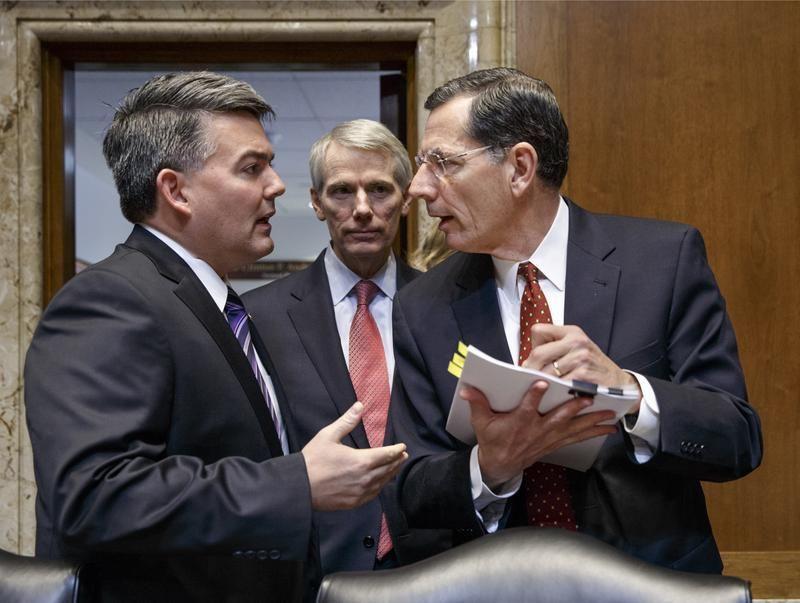
Crude politicking and excess caution could cost Republicans in 2016, when both the presidential and Senate campaigns will be fought on a different map with a bigger electorate. The enlightened Republican knows the party must recalibrate, and if that process starts in Congress now, the presidential field may find it easier to stretch its legs. Hence, Rep. Renee Ellmers did her fellow Republicans a service by successfully waving them off a bill that would effectively presume women were not telling the truth about rape if they did not report the crime to the police.
Sen. John Hoeven almost did his party a similar favor by crafting an amendment to the Keystone pipeline bill that acknowledges humans contribute to global warming, which would have signaled that the GOP -- like most of America -- wants to find a balance between producing energy and preventing a climate crisis. The Hoeven amendment actually attracted 15 Republicans. But Hoeven panicked once it appeared the amendment would pass, fearing climate science deniers would then abandon the underlying bill. He reversed his vote and sunk his own amendment.
Hoeven flinched, yet he prompted two potential presidential candidates, Sens. Rand Paul and Lindsey Graham, to vote for accepting the science, increasing the odds of an intra-party climate debate during the presidential primaries.
Also at the end of last week, Republican presidential frontrunner Jeb Bush travelled to San Francisco of all places to deliver a speech that, while largely conservative, challenged tea party orthodoxy on immigration, education and public investment in infrastructure. Assuming Bush is committed to running, the expanded parameters of debate in the Republican presidential primaries could reshape how voters perceive the Grand Old Party.
Republicans of all stripes should welcome these developments. As Karl Rove recently counseled, “Candidates who make it to the finals will be those who focus more on solutions than on problems … proficiency in bashing President Obama or Hillary Clinton will have surprisingly limited value.” But those solutions are not sitting on the shelf. They need to be created and honed, and an open dialogue is the best way to do that. As much as Jeb Bush fans are excited to see a relative moderate being taken seriously by fellow Republicans, die-hard conservatives should be just as excited for the opportunity to compete in a “free market” of ideas, and prepare to step up their game.
Such an intra-party debate could lead to bitter division or a deeper, more sophisticated unity, depending on how it is executed. Mature parties capable of governing are also capable of engaging in good faith, constructive debate with their own members. Insecure parties can’t handle such disagreement, and try to drum opposing factions out instead of hearing what they have to say.
Consider that the brutal 2008 Democratic primary led to the eventual winner Barack Obama accepting the main health care plank advocated by his rival Hillary Clinton, the individual mandate. No matter how vicious things got, few Democrats in either camp questioned the sincerity of the other’s beliefs, making it easier for the best ideas to rise to the top no matter their origin.
The 2016 Republican primary is bound to get hot, and will likely be far more chaotic than the mano-a-mano Democratic affair from eight years ago. But if Republicans take the contest as an opportunity to cull and sharpen the best ideas from all corners to solve a new array of 21st century problems, their party will be better off for it.


RCP Today
Top stories on RealClearPolitics
The Takeaway
Polling intelligence and analysis delivered to your inbox
World News
Featuring the latest world news
Policy
Featuring the latest policy news
Support Our Mission
As part of RealClearPolitics, authors aim to provide balanced, non-partisan analysis by presenting top reporting and commentary from all sides of the political spectrum.
Trusted by policymakers and citizens alike since 2000