
Who Will Win in 2012? The Smile Can Be Telling
Published May 25, 2011 • Read time: 4m
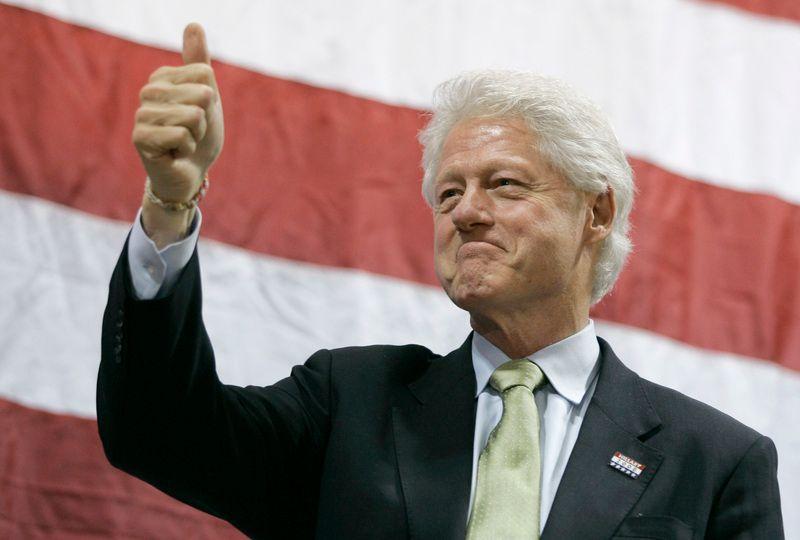
We can predict the answer to that question more than the chorus of political analysts might let on. If the outcomes of the last dozen presidential contests are any indication, the answer lies in which candidate boasts the winningest -- or most genuine -- smile. This is the cheerier candidate, presumably, the one with whom voters would prefer to have a beer.
In explaining the trajectory of presidential elections, U.S. history textbooks and professors don't sufficiently discuss the intuitive voter in American politics. In the last half-century, personality has seemed to dictate who ascends to the presidency more than any ideological pendulum.
If we study election-by-election, the candidate with the more authentic smile won. The first (and winning) candidate, listed in each match-up below, generally appeared happier along the campaign trail.
Obama vs. McCain: Obama emitted a cheerful charisma with which McCain could not compete. As then-Time magazine reporter Jay Carney noted during the general election campaign, McCain had lost his "sweet spot." His smiles and two-thumbs up mostly seemed contrived rather than genuine.
Bush vs. Kerry: While not the bubbliest candidate, and despite growing unpopularity, Bush appeared more upbeat and accessible in his facial expressions.
Bush vs. Gore: Likewise, voters found Bush to be less unemotional and more likely to crack a smile, compared to his more somber opponent.
Clinton vs. Dole: Once again, Clinton smiled more, which seemed far more fitting on his face than on the more aged WWII vet's.
Lies, Assault and Cover-ups Don't Stop Donald Trump
Trump Stands by His Man; Obama on a Health Scourge; Hayden Interview; Reagan's Courage
Analysis: For Trump, Few Limits to Win-At-Any-Cost Approach
What If Clinton Isn't Indicted?
Clinton vs. George H.W. Bush: The youthful former Arkansas governor pounced on the elder statesmen with many more "I feel your pain" empathetic smiles.
George H.W. Bush vs. Dukakis: Even the boring Bush scored more smiles than the stone-cold Massachusetts governor, who told debate watchers he would refuse the death penalty even in the hypothetical murder of his wife.
Reagan vs. Mondale: "I am not going to exploit for political purposes my opponent's youth and inexperience." Despite continued economic struggles, Reagan's characteristic humor and wit -- his constant charm -- brought about the ultimate demise of a less smiley career politician.
Reagan vs. Carter: Hollywood picturesque smiles overcame Georgia's sunny former governor, who had turned awfully serious.
The list continues with no obvious exceptions: Carter smiled more than Ford, Nixon more than McGovern and Humphrey, Johnson more than Goldwater, and Kennedy more than Nixon.
Some current political scientists, who believe central or forced-wedge issues dominate electoral results, would dispute the impact of voters' identity cues. They cite, most recently, gay marriage in 2004 or the new millennium's revival of "It's the economy, stupid" in 2008 (the stratagem executed in Clinton's successful '92 bid).
These front-and-center themes inevitably shape the context of presidential elections, be it 9/11 and its aftermath in 2004's re-election of President Bush or the financial meltdown that began on the cusp of Barack Obama's victory. And coherent and persuasive messaging is required for any victorious presidential campaign.
But issues may be incidental and sidestep the most essential force in the nation's political experience over the last century: the visceral shoot-from-the-gut American voter.
A January 2008 New York Times column by David Brooks offered this view as well. Dubbing many presidential election theories "bogus," Brooks wrote about "the unconscious cognition" that influences voters' evaluations of a candidate's character or intelligence.
"After seeing a candidate for 100 milliseconds, voters make certain sorts of judgments based on expressiveness, facial structure, carriage and attitude," he added.
This phenomenon, while true of the entire voting population, is particularly relevant for impressionable first-time ballot-boxers. One voter-to-be, a UCLA sophomore, recently told the school's paper that she is likely to vote for President Obama because "he's optimistic, charismatic . . . and good-looking."
Certainly, social psychologists might narrow my "smile approach" to explore related variables -- like height and physical attractiveness -- that also contribute to the reactions of voters.
But long before 2012, American forefather Thomas Paine possibly articulated the most precocious insight into the common-sense outlook of his nation's would-be voter. "I love the man that can smile in trouble, that can gather strength from distress, and grow brave by reflection," he wrote in "The Crisis" during the Revolutionary War.
Across cultural boundaries, smiles abound as a powerful universal language and a mechanism to find common humanity and values in friends as well as strangers.
For presidential candidates at least, the children's fable appears true: When you smile at the world, the world smiles back -- something that prospective GOP contenders would be wise to make note of in their campaign to unseat President Obama.

The Danger Before the Attack
Leslie J. Sullivan • RealClearPolitics
Jon Finer’s Old and Dangerous ‘New Approach’ to Israel
Peter Berkowitz • RealClearPolitics
The President Deserves Better
John Ullyot • RealClearPolitics
Congress Doesn’t Need Another Blame Game. It Needs To Find What’s Broken
Jarrod Bernstein • RealClearPolitics
Democrats Won the Midterms. Common Sense Won, Too
Jordanne Kemper • RealClearPolitics
The 120th Congress Shapes Up
Carolina Lumetta • RealClearPolitics
RCP Today
Top stories on RealClearPolitics
The Takeaway
Polling intelligence and analysis delivered to your inbox
World News
Featuring the latest world news
Policy
Featuring the latest policy news
Support Our Mission
As part of RealClearPolitics, authors aim to provide balanced, non-partisan analysis by presenting top reporting and commentary from all sides of the political spectrum.
Trusted by policymakers and citizens alike since 2000