

Ohio's Kasich: "I'm More Experienced Than Anyone"
Published April 24, 2015 • Read time: 7m
Join the Conversation
0If the Republican presidential stage is too crowded and all the major roles already cast, John Kasich is unfazed and undeterred.
Instead, the Ohio governor has been busy in recent weeks auditioning for activists, lawmakers, and press in venues ranging from early-nominating states to Washington, D.C. His routine packages more than two decades of public service and private sector work into one simple pitch: “I’m more experienced than anyone in the field.”
Kasich believes his service at both the federal and state levels sets him apart from a field comprised of former and current governors, fresh-faced senators, and others. He has been around politics and policy for a while (though he took a break between Congress and the governor’s mansion to work as an investment banker at Lehman Brothers). His long career in politics is a good thing, he argues — a resume his GOP rivals don’t have.
“I didn’t fall off a turnip truck, here,” Kasich told reporters at the U.S. Capitol, where he was plugging a balanced budget amendment, which is also a way for him to test the waters of a presidential campaign. “I was a state senator, I was nine terms in Congress, I’ve been elected governor and won 86 out of 88 counties.”
Kasich’s last point underscores what may be his greatest asset: Ohio.
No Republican has won the presidency without winning Ohio. The Buckeye State’s demographic, cultural, and political diversity attracts competition from both parties, but victory has been elusive for Republicans in the past two cycles. The GOP is holding its nominating convention in Cleveland next summer, highlighting the state’s importance as a national battleground and, potentially, a bellwether.
Lies, Assault and Cover-ups Don't Stop Donald Trump
Trump Stands by His Man; Obama on a Health Scourge; Hayden Interview; Reagan's Courage
Analysis: For Trump, Few Limits to Win-At-Any-Cost Approach
What If Clinton Isn't Indicted?
“You can’t get to the White House without winning Ohio, and he has won it like no one else has in a very long time,” says Chris Schrimpf, spokesman for the Ohio Republican Party, which has helped fund some of Kasich’s trips this year.
Kasich defeated Democratic incumbent governor Ted Strickland (who is now running for the U.S. Senate against Rob Portman) in 2010, and won re-election last year with 63 percent of the vote, a significant portion of it from minority voters and union households, though he had weak Democratic competition.
For Kasich, the credential is not just in winning Ohio, but also in implementing policy. Under Kasich’s watch, unemployment fell four points to 5.1 percent, income taxes were cut to stimulate the economy, and an $8 billion budget shortfall was erased.
But the experience has also shown him to be quite an unusual Republican. Kasich accepted the Medicaid expansion under the Affordable Care Act, despite opposition from the GOP-led legislature. The governor maneuvered around lawmakers to approve the funds through the state Controlling Board, showing persistence on the issue and some creativity. Kasich defended his move in moral terms, invoking the pearly gates.
“‘Now, when you die and get to the meeting with St. Peter, he’s probably not going to ask you much about what you did about keeping government small,” Kasich said in 2013. “But he is going to ask you what you did for the poor. You better have a good answer.”
Kasich has tried to maintain opposition to Obamacare, even though the law facilitated the expansion of Medicaid in his state. “There is a big distinction between Medicaid and our ability to bring our money back to fix our problems as opposed to the government takeover of the health care system,” he said in an interview with Laura Ingraham in 2013.
But Kasich’s decision puts him in a difficult spot among conservatives in the presidential field and in the general political arena. It also illustrates the difficulty he may face in gaining traction in a Republican primary.
Early in his first term, Kasich pushed through anti-union laws regarding collective bargaining rights, but they were overturned by a ballot measure. Wisconsin Gov. Scott Walker is campaigning on his ability to take on the unions and win, even in a recall. Kasich is positioning himself as a common-sense governor interested in bringing people out of their individual silos to work together. But Jeb Bush and Marco Rubio, both of Florida, have been espousing similar themes.
“I’m more experienced than anyone in the field. I’ve got foreign policy and national security experience for almost 20 years,” Kasich said at the Capitol.
The governor argued his experience not only sets him apart from the GOP field but also contrasts with the current president, whose inexperience is among Republicans’ top criticisms. “I think confidence matters as well, because we’ve had somebody that never managed anything, never ran anything, and I don’t think we’re in a very strong position today,” Kasich said. “I think people who run things and have a record — and it’s not just about promises, it’s about what you did.”
That experience also includes a previous run for president. Kasich sought the nomination in the 2000 election but dropped out in July 1999, before any primaries or caucuses, and instead endorsed George W. Bush. This time around, he could be facing another Bush in 2016, if both he and Jeb decide to run. “It’s kind of like Groundhog Day,” Kasich said.
Kasich has been campaigning around the country on behalf of a balanced budget amendment to the Constitution, which is why he was in Washington this week and has been able to visit some of the early voting states. It’s a cause the governor feels passionately about, having served as budget chairman in Congress and having guided a balanced budget agreement through Congress. But it also gives him a way to gauge support for a possible presidential run.
Kasich visited New Hampshire twice the year, recently swung through South Carolina, and is planning a trip out West sometime soon. Last week, he started a political committee called New Day for America that will enable him to raise and spend money and travel without having to announce an official campaign. And he insists he’s in no hurry to get in.
“We’ll see how that goes. Let’s see if I can get the resources,” Kasich said. “But I’m not in this for a lark. I mean, if I were to get in, I would get in it to win, and if I didn’t think I could win, then I wouldn’t run.”
In some ways, the large field stands to benefit Kasich in the early stage because the threshold for success is low. “He doesn’t have to carve out a huge niche to be successful, and he doesn’t have to get a high percentage of the vote in the primaries or caucuses,” says John Green, director of the Ray C. Bliss Institute of Applied Politics at the University of Akron.
Currently, however, Kasich is barely registering in polling, and that’s if he is included in them. In early-state stops, Kasich has to spend the time introducing himself to voters, as he isn’t well known beyond Ohio and Washington. He is often mentioned as a possible vice presidential candidate, especially if the nominee winds up being a younger legislator or governor without the same quality of experience — especially if Republicans have their eyes set on Ohio.
“People in Ohio have come to like him and to have a certain fondness for him,” says Green, noting that Kasich’s unorthodox views can have a broader appeal. “He’s not scripted, and he’s not handled very well — that could be a big liability, but also an asset, as often times voters, particularly in primaries, like the idea of authentic.”
The Danger Before the Attack
Leslie J. Sullivan • RealClearPolitics
Jon Finer’s Old and Dangerous ‘New Approach’ to Israel
Peter Berkowitz • RealClearPolitics
The President Deserves Better
John Ullyot • RealClearPolitics
Congress Doesn’t Need Another Blame Game. It Needs To Find What’s Broken
Jarrod Bernstein • RealClearPolitics
Democrats Won the Midterms. Common Sense Won, Too
Jordanne Kemper • RealClearPolitics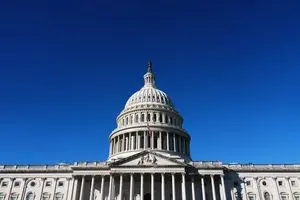
The 120th Congress Shapes Up
Carolina Lumetta • RealClearPolitics
RCP Today
Top stories on RealClearPolitics
The Takeaway
Polling intelligence and analysis delivered to your inbox
World News
Featuring the latest world news
Policy
Featuring the latest policy news
Support Our Mission
As part of RealClearPolitics, authors aim to provide balanced, non-partisan analysis by presenting top reporting and commentary from all sides of the political spectrum.
Trusted by policymakers and citizens alike since 2000