
How the Super Tuesday States Shape Up
Published March 6, 2012 • Read time: 9m
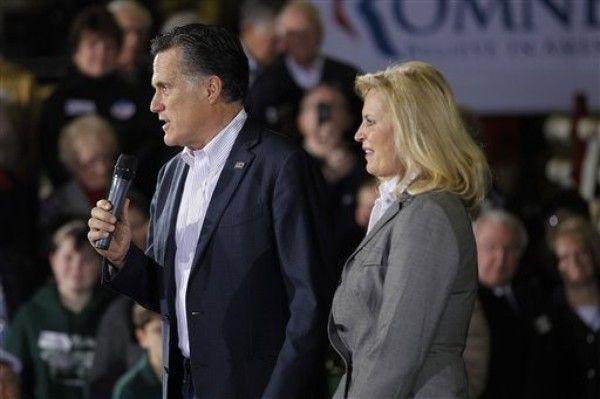
ZANESVILLE, Ohio -- Mitt Romney told a crowd here Monday evening, "If you do your job tomorrow, we're going to win this thing."
He was speaking of the Buckeye State, but a larger meaning underlies his comment: The tight race in Ohio is symbolic of the Republican primary at large. If Romney can overcome his perceived weaknesses and Rick Santorum's strength on his right flank today, analysts say he stands to finally bury the notion that he can’t lock down the Republican nomination for president.
Campaigning in Ohio, he has appealed to voters’ heads while the more socially conservative Santorum has appealed to their hearts, which may explain why Romney ended his event here by saying, “I believe you are going to do the right thing tomorrow.”
Underscoring the importance of the state both in the primary and the general election, Romney spoke in front of a giant Ohio pennant displayed next to a giant American flag.
Nine other states are up for grabs today, making this a key moment in the campaign in terms of delegates and also in terms of perception. Depending on how the vote plays out, the likely nominee could be much clearer at the end of the day. Here’s a state-by-state précis of how Super Tuesday breaks down.
ALASKA (semi-open caucuses: 24 pledged and three unpledged delegates at stake)
Ron Paul is the only Republican candidate who has campaigned in the 49th state, drawing large and enthusiastic crowds in Anchorage and Fairbanks over the weekend.
The Texas congressman appears to have grounds for optimism that he can notch his first victory of the campaign in the caucuses here, which are open only to Republicans and voters who register with the GOP on site.
Lies, Assault and Cover-ups Don't Stop Donald Trump
Trump Stands by His Man; Obama on a Health Scourge; Hayden Interview; Reagan's Courage
Analysis: For Trump, Few Limits to Win-At-Any-Cost Approach
What If Clinton Isn't Indicted?
“There is a fairly significant libertarian undercurrent in Alaska, which will make Ron Paul’s message appealing,” said Alaska pollster Ivan Moore. “I’m not sure that Santorum would [do] very well up here. Alaska’s not a particularly strong fundamentalist religious state. Our primary characteristic up here is that we’re a long way away from everywhere.”
In 2008, Romney won the state’s low-turnout caucuses with just under 6,000 votes. He has been running radio ads in the state’s low-cost media market, and his son Josh held events in Fairbanks and Eagle River to try to drum up support.
GEORGIA (open primary: 76 delegates at stake)
Newt Gingrich has acknowledged that he needs a victory here in order to remain a viable candidate, and he appears poised for a resounding win in the state that he represented in Congress for two decades.
The former House speaker leads in every recent poll conducted in Georgia, which offers the largest Super Tuesday delegate haul.
In Peach State campaign stops last week, Gingrich drew large and enthusiastic crowds, while Santorum could barely manage to turn out 150 people at a hastily scheduled Atlanta airport rally.
Despite his relative lack of any organization in the state, Santorum should remain competitive in the rural areas, while Romney is strong in metropolitan Atlanta, which is expected to account for about 45 percent of the Republican electorate, according to Georgia pollster Mark Rountree.
Gingrich’s determination to rack up a substantial margin in Georgia may come at the expense of performing better than expected in the other nine Super Tuesday states, as he spent four full days stumping in Georgia last week, while declining to campaign more heavily in other states that might also have been fertile terrain for him.
Gingrich’s best hope of mounting a third comeback in the primary season is for Santorum to fall short of expectations in other states so the former congressman can again claim the mantle of chief Romney alternative in next Tuesday’s primaries in Mississippi in Alabama -- Deep South states that could mirror Georgia’s voting patterns.
IDAHO (caucus: 32 delegates at stake)
Santorum held a pair of events in this Western caucus state on Feb. 14, drawing massive crowds in Coeur d’Alene and Boise. But Romney visited Boise last Thursday for a large-scale event of his own. It attracted thousands of attendees, and there reportedly were 1,000 others in an overflow area (the candidate joined them afterward for a rally).
Paul tends to perform much better in the caucus states and as such has been spending considerable time in Idaho. But with a significant Mormon population in the state, Romney allies expect the former Massachusetts governor to score a victory.
MASSACHUSETTS (semi-open primary: 38 pledged and three unpledged delegates at stake)
The race in Romney’s home state figures to be among the least dramatic contests of the night, as the former Massachusetts governor should cruise to an easy victory.
Though John McCain campaigned briefly in Massachusetts in 2008, Romney defeated the Arizona senator there, 51 percent to 41 percent, and is expected to rack up a much larger margin over his closest competitor this time around.
As he did four years ago, Romney will hold his Election Night party in Boston, and he has plenty of reason to believe that he will have a lot more to celebrate than he did at that time.
Romney is not particularly weak in any of Massachusetts’ nine congressional districts, each of which offers three delegates to the winning candidate, in addition to the 10 statewide at-large and three unpledged delegates that will round out the state’s delegation at the Republican National Convention in Tampa.
NORTH DAKOTA (caucus: 28 delegates at stake)
Paul has poured a hefty chunk of his resources into the state and his campaign has long pointed to it as a possible win for him.
Romney swooped into Fargo for a last-minute rally on Thursday, but the crowd was reportedly much smaller and less enthusiastic than one that turned out for Santorum. Gingrich has done his share of radio interviews in the state but hasn’t campaigned there.
OHIO (open primary: 66 delegates at stake)
This has become a must-win for Santorum to prove that he’s capable of besting Romney in a large primary state. The demographics favor him, as it’s in the Rust Belt state and has a heavy concentration of social conservatives.
Before the campaigns shifted their attention here, Santorum was leading Romney by a significant margin -- nearly 10 points in the RealClearPolitics average just a week ago. But Romney cut that down considerably, and the dueling front-runners enter Election Day in a statistical tie in the most recent polling.
There is another hitch for Santorum, however. He failed to qualify for the ballot in several of the state’s congressional districts, making him ineligible to collect 18 of the 66 delegates. In other words, even if he ekes out a victory in the popular vote, Romney is nearly certain to trump him in the delegate count.
OKLAHOMA (primary 43 delegates at stake)
One of the reddest states in the country figures to give Romney a loss in the Great Plains.
Santorum has hosted several large events here, including a Tulsa rally attended by 5,000 people in mid-February. He also campaigned in Oklahoma City at the time, and he returned to the state this past weekend to try to secure a much-needed win. Gingrich has put some effort into the state, but Santorum is the favorite.
TENNESSEE (open primary: 55 pledged and three unpledged delegates at stake)
Tennessee is Romney’s best Super Tuesday opportunity to pull off an upset in a Southern state -- an inviting possibility that could alleviate doubts about his ability to win in the South and could further bolster perceptions of him as the inevitable nominee.
All three major candidates have stumped in the state in recent days, and Tennessee Republican Party Chairman Chris Devaney said it is shaping up to be a tight finish.
Santorum’s once commanding lead here has shrunk precipitously in recent days, and the former Pennsylvania senator has just a 2.6 percent lead over Romney in the latest RCP polling average of the state.
“The thing about Tennessee is it’s a broad, diverse Republican electorate,” Devaney said. He cited east Tennessee, “where we have more traditional Republicans [going] back all the way to the Civil War, when their great-great grandfathers fought for the Union”; the middle and westerns rural parts of the state, “where conservative Democrats have moved over to the Republican Party”; and the suburbs, where “you have a lot of Midwesterners who’ve moved in, and there’s a big Tea Party presence there.”
Gingrich spent all of Monday on the trail in Tennessee, and his campaign sees an opportunity to steal a victory there after having gained ground on Santorum and Romney all week.
On Monday, the Gingrich campaign launched a 30-second ad in the state to draw attention to the former speaker’s promise to reduce gasoline prices.
VERMONT (primary: 17 delegates at stake)
Romney is expected to win the state’s delegates. Former first lady Barbara Bush recorded a last-minute robo-call on his behalf over the weekend, and former New Hampshire Gov. John Sununu stumped for him in the Green Mountain State.
Neither Gingrich nor Santorum has made an effort to contest the small state’s modest number of delegates.
VIRGINIA (open primary: 46 pledged and three unpledged delegates at stake)
Virginia might have been Romney’s best chance to prove his ability to win a hotly contested Southern state. Instead, it is poised to offer an easy victory for him and a reminder of his vast organizational advantage over his opponents.
After the Gingrich and Santorum campaigns failed to gain access to the ballot, Romney and Paul will be the only candidates for whom Virginians can vote in a GOP primary in which write-in votes are not permitted.
On Sunday, House Majority Leader Eric Cantor, who represents Virginia’s 7th Congressional District, endorsed Romney. Cantor’s nod was a nice “get” for Romney, as the candidate aims to unify conservative support, and he likely will win a majority of the vote and thereby take all of the state’s delegates.
Erin McPike reported from Ohio; Scott Conroy from Washington, D.C.

Jon Finer’s Old and Dangerous ‘New Approach’ to Israel
Peter Berkowitz • RealClearPolitics
The President Deserves Better
John Ullyot • RealClearPolitics
Congress Doesn’t Need Another Blame Game. It Needs To Find What’s Broken
Jarrod Bernstein • RealClearPolitics
Democrats Won the Midterms. Common Sense Won, Too
Jordanne Kemper • RealClearPolitics
The 120th Congress Shapes Up
Carolina Lumetta • RealClearPolitics
Flooding GOP Primaries With Democrats
Robert Natelson • RealClearPolitics
RCP Today
Top stories on RealClearPolitics
The Takeaway
Polling intelligence and analysis delivered to your inbox
World News
Featuring the latest world news
Policy
Featuring the latest policy news
Support Our Mission
As part of RealClearPolitics, authors aim to provide balanced, non-partisan analysis by presenting top reporting and commentary from all sides of the political spectrum.
Trusted by policymakers and citizens alike since 2000