
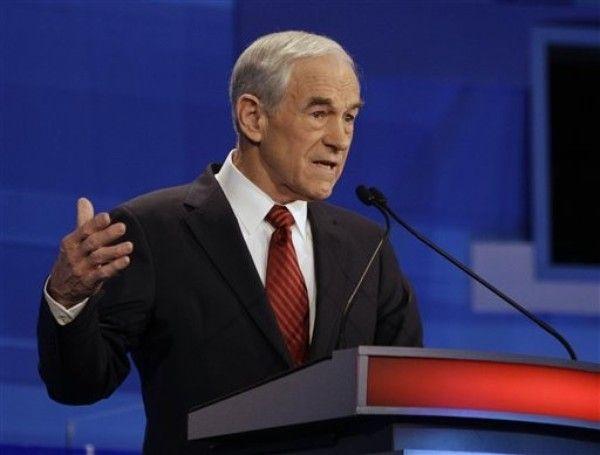
Can Ron Paul Win New Hampshire?
Published Dec. 19, 2011 • Read time: 5m
Unlike Mitt Romney, I am not a betting man. But if I were, I might go to Intrade right now and bet a bundle that Ron Paul will win the New Hampshire primary. The bettors there give that an 10 percent chance of happening, which would make for a pretty good payday.
Ron Paul can win New Hampshire because he can win the Iowa caucuses. (Intraders give Paul's Iowa victory a 40 percent chance.) New Hampshirites have never felt it necessary to follow the Iowa caucus-goers, but the dynamics of the race make their state a likely second pickup.
If those two unexpected events do occur, then all hell will rain down upon the Paulistas. The GOP establishment will throw everything including the kitchen sink, the garage door opener, and two dozen pair of oversized baboon dentures at Paul to keep him from becoming the nominee. But I am getting ahead of myself.
Congressman Paul can win Iowa because the race is divided there but his supporters are not. He already came a crazy close second at the Iowa Straw Poll, a fact that Jon Stewart highlighted as television journalists strained mightily to ignore it.
Iowa was never going to be a strong state for Romney, so he decided not to vigorously contest it. Now Paul, Rick Perry, Michele Bachmann and Newt Gingrich are fighting over that bone.
The RCP Average had Gingrich with a 1 percent lead at press time, which is a step back from where he was just days ago. He peaked too early, as questions about his political and personal past eat away at support. Also, he has very little organization in a state where the ground game is all important.
Lies, Assault and Cover-ups Don't Stop Donald Trump
Trump Stands by His Man; Obama on a Health Scourge; Hayden Interview; Reagan's Courage
Analysis: For Trump, Few Limits to Win-At-Any-Cost Approach
What If Clinton Isn't Indicted?
Paul learned that lesson the hard way. He didn't have an organization to speak of last time, and finished fifth in Iowa. He used much of the money raised in the last primary season to build an organization.
Paulistas have been testing their organizational strength for years now, winning several straw polls. The overall campaign effort is better this time. The ads are professional and hard-hitting, as is the candidate himself. Paul this time around is more committed to the fight, having sworn off running another term for the House of Representatives.
The Paul campaign has thrown a marker down in Iowa and it has thrown it wisely: must win third place or better on Jan. 3. That way, if they take second, they beat the expectations game. And if they take first, it's a whole new race for New Hampshire a week later.
The chances of a Paul first-place finish in Iowa are better than you'd think. It's a divided field and hard to gauge but let's say 25 percent of the caucus vote wins it. Paul is at 19.3 percent in the RCP Average and climbing.
He will need the perfect combination of faith and doubt to pull it off. He needs his supporters to have unwavering devotion (check!) and for other caucus-goers to have grave misgivings -- about Gingrich's baggage and bombast, Romney's corporate caginess, Perry's very Bushlike Texas swagger and Bachmann's wild eyes.
Then, New Hampshire. Here is what the Granite State looks like right now, according to the RCP Average. Romney is at +11.3 percent, still hanging on to a much-eroded lead (his total poll share is 33.3 percent). Gingrich is in second (22 percent), Paul third (15.7 percent) and Jon Huntsman fourth (11.3 percent).
All of that would matter very little the minute Paul wins Iowa. If he can beat Gingrich there, the real contest in New Hampshire will be between Paul's defiant leave-us-alone-and-bring-the-troops-home Republicanism and Romney's managerial competence. Paul seems a better fit for New Hampshire voters, and Iowa can remove the taint of unelectability (see Obama, Barack).
Here comes the fun part. Suppose the implausible occurs and Paul wins Iowa and New Hampshire, with Gingrich and then Romney coming in second in the two contests. South Carolina two weeks later is the Republican Party's firewall to exclude troublesome candidates. They used it to stop John McCain in 2000 and Mike Huckabee in 2008.
To stop a candidate, you need a candidate, preferably along with a few spoilers who can carve into the insurgent's vote share. If Gingrich and Romney both place second, neither would be the obvious default candidate. Would Romney drop out like he unexpectedly did at CPAC last time? Would Gingrich stand down because he can't stand Paul's national not-so-greatness politics?
If Paul falters, all of this will be much ado about not so much. But he might not falter and I guarantee a few Republican grandees are losing sleep over that prospect. In contest after contest, he has done much better than expected, only to have the people who supposedly know better proclaim, "That one didn't count!" Now he is about to march his supporters into much a higher stakes contest of undeniable importance.

Jon Finer’s Old and Dangerous ‘New Approach’ to Israel
Peter Berkowitz • RealClearPolitics
The President Deserves Better
John Ullyot • RealClearPolitics
Congress Doesn’t Need Another Blame Game. It Needs To Find What’s Broken
Jarrod Bernstein • RealClearPolitics
Democrats Won the Midterms. Common Sense Won, Too
Jordanne Kemper • RealClearPolitics
The 120th Congress Shapes Up
Carolina Lumetta • RealClearPolitics
Flooding GOP Primaries With Democrats
Robert Natelson • RealClearPolitics
RCP Today
Top stories on RealClearPolitics
The Takeaway
Polling intelligence and analysis delivered to your inbox
World News
Featuring the latest world news
Policy
Featuring the latest policy news
Support Our Mission
As part of RealClearPolitics, authors aim to provide balanced, non-partisan analysis by presenting top reporting and commentary from all sides of the political spectrum.
Trusted by policymakers and citizens alike since 2000